Irish Examiner view: The HSE's mixed messaging continues
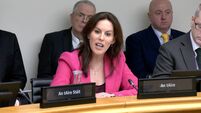
Minister for health Jennifer Carroll MacNeill addressing the Oireachtas health committee on Wednesday. Picture: Oireachtas TV
The headline on the front page of this newspaper on Wednesday was and with good reason. Readers cannot but be aware of the ongoing controversy involving the recent removal of HSE CEO Anne O’Connor, but "omnishambles" is a piercingly accurate description of how that specific issue is contaminating everything else it comes into contact with.
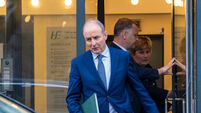
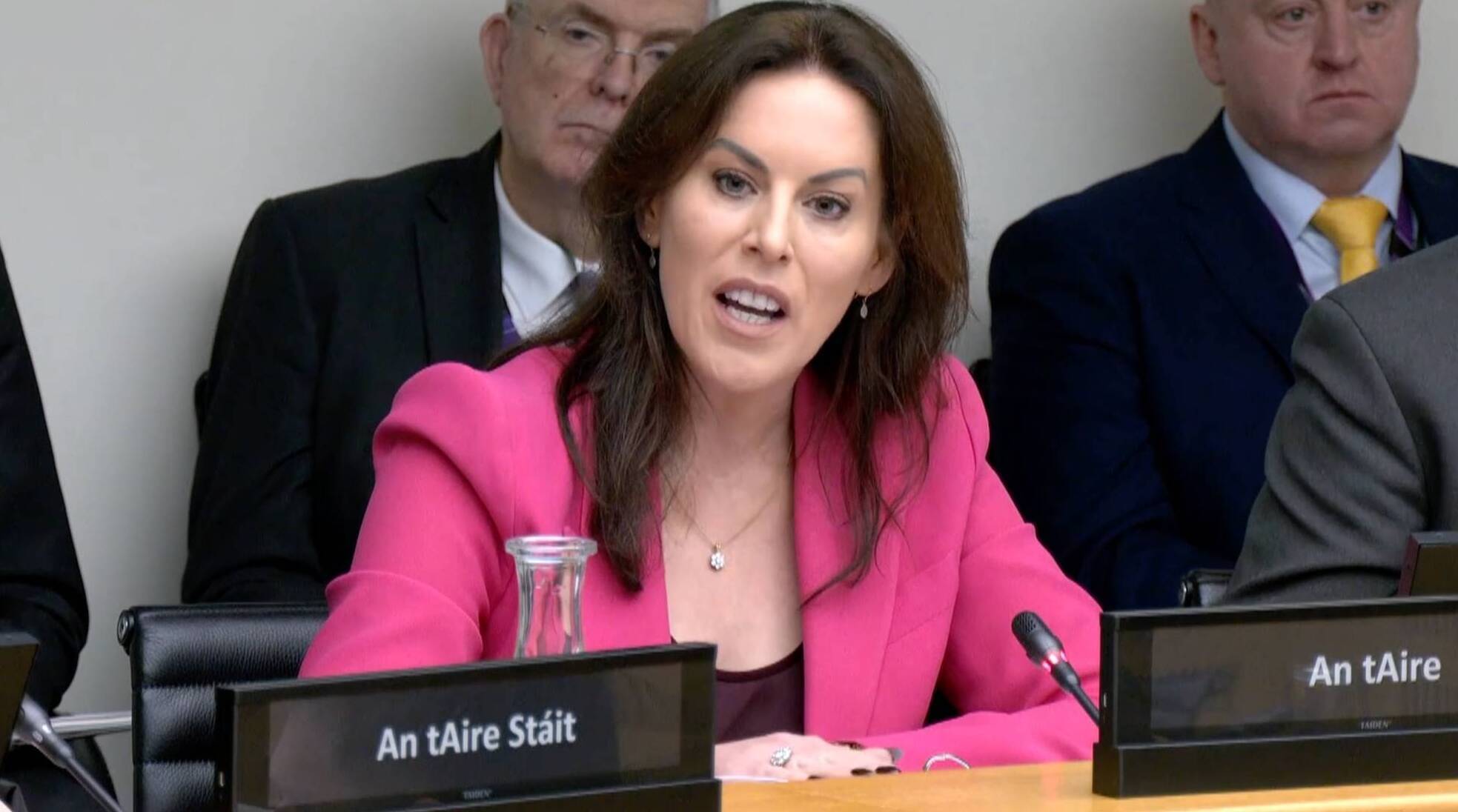
For instance, when health minister Jennifer Carroll MacNeill faced the Oireachtas joint health committee, she spent much of her time, understandably, discussing Ms O’Connor’s departure. In doing so she said she “absolutely” had confidence in the board of the HSE.
This was in contrast with the Taoiseach, who said he could not endorse the HSE board’s decision to sack Ms O’Connor until discrepancies in the sequence of events are cleared up.
As reported by Louise Burne here, Micheál Martin stopped short of expressing full confidence in the HSE board several times in the Dáil on Wednesday, though his spokesperson said the previous evening that the Taoiseach had confidence in the board.
Experienced political observers will recognise the danger signs here. The health minister and the Taoiseach are not in agreement on backing an organisation which is now firmly in the firing line, not least because of an explosive statement from Ms O’Connor herself yesterday.
The ousted CEO has instructed solicitors to challenge what she describes as "unlawful termination" from her role, but she added some incendiary detail, saying she did not know she was at risk of losing her job “until a Teams call with the chair of the board of the HSE at 7.30am on Saturday morning ... During that call I was told that I could resign or that my employment would be terminated at 11am".
This extraordinary revelation will be of deep interest to Ms O’Connor’s legal representatives, but it is surely a severe blow to the credibility of the HSE board — and no great reflection on the health minister’s judgement in backing that board.
The omnishambles rumbles on. It may yet claim some more victims before it runs out of steam.
The general impression that women routinely face violence, and the threat of violence, in our society, sharpened into a focused reality with the publication of research this week which should shame us all.
As Ann Murphy reported here, the number of women who have died violently in Ireland so far this year is almost double the total killed in all of 2025.
Women’s Aid published the to mark international day for the elimination of violence against women, pointing out that 13 women have died violently in Ireland since the start of this year, compared to seven in all of last year.
By any reckoning, that is a deeply concerning statistic. The fact that the number of women who have died violently in Ireland has doubled in the last year is an indictment of our society; it suggests that we are not making progress in this area, and in fact are going in the opposite direction.
Drilling into the research is no less unsettling. The Femicide Watch initiative began in 1996, which means it is dealing with a depressingly large sample size, with 291 women dying in violent circumstances.
The report notes one particularly significant aspect of those deaths — that 68% of those 291 women were killed in their own homes.
If two thirds of the women who died violently in Ireland over the last 30 years were killed in their own homes, then can we say that a woman’s own home is one of the most dangerous places she can find herself in? The subversion of what should be the safest space of all is underlined by another finding in the report. Since 1996, some 25 children have been killed alongside a woman, usually their mother.
Women’s Aid has welcomed indications that the Department of Justice is developing a model for domestic and family violence death reviews. It is long past time for that review model to be implemented, fully funded, and for the results of such reviews to drive policy.
Going by the statistics, road safety is one of the great challenges of modern Irish life. As of Wednesday, the official garda figure for road deaths so far this year was 165, marginally up on last year’s total at the same point in the calendar (162).
In that context, any initiative that aims to reduce road deaths is welcome, such as the new Road Safety Authority partnership with the GAA.
The two organisations are combining for a campaign which will use public figures, sporting personalities, and those with experience of road trauma as part of a concerted effort to reduce the number of road deaths.
The campaign — Road Safety Voices — was launched this week with the support of GAA president Jarlath Burns and Gaelic Players Association CEO Tom Parsons.
RTÉ GAA correspondent Marty Morrissey, who is also involved in the campaign, spoke at the launch about his mother Peggy, who died in a car crash five years ago: “We’re all touched by what happens on our roads ... Nothing tragic ever happened to us until it did happen, and then suddenly your world changes.”
This initiative deserves to be supported by all, particularly as the days grow shorter at this time of year.
With Christmas on the horizon, no family should have to face the holiday period without a loved one because of dangerous or careless driving.
CONNECT WITH US TODAY



Be the first to know the latest news and updates