Over two-thirds of women who died violently since 1996 were killed in their own homes, research reveals
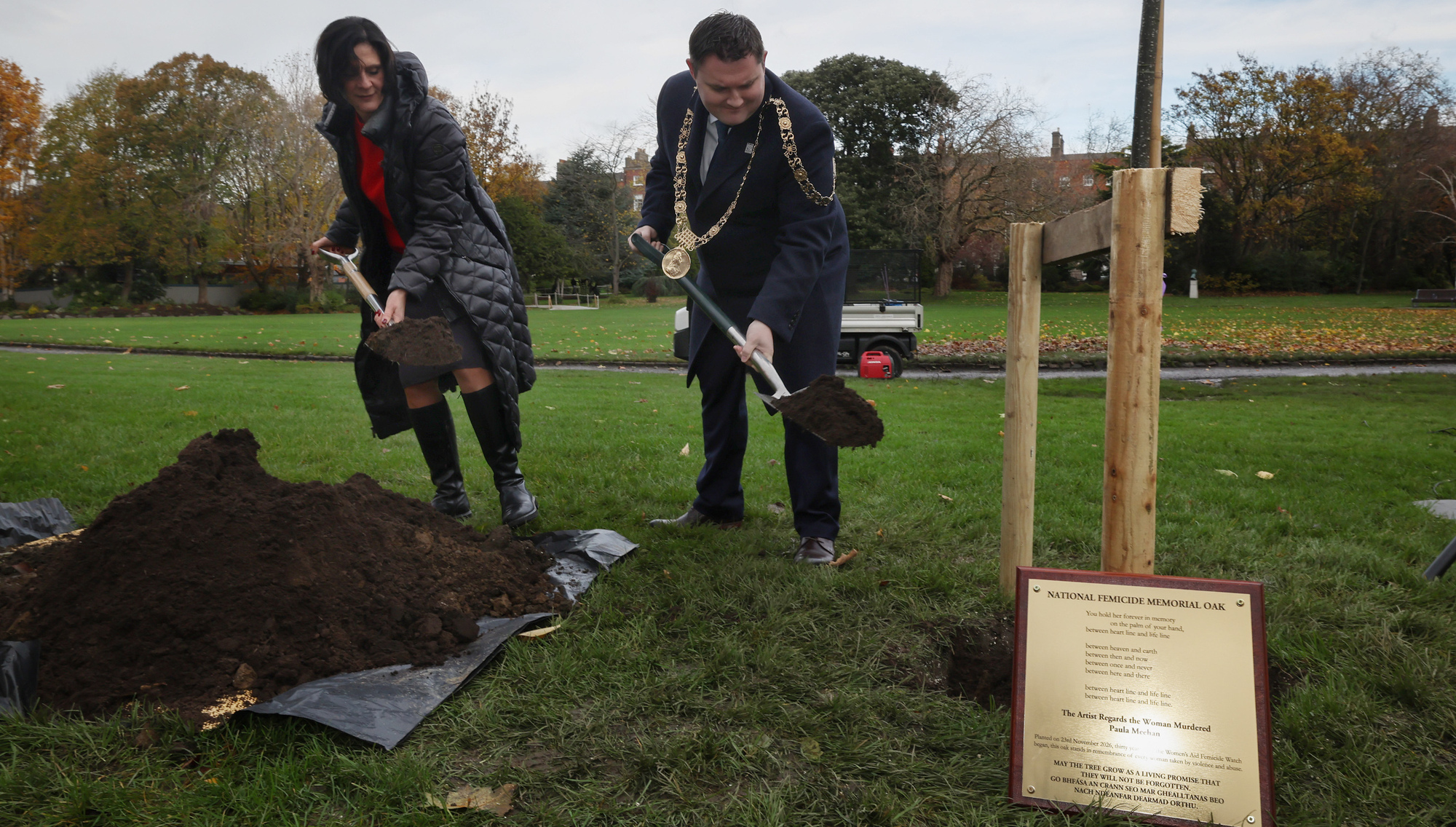
Sarah Benson (left), CEO of Women's Aid and lord mayor of Dublin, Cllr Daryl Barron (right) at the planting of a National Femicide Memorial Oak at Merrion Square Park on Monday in memory of all victims of femicide on the island of Ireland and across the world. Picture: SHARPPIX
More than two thirds of the 291 women who died violently in Ireland since 1996 were killed in their own homes, according to new research being launched today.
The Femicide Watch Report, published by Women’s Aid to mark International Day for the Elimination of Violence against Women, says 13 women have died violently in Ireland since the start of this year. That compares to seven in the full 12 months of last year.
Since the Femicide Watch initiative started in 1996, 291 women have died in violent circumstances. The report notes that 68% of the 291 women were killed in their own home.
In the 235 resolved cases since 1996, 89% of women were killed by a man they knew, with 57% having been killed by a current or former partner, according to the research.
Women’s Aid has also released its annual report for 2025, which revealed:
- 37,790 contacts and 62,275 disclosures of domestic violence against women and children.
- 1,321 disclosures of a man threatening to kill the woman, her children, a family member or himself.
- 10,825 disclosures of physical abuse, including 512 disclosures of non-fatal strangulation.
- 3,020 disclosures of rape and sexual abuse.
- 1,522 disclosures of abuse during pregnancy.
- 906 disclosures of stalking, online and in person.
- 32% of women using Women’s Aid services were being abused by an ex-partner.
Women’s Aid welcomed indications that the Department of Justice is developing a model for Domestic and Family Violence Death Reviews.
However, its chief executive Sarah Benson said: “Every death review must include specialist domestic violence services, funded to take part, and must meaningfully involve families, including children where appropriate.
"Reviews should begin with domestic homicides and child deaths and extend to suspected suicides following domestic abuse within a set timeframe. There must also be real oversight of recommendations, including a public database of anonymised reviews, so that lessons are acted on and not left on a shelf.”
Meanwhile, a call has been made for the introduction of services for domestic violence perpetrators by an organisation working with men to overcome their violent behaviour.
Move Ireland’s annual report for 2025 was launched on Tuesday at the Department of Justice.
Last year, 604 referrals were received by the organisation, making it the fifth consecutive year that there has been an increase in demand for Move Ireland’s services.
Move Ireland chief executive Michelle Walsh told the the organisation believes strongly in the need for helplines for perpetrators of violence, explaining: “When you provide a perpetrator phone line, they will come. If you are a perpetrator in this country, where do you go for help?”

BLACK FRIDAY
Already a subscriber? Sign in

CONNECT WITH US TODAY



Be the first to know the latest news and updates