Caitríona Redmond: Ghosted by your bus home? You're not alone
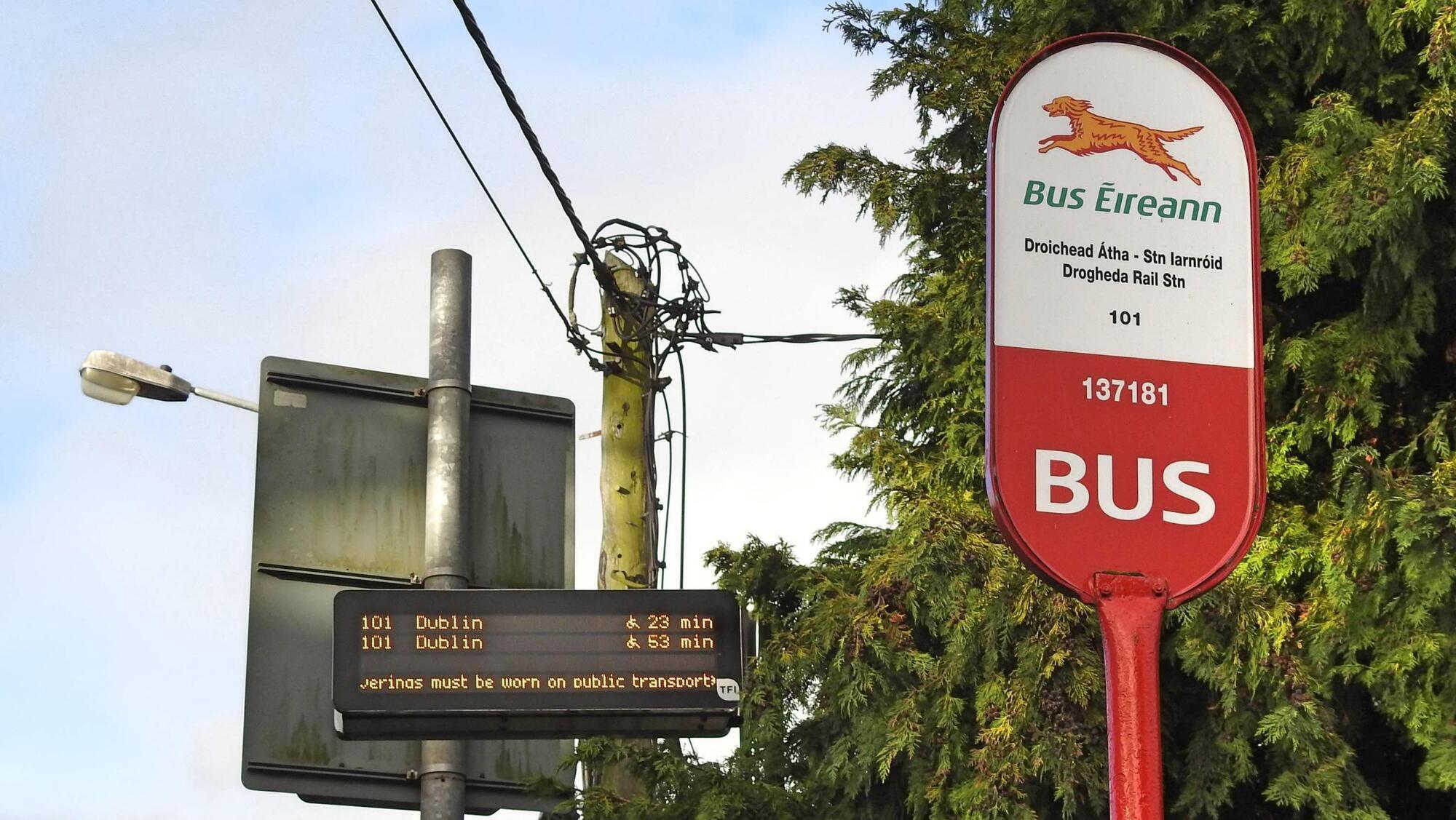
Caitríona says it’s been three years since she started relying on Bus Éireann to get her to/from college in the Drumcondra area, and the service has deteriorated over that time.

It feels like the right time to talk about some downright scary public transport issues as Halloween approaches.
In the past few months, I’ve had some really bad experiences using Bus Éireann, particularly when travelling to and from college at DCU’s St Patrick’s Campus in Drumcondra on the 101 service. I live outside Dublin Bus service areas, and that 101 bus passes by both my home and college; unfortunately, it's not as ideal as it sounds.
During a week-long block of full-time lectures, I got the bus home on time only twice. On three days, multiple buses failed to arrive as scheduled, and I spent up to two hours waiting for one to take me home. The real-time display promised buses that disappeared shortly before their scheduled arrival times or were cancelled altogether.
My experiences aren't isolated either; as recently as last week, the Irish Examiner reported long journey times between Youghal and Cork, along with poor services in other parts of Cork.
I contacted Bus Éireann and asked how it accommodates passengers along a route when a bus leaves the depot full. For example, it seems standard practice for the 101 to leave Busáras and travel directly to the first drop-off point via the Port Tunnel, leaving prospective passengers along the route none the wiser as they wait for buses that will never arrive, without explanation.
It responded as follows:
“Bus Éireann’s policy is to serve all designated stops along a route where capacity allows. Where a bus has reached capacity, it may be unable to accommodate additional passengers and will display a “Bus Full” message to intending passengers.”
It went on to say:
“Drivers are also asked to report full buses to their supervisors, allowing us to identify recurring patterns of services operating at capacity. Where such a pattern is identified on a Public Service Obligation service, Bus Éireann will share its findings with the National Transport Authority for consideration.”
I find it remarkable that, in this technological age, a “bus full” display isn't automatically communicated back to the depot or head office. Instead, responsibility appears to rest with the drivers, who have little control over the routes they operate or the capacity available to passengers.
While many buses do run on time, they are regularly at capacity and leave prospective passengers at the side of the road. Those passengers ultimately make alternative arrangements or drive to their intended destination, which is the antithesis of what public transport aims to achieve.
My hometown of Balbriggan recently had two large-scale housing developments approved, totalling nearly 1,600 homes. If each home housed three people on average, that would mean almost 4,800 additional residents.
On paper, my town has excellent transport links. In reality, our public transport is packed every morning and evening, with buses and trains running at capacity and often leaving people behind.
I contacted the National Transport Authority (NTA), put the same questions to it as I had to Bus Éireann, but I also specifically asked it for its perspective on compliance with bus routing and legislative requirements, and how uncollected passengers could sometimes wait for significant periods along the route for a free bus to collect them.
The NTA responded with a lengthy reply, but it didn’t answer my query about legislative requirements and uncollected passengers.
It explained passengers may expect buses that don't appear, and a cancelled bus differs from a ‘ghost bus’.
"Where a bus reaches its permitted passenger capacity, the driver cannot safely carry additional passengers. However, the NTA expects contracted services to operate in accordance with approved service arrangements, subject to circumstances that may arise during day-to-day operations," it said.
“In relation to real time passenger information (RTPI), one of the primary factors affecting information quality is the cancellation of a service. Cancellations can arise for a variety of reasons…
"As the RTPI system is initially populated using scheduled services, a planned departure will continue to be displayed unless the cancellation is entered into the system by the operator.
"A 'ghost bus' occurs when a service cancellation is not communicated to the RTPI system in a timely manner, resulting in a service appearing to passengers despite not operating."
It’s alright, though, because the NTA “recognises the significant inconvenience and frustration caused to passengers when a scheduled bus service is unable to accommodate them due to capacity constraints.”
And in further good news, it tells me there will soon be a whopping 60 new vehicles for use across Ireland. I doubt this will alleviate capacity issues across the country.
From my perspective, it’s been three years since I started relying on Bus Éireann to get me to/from college in the Drumcondra area, and the service has deteriorated over that time.
When I’m standing at the bus stop for up to two hours in the evening, hoping a bus will turn up on its scheduled route to take me home, the responses I received give me little comfort, especially in the cold, damp winter weather.
I guess we all could be waiting another three years (or more) for the situation to improve.
An Post has been in touch to explain its new charges ahead of the customs handling fee from the EU, which starts on November 1.
It confirms the €2 fee is non-refundable in all circumstances, and it has been very clear customers will be notified of any charges via email or postcard. It will hold onto items for 14 days pending payment, after which time it will return them to the sender.
Importantly, it said new mandatory product identifiers must be attached to all online shopping transactions. In a small number of cases where the retailer does not provide this information, An Post will not be able to deliver the package.
Be aware of this when placing an order.