Irish Examiner view: Both sides must work to settle public pay dispute
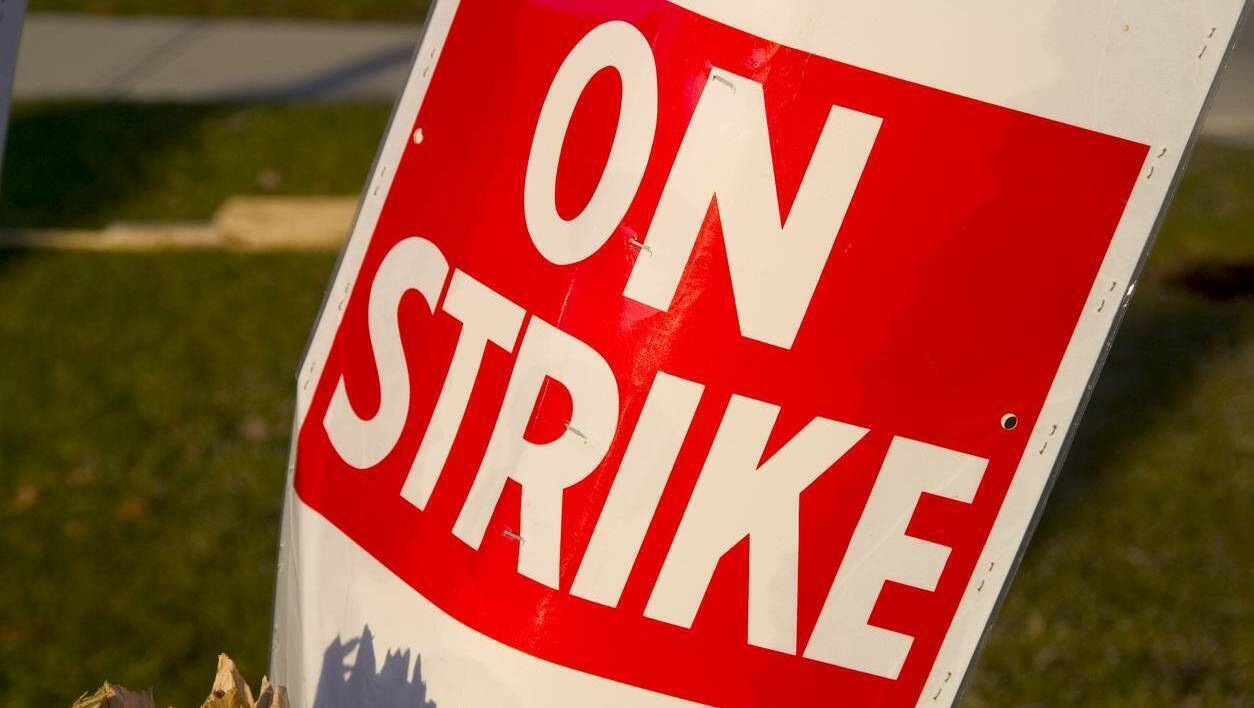
The disruption caused by work stoppages on Wednesday October 14 will be felt keenly by families already hard pressed due to the cost of living. Picture: iStock
The public sector strike planned for tomorrow week, Wednesday October 14, needs to be averted. The escalation in industrial action in pursuit of a new pay deal threatens enormous disruption, with pickets and work stoppages hitting schools and colleges, offices, hospitals, and other workplaces.
The disruption will be felt most by families and individuals who themselves are under financial pressure, including parents who cannot get to work because schools are closed, patients whose appointments are delayed, and other families dependent on public services.
There is no doubt that public sector workers have seen the value of their pay eroded by sharp cost-of-living increases. There is also understandable frustration at what they see is the Government’s failure to engage meaningfully on a successor to the public sector pay agreement that expired at the end of June.
For its part, the Government, both employer and custodian of taxpayers’ money, says that it has always been willing to negotiate, but insists it does not want to begin talks with preconditions. It has also said that it is making provision in today’s budget for increased public sector pay. This is something that deserves serious consideration by the unions.
Read More
There will be a lot of noise and immediate reaction from all quarters to the speeches from Simon Harris and Jack Chambers today. The pay provisions, including whatever tax changes are announced, deserve careful and considered examination; the announcement of a pause to next week’s planned strike might be the appropriate response of the unions, to allow then time to fully assess the implications of the budget.
This is not an argument for public servants to abandon their claims nor a suggestion that they accept the Government’s first offer. Workers have a right to press their demands and to expect their concerns to be treated seriously. But today’ budget should be carefully assessed to see if it provides a basis for starting meaningful negotiations.
Responsibility rests with both sides. The Government must make clear what provision it has made in terms of public sector pay, and demonstrate that it is prepared to negotiate seriously on the main issue. There is still time to avert the disruption. Both sides should use it.
It was 64 years ago today when a young American president asked his fellow citizens to prepare for the unthinkable. With the Cold War escalating, John F Kennedy urged Americans to build bomb shelters to protect their families from atomic fallout in the event of a nuclear exchange with the USSR.

The October 6, 1961, message was issued to civil defence authorities, tasking them with providing shelters. Many ordinary Americans were already visiting fairs and shopping centres, and watching television programmes to see what was available in terms of backyard nuclear bomb survival shelters.
Thankfully, the efficacy of these shelters were never tested — the bombs were not dropped, and the shelters were not needed. It is easy, with six and a half decades of hindsight, to look back with some amusement at the general panic, and frantic efforts of individuals to prepare to survive a nuclear war. Except that, similarly apocalyptic warnings are beginning to sound familiar in 2026.
This time, the prophets of Armageddon are not political leaders or military chiefs — they are people from inside the technology sector who are behind increasingly powerful artificial intelligence developments.
Scarcely a week goes by without some insider warning of the potentially destructive capabilities of artificial intelligence (AI), with warnings ranging from the possibility of rogue AI agents hacking into systems and causing some disruption, all the way up to wiping out humanity.
Read More
While there are critics who say these warnings are grossly overstated, it is not unreasonable for people to be nervous. This technology is being developed at a phenomenal pace by a relatively small number of individuals, some of whom are among those expressing concern. A backyard bunker will not protect us if even a fraction of the dire predictions come to pass, but that doesn’t mean we should do nothing.
Governments must start regulating the development of increasingly powerful AI now, with genuinely independent oversight to scrutinise the risks and intervene when necessary.
Ireland will host the International AI Summit to launch European AI Innovation Month next week. It sounds like a good place for Europe to make a stand on regulation.
Almost 30 years after dog fouling fines were introduced in this country, it is disheartening to learn that pet droppings on our public paths remains a daily hazard for many pedestrians.
The 1997 Litter Pollution Act made provision for people to be fined for not cleaning up after their dogs in public spaces. The €150 fine increased to €250 last month, but, as fines are issued so rarely, the increase is unlikely to be much of a deterrent.

Cork City Council was one of 17 local authorities which did not issue a single fine last year.
There has been a welcome change in the behaviour of dog owners in recent years, the majority of whom now embark on their journeys armed with waste bags and knowing the whereabouts of bins.
However, Vision Ireland has highlighted that dog fouling continues to pose problems. For people with visual impairment, dog dirt on the path can be a slip hazard, or a threat to health and hygiene.
Read More
Parents wrestling buggies, and people who use walking frames or wheelchairs are familiar with that sinking feeling of making unexpected contact with some droppings.
We need to address why local authorities are unwilling or unable to fine the culprits. In tandem, they at least should launch a concerted public campaign with the strong message — leaving dog dirt on a public path is not a harmless oversight, it is an anti-social act that endangers others. It is fairly clear that the fines are not working.


CONNECT WITH US TODAY



Be the first to know the latest news and updates