Historical document shows plans for playing equipment on area described as 'children’s burial ground' in Tuam
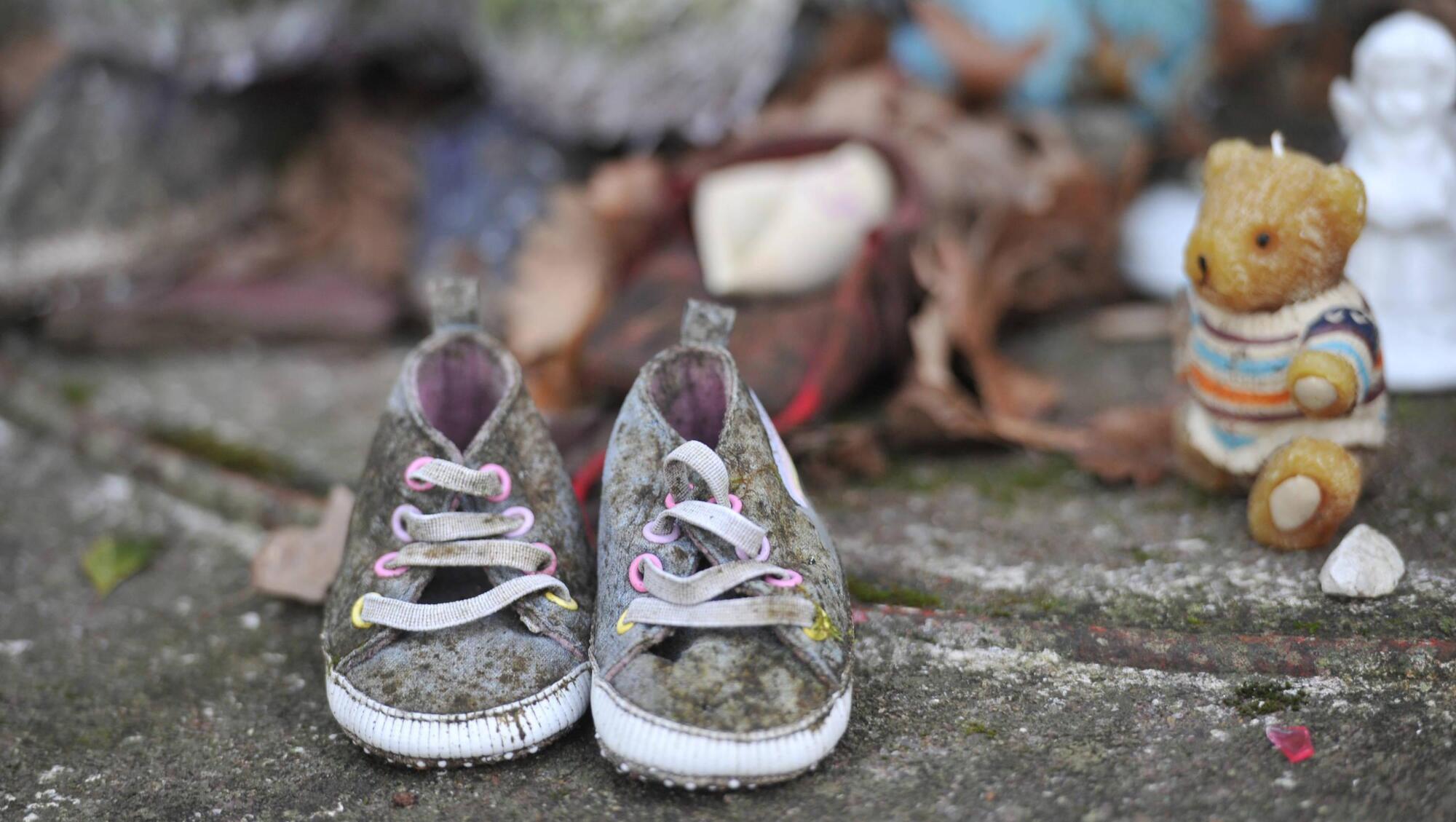
A historical document from Galway County Council has revealed plans for development works, including playing equipment, on an area described as a "children’s burial ground" in Tuam. File photo: Larry Cummins
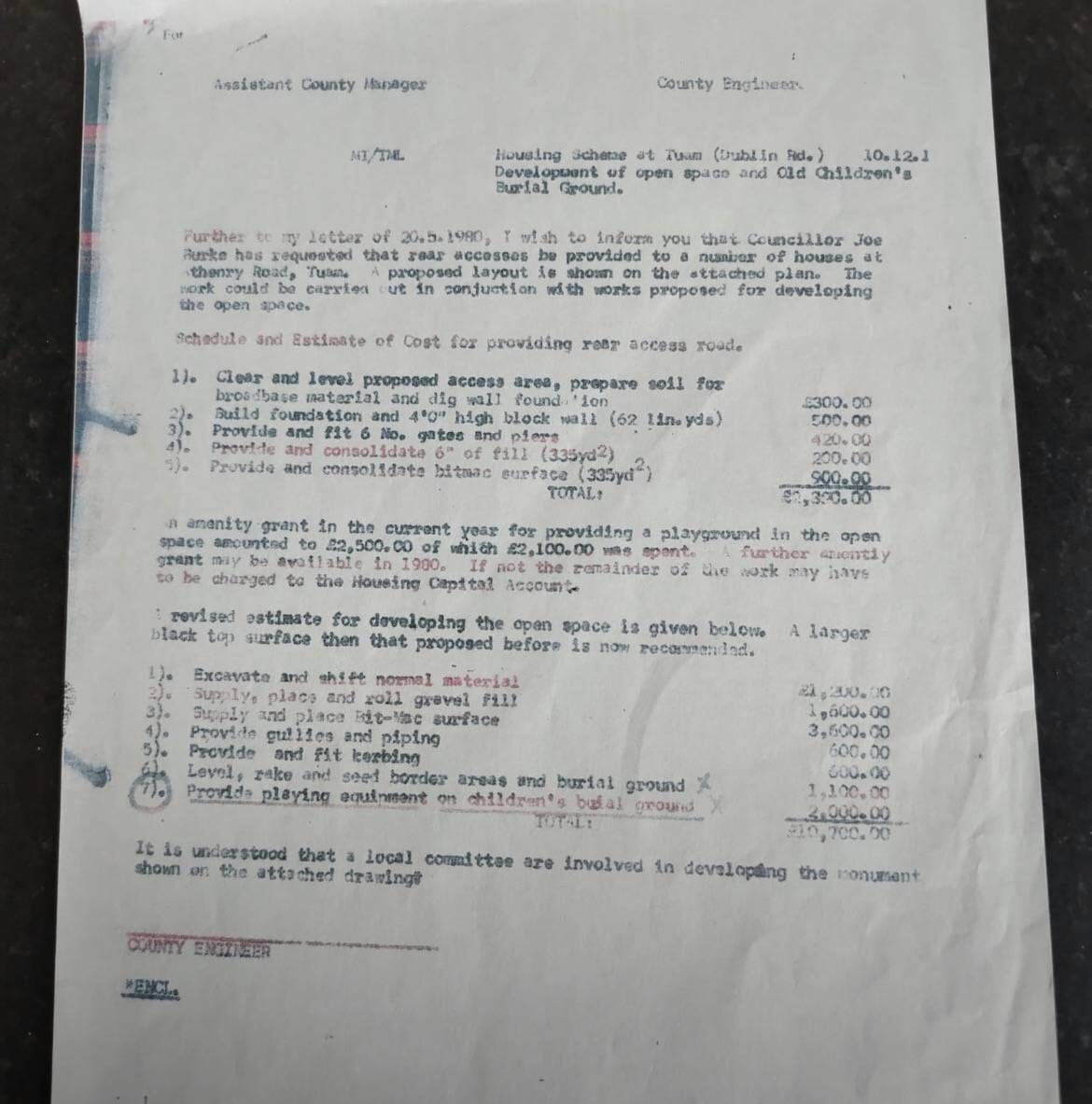
A historical document from Galway County Council has revealed plans for development works, including playing equipment, on an area described as a "children’s burial ground" in Tuam.
In correspondence secured under Freedom of Information, the county engineer’s office wrote to the council on May 20, 1980 about proposed works to the area currently being excavated.
The one page letter, headed, ‘Housing Scheme at Tuam (Dublin Road) development of open space and Old Children’s burial ground’ sets out estimated costs for proposed works at the open space and old children’s burial ground only would cost in the region of £2,500 (€7,000).
The institution, predominately for unmarried mothers, was ran by the Bons Secours nuns and overseen by the Galway County Council.
Read More
It opened in 1925 and closed in 1961 when the nuns moved from the area and the council knocked the home in the 1970s and built the now Dublin Road housing estate and surrounding area of the next decade.
The centre of that housing estate is now the subject of the country’s first ever mass exhumation, which covers an area of 5,000 square metres.
Forensics are trying to locate the remains of 796 children who were buried on the grounds by the nuns.
A memorial garden was examined in 2016 and 2017 and tests excavations showed a “significant quantity” of human remains at the bottom of 18 chambers in a disused sewage tank. The children’s remains were described as “co-mingled”.
However since the exhumation began last year, 109 babies in coffins have been recovered by the forensic team in a concreted over laneway.
A theory for the comingled babies in the nearby memorial garden - yet to be excavated - is that construction workers may have damaged the burial site and swept the remains of the children into a nearby septic tank.
Among the items listed in the estimate by the county engineer is a proposal to “supply place and roll gravel fill, supply and place tar mac surface, level rake and see border areas and burial ground".
The final line in the document says “provide playing equipment on children’s burial ground”.
The works also included access to the area and the preparation of soil with the total bill amounting to £13,020 (€16,527).
The document also refers to levelling and consolidating areas of the ground and states that a local committee was involved in developing a monument shown on an attached drawing.
The record raises fresh questions about the history of development at the site.
The reported recently on concerns that construction and redevelopment works may have impacted the burial site.
To date, the concentrated burial site currently being examined had no surface markings and was concreted over and turned into a laneway.
This document published today, provides a record of proposed works at an area explicitly described as a "children’s burial ground".
However, it has yet to be established whether any construction disturbed human remains, but it is a theory being examined by the Office of the Director of the Authorised Intervention at Tuam.
In response to questions from the , Galway County Council recently a spokesperson said, acknowledged that one of the drawings supplied to the Commission included an area marked as a burial site.
However, the council did not respond to fresh enquires by the in response to the engineer’s report.
The document comes as the names of six more children have been added to the death list at Tuam - bringing the total to 802. These children have no death certificates and were not legally registered.
The General Register Office (GRO) was unable to identify birth certificates for the six children recently added to the overall list, there names are:
- Thomas Crehan, aged two months, who was recorded as dying on August 15, 1927
- Michael Sweeney, two-and-a-half months, November 19, 1931
- Infant Clifford, five minutes, December 2, 1938
- John Gallagher, 15 days, December 23, 1949
- Patrick Anthony Devaney, one month, February 16, 1951
- John Francis Fitzgerald, three weeks, February 19, 1951
However, in a response from the Office of the Director of the Tuam Intervention, a spokesperson said they have been able to identify three out of six civil birth records for the children, who were registered with variations to their names.
They include: Michael Sweeney, John Gallagher and Patrick Anthony Devaney.
CONNECT WITH US TODAY



Be the first to know the latest news and updates