Letters to the Editor: Rules bend for those who did not obey them and tighten for those who did
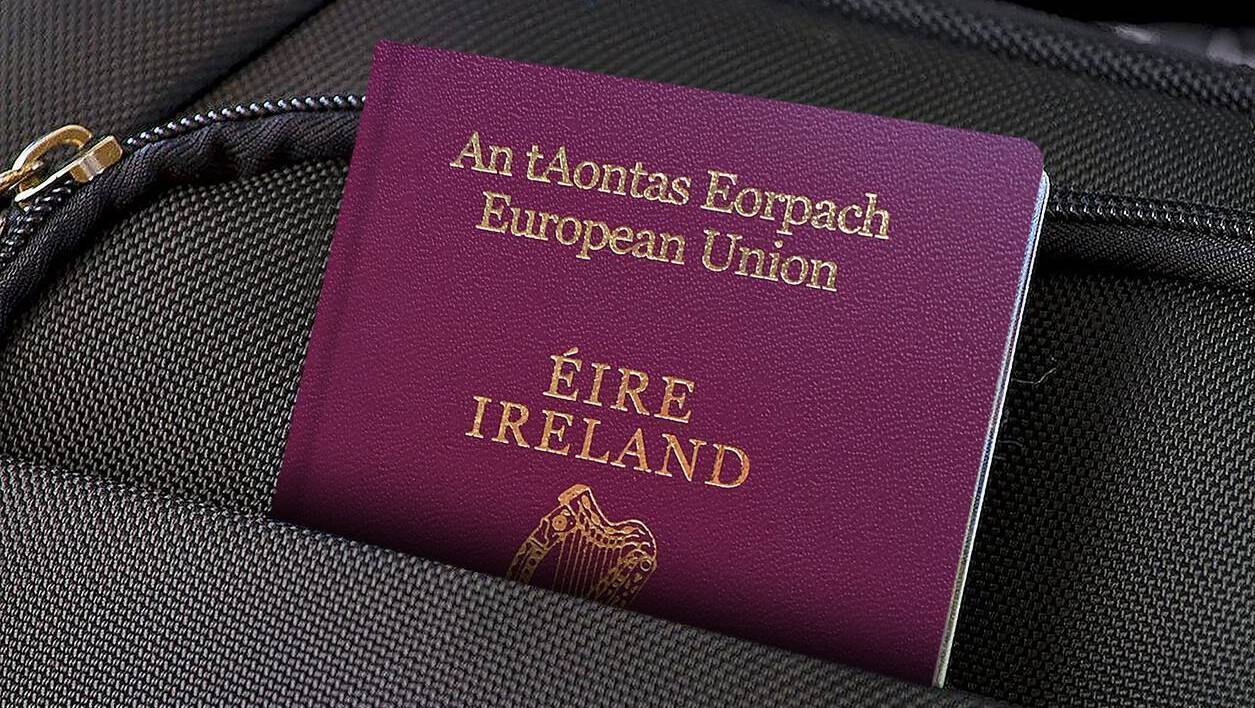
Guilherme Daniel Gomes writes that he is close to the fourth year of reckonable residence that the State itself told him he needed before he could apply to become an Irish citizen. iStock
On Wednesday, the justice minister asked Cabinet to approve priority drafting of the Irish Nationality and Citizenship (Amendment) Bill 2026.
As reported, it raises the residence requirement from five years to eight (two years continuous, six in the last 10), raises the spousal route from three years to five, adds language and civics testing, an income floor, and a two-year bar on social protection, and creates a new power to revoke citizenship on public order and national security grounds.
While Ireland is entitled to set the conditions of its own citizenship, if the Oireachtas wants eight years for people who arrive after this act commences, that should be proposed as a new deal, and every newcomer will know it in advance.
What I object to, without reservation, is applying the eight-year rule to people who are already counting under the five-year rule.
Nothing published so far says how the change will treat them. That silence is the problem, and it should be resolved not after months of anxiety for the many thousands of people midway through their five years.
Read More
Reckonable residence is not a fact of nature.
It is a statutory yardstick that the State designed, published, and invited people to accumulate.
However, a person who was told “five years” and who built a career, a mortgage, and a family around that premise is now to be told, four years in, that the finish line has moved three years down the road.
People who will suffer the consequences are those who did everything right: Entered legally, held employment permits, renewed on time, paid PAYE and USC, and never became a burden on anyone.
It should also be considered how the State has treated those who did not.
The 2022 Regularisation Scheme gave permission towards citizenship to thousands who had lived here illegally. Until December 2025, a person granted refugee status could apply after three years, counted from the day they arrived to claim asylum.
I do not question the entitlement of any of those people to their opportunity. What I question is the message the State is sending: The rules bend for those who never followed them, and tighten for those who did.
I therefore ask that the general scheme, and the bill, provide the following:
A saving clause: any person who holds any period of reckonable residence on the day the act commences continues to be assessed under the residence conditions in force on that day. Particularly, the eight-year requirement applies only to residence that begins on or after commencement.
The joint committee, in its pre-legislative scrutiny report, recommends these provisions explicitly and requires the department to publish how many people currently hold between one and five years of reckonable residence, so that the Oireachtas legislates with the numbers in front of it.
I thank you for your time and consideration.
I was horrified to see on television the recent gaudy gilding of the US White House Oval Office, now festooned with the trumpery of unbridled capitalism.
It seems to faithfully and flawlessly reflect the character of its present occupier. An architect friend of mine recently described this particular style as being postmodern bordello.
How embarrassing. Here we are in charge of the EU for six months yet we can’t provide our own security and defence.
We are forced to rely on the French and the British to patrol our waters and skies. Yet we have the temerity and audacity to wave the neutral flag in front of our international partners and allies.
Our Government sees fit to hand the job of defence to a minister with three portfolios who has no experience in the field of defence or security.
This shows anyone with a modicum of understanding that our Government, officials, and faceless bureaucrats, treat our security with a certain disdain, as if it doesn’t really rate as a priority.
In exposing our defence weaknesses, without properly investment it exposes us all to bad actors.
Those bad actors are at our gates, yet we do nothing.
Read More
Government after government have allowed our military to remain permanently weak and unable to defend our nation.
To spend 0.22% of GDP on defence is indefensible while our allies seek to spend up to 3% of GDP on their military defences.
We have listened for too long to the naysayers, and to those who would rather expose us to dangers, shouting neutrality, rather than beefing up and investing in proper military defences on sea, air, and on land.
As we discuss the triple lock, which the usual suspects want to maintain, even with a UN security council filled with bad actors, we are not the masters of our own destiny no matter what our Government says.
We are at the mercy of others, and no amount of neutral or sovereign flag waving will stop those who are intent on exposing our weaknesses.
Ireland’s reliance on its diplomatic nous can only get them so far, while relying on others to come to our aid.
We are seen by our international as leeches, while we act as scrooge, gathering vast sums for our exchequer, yet expect others to pick up the tab.
This constant reliance on others to come to our aid, while we wave the flag of neutrality, is blatant and unequivocal cowardice in the face of our enemies.
We should be ashamed of what is being constantly perpetuated in our name, but sadly those in power, and our naysayers, are not.
I didn’t envy the defence minister Helen McEntee having to admit, last week, to fellow EU defence and security colleagues that Ireland has “not spent as much or committed as much as we should have” on investment in defence.
Presuming the minister felt at least some unease if not embarrassment, especially when a UK warship and helicopter deployed off the coast of Co Wicklow for the security of their meeting is factored in.
She and hopefully some of her government colleagues might understand the frustration and chagrin of many of us ‘old soldiers’, who during a lifetime in the Defence Forces had, on a frequent basis, to cope with a ‘Cinderella complex’ while working, studying, and socialising alongside international military colleagues, including those from fellow neutral countries.
In that context, many would clearly recognise the patronising sting in Kaja Kallas’ remark that Ireland has ‘much better neighbours than some of the other European countries have’ and would also realise that the seemingly impressive 43% increase in defence spending as cited by Ms McEntee means, at most, a 0.03 percentage points increase on GDP spending, leaving us still the lowest in Europe — even less than Malta.

CONNECT WITH US TODAY



Be the first to know the latest news and updates