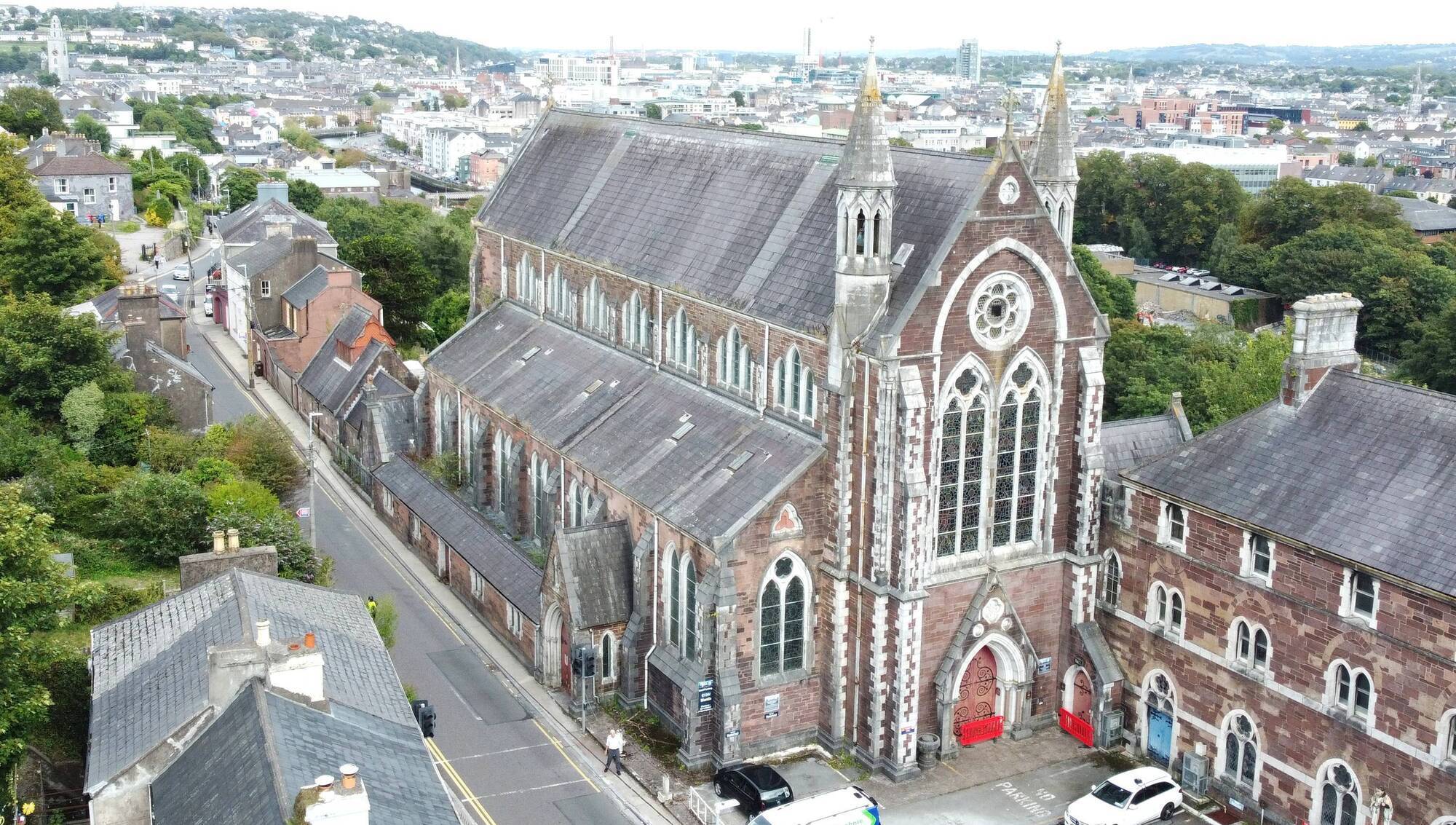
An unusual property is for sale in Cork, as reported here this week. St Vincent’s Church in Sunday’s Well, overlooking the North Mall, is on the market for €375,000 — as noted by Alan Healy in these pages, that is lower than the price of a three-bed semi in many parts the country.
There is a specific backstory to the St Vincent’s sale. It was put on sale, following its last mass 10 years, for €750,000, and the cut in price is reflective of the difficulty in disposing of the property.
However, taken in conjunction with the closure this past summer of another Cork church — St Augustine’s on Washington St — it begs an obvious question: With religious observance falling, what is to be done with such large structures dotted around the country, some of them no longer being used and others with few visitors?
As noted here during the week, such churches are often at the physical centre of communities, which is hardly surprising given how central religious faith was in Irish life for centuries. However, the decline in church attendance means many of those communities are left with large structures at their hearts which are barely being used, as opposed to being the very hub of those communities in times past.
Given the disquieting growth in dereliction in many of those same communities, there must now be a concern that some of those churches may now fall into disrepair through disuse. A clear solution may be at hand, however.
The accommodation crisis in all its manifestations continues to bedevil us as a society, its malign influence visible everywhere. Buying and repurposing former churches to address that crisis seems a logical step.
Doing so would offer shelter and refuge to the most vulnerable people in our society. The religious orders seeking to dispose of those churches must surely see how appropriate such a change of use would be.
Gloria Steinem's work the definition of commitment
It would be difficult to overstate the significance of Gloria Steinem’s long life as a feminist, activist, organiser, and writer. From the early ’60s she had a central role in the movement which came to be known as women’s liberation, and as the years wore on often seemed to one of that movement’s most visible representatives.
Instantly recognisable with her trademark sunglasses and long straight hair, her calm persuasiveness on countless television talk shows made her synonymous with women’s fight for equality in a staggeringly sexist era.
For instance, when she and others came together in 1971 to co-found Ms, it was the first magazine owned and run by women. At the time, some observers predicted it would sell fewer than 20,000 copies but the first issue sold 300,000 copies, sold out completely in eight days, and pulled in tens of thousands of subscriptions.
That same year she also helped to found the National Women’s Political Caucus, which encouraged women to run for political office in the US and continues to influence politics there.
Such initiatives proved inspirational to those in other jurisdictions also, and Ms Steinem was a tireless traveller to countries where she motivated other women to organise and advocate for their rights.
She maintained her commitment to those causes all her life, and remained clear-eyed about the meaning of commitment. Ten years ago, she came to the West Cork Literary Festival in Bantry and gave Marjorie Brennan of this parish a keen analysis of “activism” on social media: “We need to remember that pressing ‘send’ is not actually doing anything ... I get some startling information about a problem, I send it to the relevant people, and I feel I’ve done something. But I haven’t.”
She did her share. Rest in peace.
Katie Taylor is one of a kind
In the week that feminist icon Gloria Steinem died, it seems appropriate that a female athlete is filling Ireland’s biggest stadium as the crowing glory to a storied career.
There is an extensive under-card of fights scheduled for this evening in Croke Park, but with all due respect to those fighters, this is an occasion when the main event is truly worthy of the name. The 80,000 fans trooping into the stadium from Jones’s Rd may take in the earlier bouts, but the reality is they are there to see Katie Taylor.
It is appropriate that the boxer’s farewell bout comes in Dublin, and in the only venue in the country big enough to give her the send-off she deserves.
The markers of a national event are all in place. Tonight’s fight is not hidden behind a pay-per-view barrier, for instance, but is available free to air on RTÉ. In Taylor’s home town of Bray, the local Lidl store has been renamed — it is now The Katie Taylor Lidl Store, complete with a plaque and a large mural celebrating her career and achievements.
Since the very start of her career she has been a trailblazer, winning Olympic gold before embarking on a wildly successful professional career.
When she climbs into the ring this evening for her World Super Lightweight bout with Flora Pili she will be making history once again — it is the first professional boxing event at Croke Park since Muhammad Ali fought Al “Blue” Lewis there in July 1972. That is the company she is in, and the company she deserves to be in.
CONNECT WITH US TODAY
Be the first to know the latest news and updates