Irish Examiner view: Time for US Democrats to plan
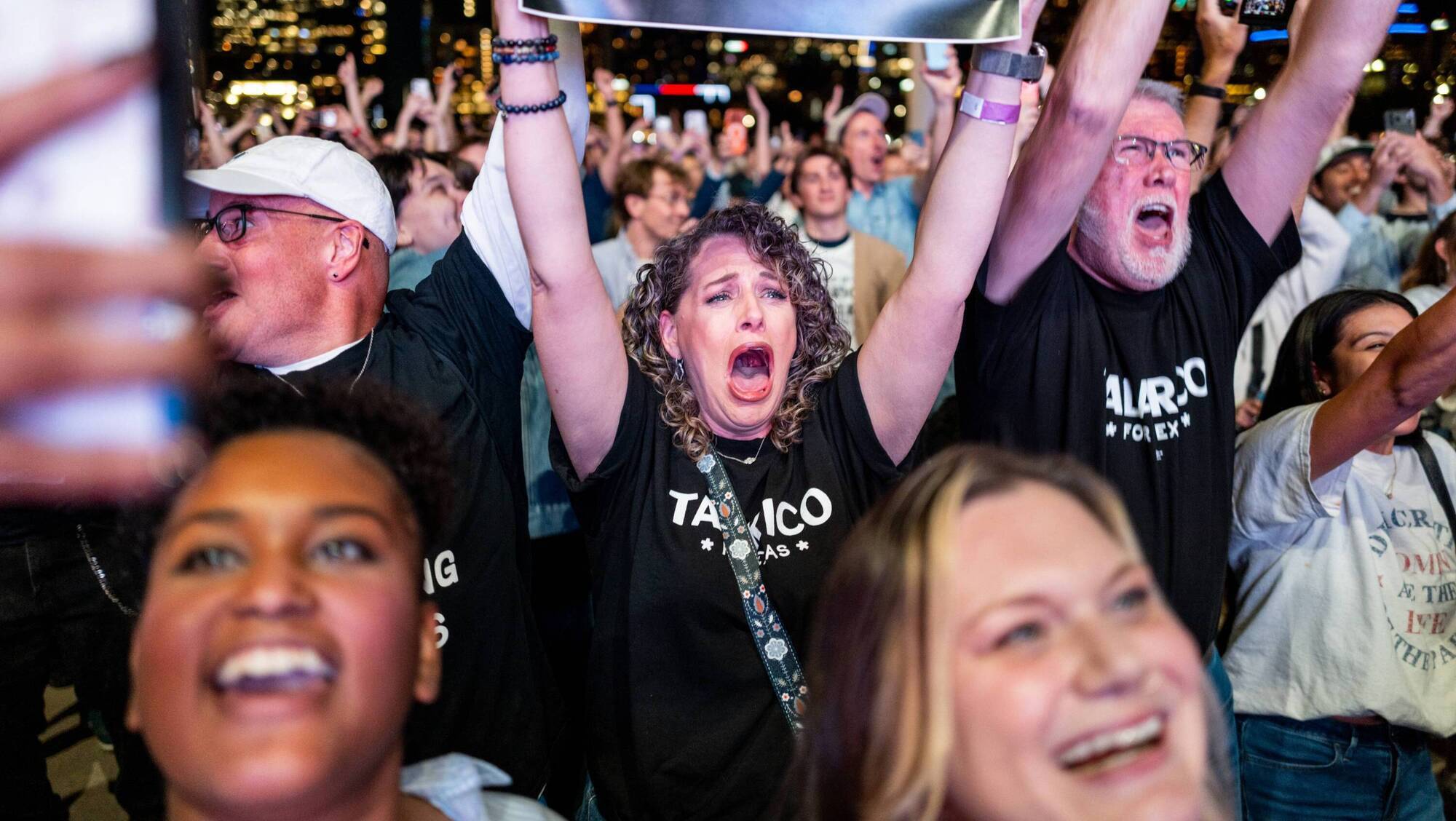
Supporters of Texas Democratic Senate candidate James Talarico at in Austin, Texas. Picture: Brandon Bell/Getty Images
The results of the US midterm elections have come in, and it is impossible to consider them anything other than a scathing repudiation of the policies of president Donald Trump.
His Republican party has lost the US Senate and House of Representatives due to some very surprising results across the country.
For instance, Texas returned its first Democratic senator in almost 40 years thanks to the victory of James Talarico, who overcame savage personal attacks by US vice president JD Vance and others.
Several other states long associated with the Republicans also opted for Democrats, giving the latter party the whip hand in Congress.
In retrospect, the troubles caused by Mr Trump’s war with Iran, and rising fuel prices in particular, appear to have swayed many voters, thus proving the durability of the old adage about voter preoccupation at the ballots: It’s the economy, stupid.
The Democrats, flush with victory, may now be inclined to seek retribution for Mr Trump’s vicious policies, which range from gutting aid programmes to heartless deportations.
Holding the people willing to implement those policies to account is surely tempting, and some American media outlets are already reporting that Trump aides are seeking legal representation ahead of expected indictments.
However, the Democratic party would be mistaken to focus on vengeance as opposed to mapping out a clear alternative to the Trump worldview.
For instance, Democrats would be better advised now to focus on legislating for greater safeguards when it comes to the development of artificial intelligence.
The power wielded by the Democrats in both Houses of Congress may make Mr Trump’s remaining two years in office unhappy ones, given the party’s ability to stymie his plans and investigate his actions, but it also presents hidden challenges.
Democrats will be keen to select a strong candidate for the presidential elections in 2028, but any such candidate will wish to avoid the fate of many Republicans last weekend — losing elections as a result of economic challenges.
Hence the importance of the party’s agenda in the coming months and years.
In recent years, one particular topic has been aired, teased out, debated, and then revived on an ongoing basis — how safe are our city centres, and Dublin in particular?
As recently as last June, justice minister Jim O’Callaghan observed of a late-night stabbing in the capital: “I think we need to reflect upon the fact that it is not representative in general.
"Dublin is a very safe place, and I want to see more people coming into Dublin.”
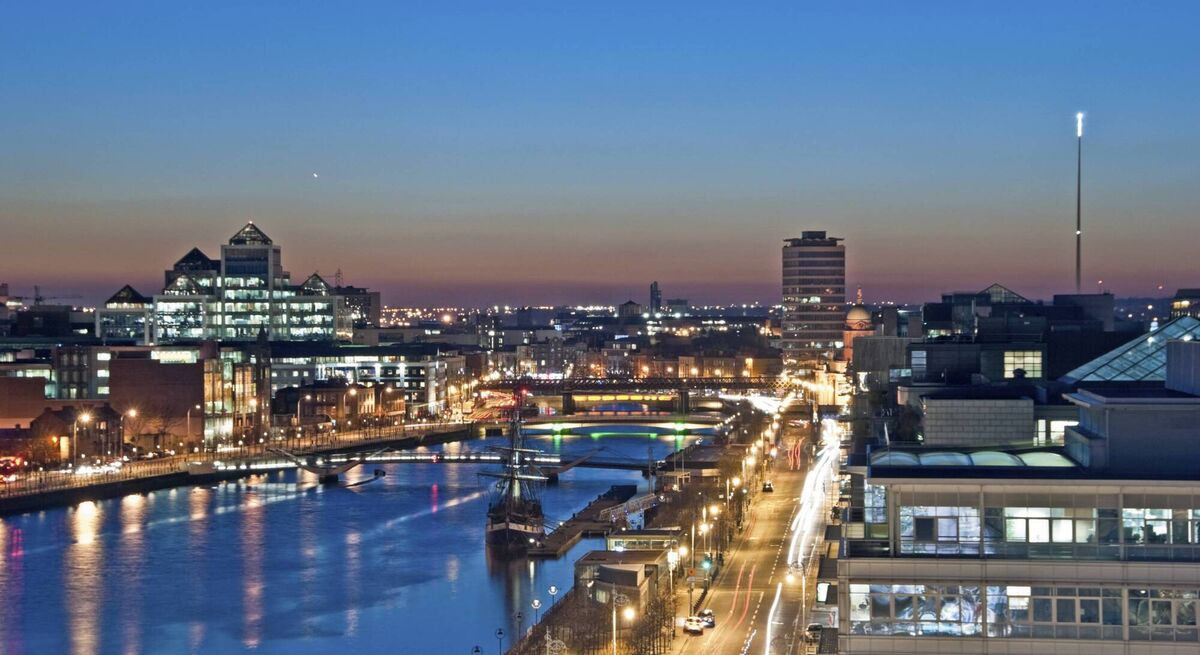
His comments should be considered in the context of news this week that plans are in place to have private security operatives patrol Dublin city centre.
The plans emerged after discussions between the Dublin City Development Company, headed by former Department of Health secretary general Robert Watt, and business representatives: A tender is being drafted to contract a security firm to provide operatives who will complement gardaí.
The plan has already drawn fire from Dublin city councillors, who say they have not been consulted about it, with one asking if the new operatives would be “Dublin’s version of ICE”, referring to the controversial US immigration and customs enforcement body.
On the face of it, this seems an extraordinary scheme.
Policing the streets is the proper function of An Garda Síochána, and the deployment of private security workers in such policing seems fraught with legal issues.
The fact that councillors appear to have been bypassed in the consultation process is also troubling.
It undermines local democracy and removes accountability — an urgent requirement when it comes to any form of policing.
A separate police force such as this also undercuts the assurances of the justice minister about Dublin’s safety.
A truly safe city would hardly need private security operatives in addition to the official police.
This news also suggests that we now have two-tier policing in this country, with additional private resources in Dublin city centre to go along with the Garda presence there.
For that reason alone, this should not go ahead.
One of the new markers of the Christmas period is the John Lewis seasonal TV advertisement, which has become an annual event all of its own.
This week the 2026 version was unveiled, featuring actress Kristin Scott Thomas playing a grandmother who struggles to find presents for her grandchildren before going to the John Lewis store.
She then decorates a room in her house to the children’s delight.
The advert has had a mixed response since it appeared — this is in sharp contrast to previous years, when the John Lewis organisation was showered with praise for touching commercials which got viewers in the Christmas spirit.

Obviously this is entirely subjective.
One viewer may be left cold by this year’s advert, while it might move another to tears.
It may be worth stating that after the recent Dublin Rape Crisis Centre ad, which mangled a valuable lesson on consent through casual ageism, the John Lewis advert is hardly flattering about older people: Kristin Scott Thomas’s grandmother appears to be entirely clueless about what to get her own grandchildren for Christmas.
There is clearly little enough at issue outside of one’s personal preferences when it comes to such sentimental advertising.
It should be acknowledged that there is one clear winner here — John Lewis itself, given the amount of extra publicity generated by discussion of its advert.

CONNECT WITH US TODAY



Be the first to know the latest news and updates