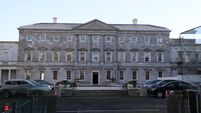
Our report on Monday on apparent gaps in our security preparedness for the EU presidency makes for worrying reading.
Ireland takes over the EU presidency in just four months, a responsibility which will include hosting the largest political summit ever seen in this country, as well as an on-going programme of events featuring political leaders and dignitaries.
This will take place against a background of heightened tensions between the EU and Russia, and intelligence agency warnings that Russia is increasing its hybrid attacks — disruptive and hostile activity, short of actual war, which include drone incursions, cyberattacks, and sabotage.
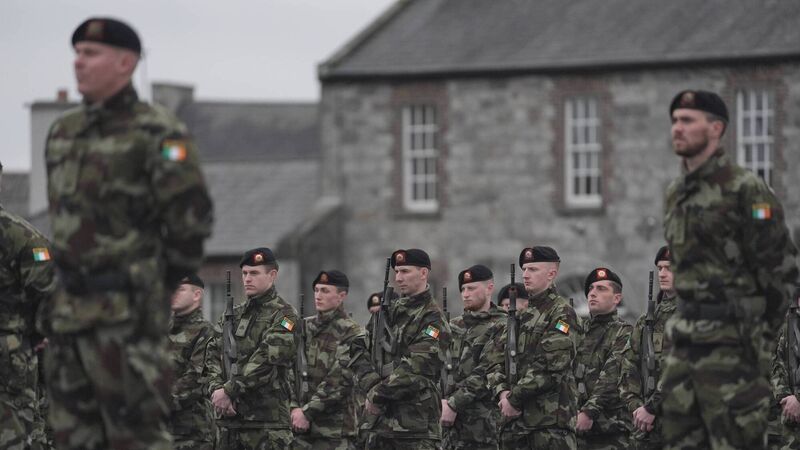
Yet, despite the Government’s awareness of the threat, repeated delays in acting on key recommendations of the Commission on the Defence Forces (CODF) mean that we will be without the envisaged security structures and the military counter-drone technology that would equip us to deal with the threat. This is causing alarm among security experts.
It is four years this month since the commission issued its report, a roadmap for transforming the Defence Forces and equipping it with capability to meet current and anticipated security challenges. In November 2023, the government published an implementation plan, outlining how it would deal with the 130 recommendations. But certain important elements of the plan seem to be disappearing further into the future.
One recommendation, particularly relevant at this time, was that military counter-drone technology be in place by the third quarter of 2025. That target was missed and, despite repeated assurances from the Government that the technology would be in place by this July, it now appears that it will be September, halfway through the EU presidency, before our Defence Forces have that technology available to them — even then, it will still have to be tested and personnel trained.
The development of civil-military hybrid structures, taking in the Defence Forces, gardaĂ, other agencies, and government departments, that would be capable of a co-ordinated, structured and planned response to hybrid threats is another recommendation that has been delayed, with the latest evaluation of the concept not due to be completed until later this year. Former TD and ex-army ranger wing officer Cathal Berry says money is the reason for delays.
While other European countries have consistently spent almost 2% of their GDP on defence, and most are now moving towards 3.5%, Ireland spends only 0.2%.
If Berry is correct, and money — or lack of it when it comes to security — is the issue, it is time that we thought seriously about how we are to defend ourselves and our critical infrastructure. Defence spending is a somewhat sensitive issue in this country, tied up as it is with our neutrality and our vision of ourselves as being militarily non-threatening to any other country.
However, the real and immediate risk to our security has little to do with conventional war, and everything to do with the disruptive and potentially catastrophic consequences of drone attacks on our airports, cyberattacks on State services and private businesses, or sabotage on key infrastructure. We need to make big decisions on what we are willing to spend to protect ourselves.
Tough times for students
News that the Government is to ask third-level institutions to consider cutting the number of days students need to be on campus will be welcomed by many. The proposal, reported in these pages yesterday, is designed to reduce the number of days students have to commute to college, a considerable burden for thousands of students facing long hours on the bus or train every day.
 A "more efficient" schedule would allow students fit more lectures into a day, leaving them free to work from home on the other days.
Sensible as it may be in terms of grappling with the challenges facing today’s college students, the proposal also acknowledges the passing of the traditional, slower-paced, more carefree student life known to previous generations. While there is no doubt an element of cliche about it, up until quite recently the term "student days" called to mind lost afternoons in earnest conversation, cultural, and sports societies joined just to meet people and try something new, and the odd lecture which took up a modest fraction of one’s time.
There was time to test ideas, make friends, learn about oneself and mature. Today’s reality is altogether harsher
Where accommodation — away from home — can be obtained, it is punitively expensive. More students have to work, many in full time jobs, to pay their way: A necessity that not only curtails their involvement in student activities, but also impinges on their studies. Those who remain in the family home, not out of choice but because they cannot afford to move out, often face commutes of three or more hours.
The new government strategy seeks to produce an additional 42,000 student beds in the next decade. If it works, and brings down the cost of accommodation, perhaps it will afford the next generation a taste of what student life was like in less-frenetic times.
Jessie Buckley:Â Long may success last
Jessie Buckley’s latest success, winning a Bafta for best leading actress in a film, provided a welcome lift in national spirits this week. Her talent, as evidenced in her performance as William Shakespeare’s wife, Agnes, in Hamnet is getting the international recognition it deserves. The latest accolade follows a Golden Globe award, an Oscar nomination and an Ifta last week.
What is particularly uplifting about the Irish actress’s successes is witnessing the sheer happiness, generosity, and humility she exudes: Here is a star who radiates pure joy and fulfilment in her work. Compared with the tortured, self-important persona adopted by so many celebrities, Buckley’s enthusiasm for her job and her life is a tonic.
“I love what I do, and I love being part of this industry,” she declared after winning an award last month.
Her acknowledgement of her debt to fellow cast members, the crew working on her films, and all who have helped her along the way is also noteworthy — her Golden Globe speech was probably the first at which a crew member who made a hearty soup for all those working on the film was publicly acknowledged and thanked from the stage.
The actress’s success has not come out of the blue; behind it is an innate talent and decades of hard work and seized opportunities to hone her craft. She was still a teenager when she took part in the BBC talent show, I’d Do Anything, and in the same year, appeared in a West End show. She studied at the Royal Academy of Dramatic Arts, and quickly went on to win roles in several BBC television series. Buckley made her film debut in 2017 and, the following year, earned a Bafta nomination for her role in the film Wild Rose.
Long may her success, and her enjoyment of it, continue.
CONNECT WITH US TODAY
Be the first to know the latest news and updates