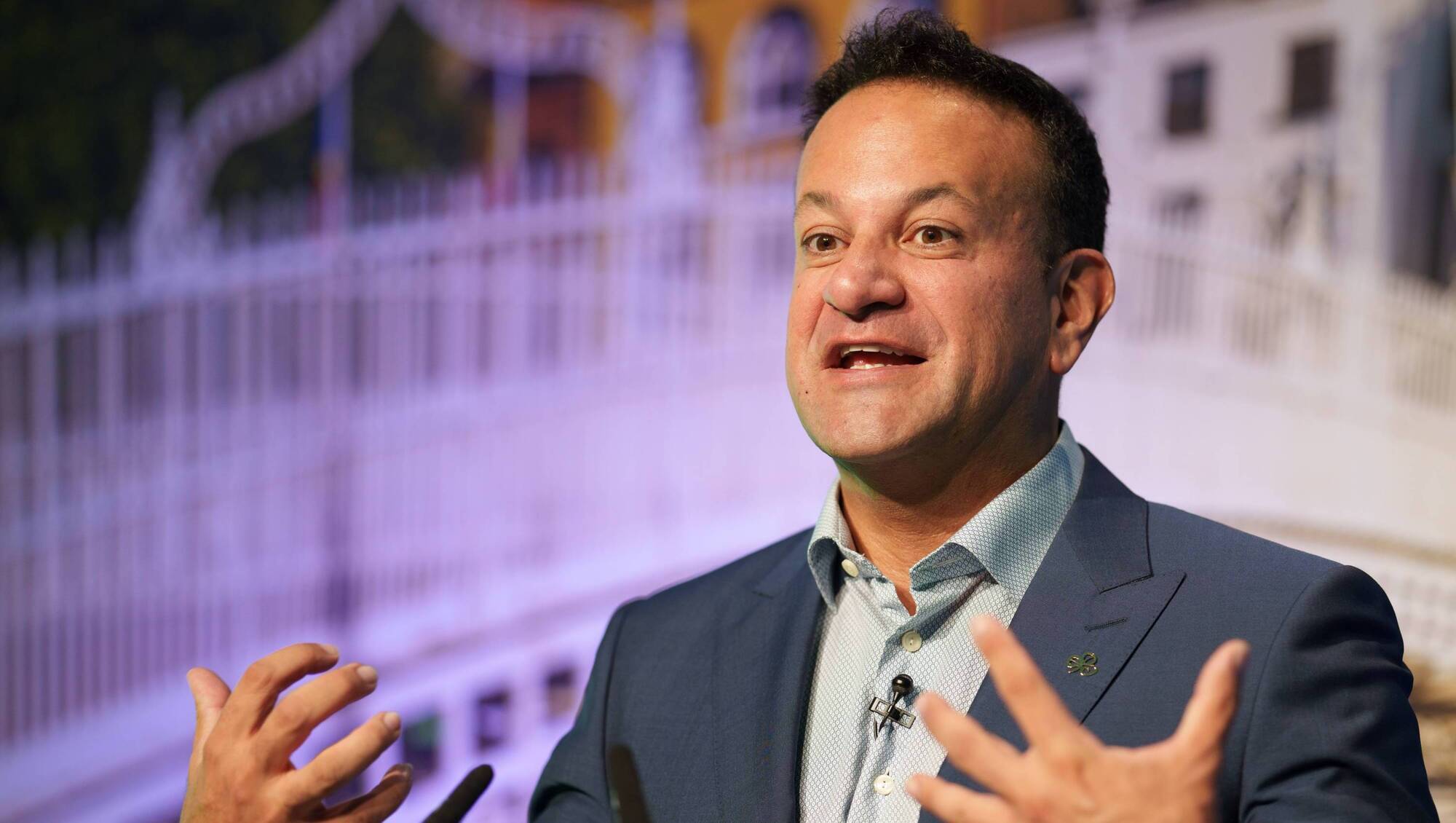
Quite how Leo Varadkar has reacted to the mixed reviews of his new political memoir, Speaking My Mind, we will probably find out in due course.
Our former taoiseach has never been backward in coming forward.
“Jaunty, but superficial and lazy at times,” was the verdict of Diarmaid Ferriter, a professor of modern Irish history at University College Dublin, a verdict that some of his critics might say applies to Mr Varadkar on occasions as much as to his writing.
England’s Daily Telegraph, which views everything through the Brexit prism, was unflattering in its two-star judgement: “Self-obsessed, bitter, evasive — was Leo Varadkar just an Irish Boris Johnson?”
Speaking My Mind sets out the main events of the Irish political landscape in a transformative era between 2010 and 2025, and provides some insight into how the gay son of an Indian immigrant rose to lead his country.
It’s reasonable that Mr Varadkar would want to provide his version of events that shaped the nation, and he touches upon many of them: The inept “heave” against Enda Kenny; his backing for the garda whistleblower Maurice McCabe; his experience of Boris Johnson (he found him “odd”) and Nigel Farage (“surprisingly good company”); his controversial leaking of a proposed new deal over fees to the National Association of General Practitioners in 2019.
There is an irony, given the snail’s pace at which the national inquiry into our management of the covid pandemic is proceeding (last information online posted in July), that Varadkar is the latest prominent figure to give his six cents’ worth on the biggest peace-time crisis since the Second World War.
With covid’s onset, Varadkar says he was “wielding power as never before” but so, he points out, was the chief medical officer, Tony Holohan, who he describes as “intelligent, refined, and quite arrogant”.
He accuses him of “over-reach” while complaining that Nphet, the National Public Health Emergency Team, was “even leakier than the Dáil”.
He remains critical of inconsistencies regarding pandemic restrictions and “pessimism bias” and “poor modelling”.
He even finds time to settle some scores over Golfgate — a sub-plot of covid restrictions — and with former Fine Gael minister, parliamentary colleague, and European commissioner Phil Hogan.
Golfgate was a controversial dinner attended by well-known names and faces amid lockdown restrictions, over which Hogan lost his position in Europe. He believes the taoiseach could have stood firm, and there remains animus between the two of them.
Whatever with that little local difficulty, both of the principals “wielding power as never before” have now had the chance to provide their account of events during the coronavirus shutdown without the public having its say — or being given an opportunity to challenge.
Holohan wrote his book first, and now Varadkar has provided a section within his own story. There has been no interrogation and no attempt to establish an objective narrative.
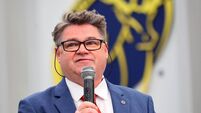
In his book launch at the National Library of Ireland, Varadkar made it clear that this is his account of momentous times and that it should be regarded as a contribution to history.
And there is nothing wrong with that. Politicians of every colour and mien like to provide their version for posterity.
However, nearly four years since restrictions were stepped down, citizens deserve something more than partial accounts emerging sporadically.
In search of a lost chord
There seems to be something strangely discordant about the decision of An Post to exclude Brian McFadden from its stamp marking 25 years of Westlife.
McFadden, now aged 45, was a prominent member of the Sligo/Dublin group when it became famous in the 1990s. Before he left in 2004, it had topped the charts around the world and sold millions of discs. Their first Greatest Hits compilation, Unbreakable, was released the year before. The An Post stamp features Nicky Byrne, Kian Egan, Mark Feehily, and Shane Filan — four of the original five members.
There are also individual stamps of these four performers, but not McFadden.
Whatever you think of Westlife, they have made a successful contribution to Ireland’s reputation and cultural capital.
Launching a commemorative cover without 20% of the line-up would be a little like promoting, to use one of their contemporary commercial rivals, the Spice Girls without Geri Halliwell. Or, to bring it right home, Boyzone without Ronan Keating.
An Post’s justifications sound a little thin, as they did in trying to explain why a stamp marking the birth of Daniel O’Connell 250 years ago included a building which appeared to carry a TV aerial.
Mandelson scandal throws spotlight on McSweeney
here were unlikely to have been many idle moments yesterday when Taoiseach Micheál Martin visited Chequers, the country residence of British prime minister Keir Starmer, for one of their regular confabs.
On the agenda was a review of Northern Ireland and, if conversation palled at any stage, they might have reflected that the Good Friday Agreement represented one of the brighter spots in the career of the now not-so-dearly-departed Peter Mandelson.
It was Mandelson who took over from the pivotal figure of Mo Mowlam at the behest of Tony Blair when discussions between Protestants and Catholics were logjammed.
He helped finesse a way through to implementation of the Good Friday Agreement alongside former US senator George Mitchell.
Both men featured in the notorious 2003 scrapbook of 50th birthday greetings to the disgraced financier and sex offender Jeffrey Epstein.
The handwritten contributions of Mitchell, now 92, were more measured than the toe-curling declarations of amity from a political figure who was once known as the “Prince of Darkness”.
Mandelson — a member of the House of Lords and grandson of Herbert Morrison, a founding father of the modern Labour Party — has been forced out of office a few days before Donald Trump’s state visit and just seven months after he was appointed, despite the misgivings of many, as the British ambassador to the US.
It is the third time a major controversy has lost him a top job. In 1998, he resigned as trade secretary when it emerged that he had been loaned ÂŁ373,000 by a cabinet colleague without declaring it.
His 14-month stint as Northern Ireland secretary ended in 2001, when it was revealed he had used his influence to broker a British passport for a ÂŁ1m donor to the Millennium Dome project.
A colleague emolliently compared him on the BBC to an “Icarus-type figure” who “proved... extremely effective in a number of jobs but, at times, he’s flown too close to the sun.”
To extend a verdict from Oscar Wilde’s Lady Bracknell, this is not a matter of misfortune or carelessness but of someone who lacks the judgement gene.
Mandelson, who served for four years as a European commissioner for trade, will no doubt find somewhere else for his special talents to thrive. What is more intriguing is what happens next, and in particular to the Cork man at the heart of the British government.
By any metric, Labour has had a rotten time in power since what is increasingly represented as the “loveless landslide” of July 2024.
After the rows about “freebies”; the winter fuel furore; floppiness over cuts to an unsupportable welfare bill; and a forthcoming budget which is viewed with general trepidation, the most damaging episodes have occurred when personal misbehaviour has elided with the most frequently stated electoral promise — to eradicate suspicion of sleaze or impropriety.
Louise Haigh, Tulip Siddiq, Rushanara Ali, Angela Rayner, and now Mandelson have departed for greater or lesser scandals and misjudgements.
Under such circumstances, attention swings to the circle of special advisors who can surround modern prime ministers. Keir Starmer lost one chief of staff, Sue Gray, four months into his Downing St tenure, and critics are now casting baleful looks towards the incumbent, Morgan McSweeney.
McSweeney, 48, from Macroom, is credited with being the tactical brain behind Labour’s sweeping triumph last year. He is variously described as a protégé of Peter Mandelson and as the person who pressed for his appointment. Critics are circling.
Westminster is familiar with the sight of special advisers cast to one side when their powers to firewall premiers from obloquy start to fail.
Alastair Campbell and Dominic Cummings had their moment in the sun. Morgan McSweeny is no less important to the immediate future of Keir Starmer’s premiership.
CONNECT WITH US TODAY
Be the first to know the latest news and updates