Irish Examiner view: AI will test reliance on Irish model

Social media giant Meta on Wednesday cut up to 350 jobs. Picture: Brian Lawless/PA Wire
Meta’s decision to place around 350 Irish-based jobs at risk is another warning flare for an economy that has become deeply reliant on the fortunes of a few US tech giants.
Ireland still enjoys something close to full employment, public finances remain strong, and the wider economy is in considerably better shape than during previous downturns.
However, it would be unwise to dismiss the latest cuts as merely another cyclical tremor in the technology sector.
For years, Ireland has benefitted enormously from attracting multinational investment.
The rewards are obvious: High-paying jobs, strong tax receipts, and the development of a modern, internationally connected economy.
Yet decisions taken in California boardrooms can have immediate consequences for workers in Dublin, Cork, or Galway.
Concerns are growing within the Government about further retrenchment across the tech sector as companies reorganise around AI.
This is what makes the current moment different from previous tech slowdowns.
In the past, layoffs were often tied to weaker demand or broader economic shocks.
This time, many companies are simultaneously investing heavily in AI while reducing headcount.
Still, perspective matters. Ireland is not facing an employment crisis.
Many workers leaving large tech firms possess highly transferable skills.
Experienced software engineers, compliance specialists, sales staff, and data analysts are unlikely to remain unemployed for long.
Indeed, Ireland’s long-standing success in attracting investment was built partly on the adaptability and education of its workforce.
Nor should every technology restructuring be interpreted as evidence that multinational investment is suddenly abandoning Ireland.
The country retains major advantages: Access to the European market, an English-speaking workforce, regulatory expertise, and an established ecosystem for global firms.
However, there are legitimate reasons for concern.
The State has become heavily tethered to a narrow concentration of corporate tax receipts and employment linked to foreign multinationals.
That concentration risk has long been acknowledged in theory. AI may now test it in practice.
The challenge for policymakers is to avoid both complacency and panic.
Alarmism would be counterproductive, but assuming that displaced workers will automatically transition smoothly into equivalent roles may also prove optimistic.
Some jobs will evolve. Others may disappear faster than replacements emerge.
Ireland has navigated major economic shifts before and can do so again, but the Meta layoffs are a reminder that, even during periods of apparent prosperity, economies built around globally mobile industries remain exposed to sudden change.
The era of easy assumptions about endless tech jobs may be coming to an end.
The disturbing footage surrounding the detention and humiliation of the Global Sumud Flotilla activists by Israeli authorities feels especially personal and resonant.
Ireland’s sympathy for the Palestinian cause has long been rooted not simply in geopolitics but in a national memory shaped by colonialism, displacement, and the experience of power exercised without accountability.

The outrage directed at Israeli security minister Itamar Ben-Gvir was immediate and unsurprising.
However, there is a broader and more uncomfortable point.
Ben-Gvir can no longer be dismissed as merely the unacceptable face of Israeli politics.
He is a senior minister in government, part of a political culture that has steadily shifted towards hardline nationalism, open hostility to international criticism, and an increasingly brutal rhetoric around Gaza and Palestinians.
For years, Israel’s allies argued that figures such as Ben-Gvir did not represent the country as a whole.
That distinction has become harder to sustain.
Policies and language once associated with the extremist margins have increasingly entered the mainstream of Israeli political life.
Dublin’s criticisms of Israeli policy have frequently drawn accusations of bias or exceptionalism.
Events of recent years — and particularly the conduct and rhetoric of senior Israeli ministers — have increasingly vindicated those concerns.
With fresh elections potentially looming, Israel faces a defining question: Will voters recoil from this more aggressive and uncompromising version of the state or endorse it once again?
Many Israelis remain deeply opposed to the current direction of travel.
If figures such as Ben-Gvir continue to thrive politically, the international community may have to confront an unsettling reality that this might no longer be a temporary deviation in Israeli politics but a reflection of where significant parts of Israeli society stand.
Pep Guardiola leaves English football as both a genius and a contradiction.
His Manchester City sides could suffocate opponents with possession, press with mechanical precision, and turn football into something approaching performance art.
However, Guardiola’s brilliance was always shadowed by the uncomfortable reality of the project he represented.
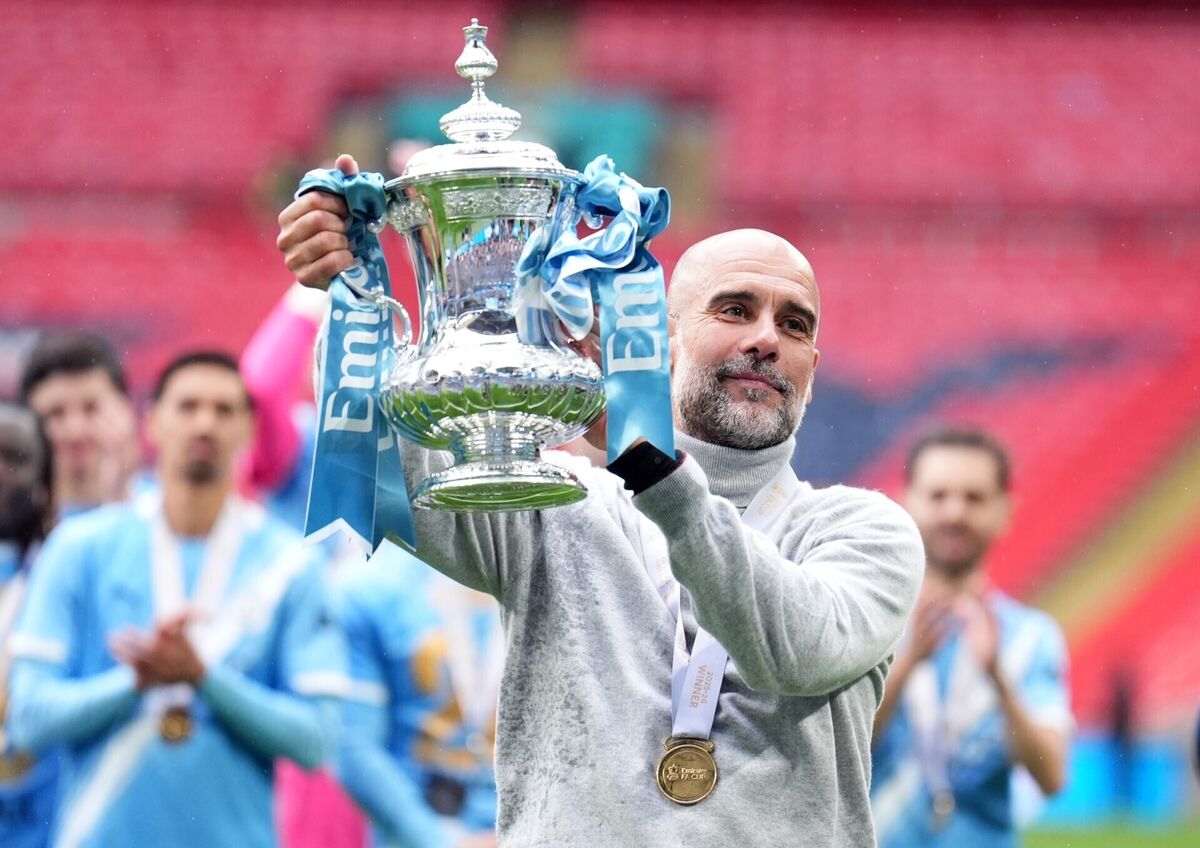
Manchester City’s rise was bankrolled by Abu Dhabi wealth and accompanied by accusations of sportswashing that Guardiola himself could never entirely escape.
That tension defined the Guardiola era: Beauty built atop vast state-backed power.
He often spoke about football romantically, almost spiritually, while operating inside one of the most politically controversial ownership models in world sport.
Still, even critics must acknowledge the scale of his influence.
Guardiola changed how football is played from schoolboy academies to Champions League finals.
Admittedly, he also ruined many an honest goalkeeper’s career by insisting they play five-yard passes across their own six-yard box like Franz Beckenbauer in gloves.
For better and worse, football will not look the same without him.
CONNECT WITH US TODAY



Be the first to know the latest news and updates