Irish Examiner view: Race to the Áras yet to grab interest
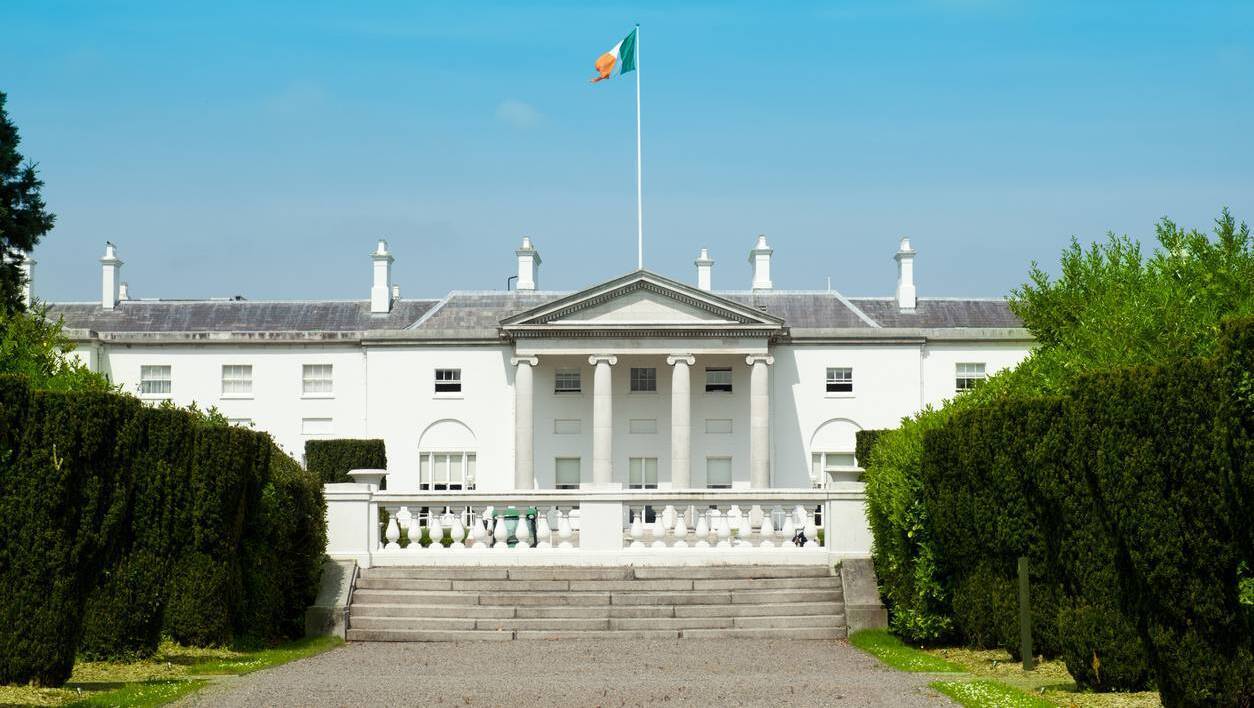
Following McGuinness’s standing down, Fine Gael has got its collective knickers in a twist over who should run for President, instead with a national executive committee meeting last night trying to decide the best way forward.
It is a sad state of affairs that the forthcoming presidential election here in Ireland appears not alone to have lost any appeal it may previously have had to the voting public, but also to many of those who initially considered running for the office.
In the last such election here, in 2018, the total of the electorate was 3.4m potential voters. Yet, the contest attracted a turnout of just 1.4m, or 43.9%, which by any standards was a pretty paltry figure.
This year’s election, which will probably take place in October, has attracted a wild slew of potential candidates — including such as disgraced MMA fighter Conor McGregor and dance legend Michael Flatley — but has been more notable for those figures who have already ruled themselves out.
The original Fine Gael candidate, MEP Mairead McGuinness, stood down for health reasons while, last weekend, former chief medical officer Tony Holohan announced he would not seek a nomination because he wanted to protect his family from the “personal abuse” of a campaign.
It is telling that a person such as Dr Holohan, who is no stranger to the limelight, has weighed matters and decided that going for election might only place himself and his family in the crosshairs of those for whom the race for the Áras is a chance to sow malicious discontent.
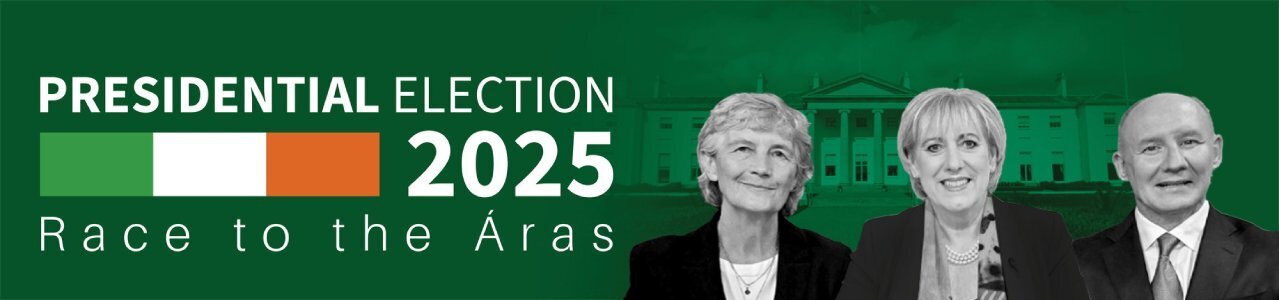
Recent presidential elections have thrown up an inordinate amount of the bilious backstabbing and bile rarely seen here in general, local, or European elections, and quite why this has become a characteristic of the contest is something of a mystery.
It is lamentable that some of our major political parties — notably Fianna Fáil and Sinn Fein — have, a matter of weeks before the expected date for the election, yet to announce any candidate. One might be fishing around for some sort of celebrity candidate, while the other is weighing up the potential for success for someone within its own parliamentary ranks.
Following McGuinness’s standing down, Fine Gael has got its collective knickers in a twist over who should run, instead with a national executive committee meeting last night trying to decide the best way forward.
All in all, we can expect the forthcoming campaign to be an unedifying prospect which will do nothing to burnish the reputation of what is, after all, the highest office in the State.
The imposition of any sort of wealth taxes on the monied and privileged is something that is causing much angst across Europe right now, as chancellors and finance ministers look to repair public finances drained by successive global shocks.
Debate on a wealth tax has long been ongoing here, but finding the best ways of implementing it without creating disaffection and causing the wealthy to flee elsewhere is troublesome.
So too in England, where members of the ruling Labour party are pressing for a 2% annual levy on those with assets over £10m (€11.58m), which they say could raise some £24bn. But there is no guarantee the chancellor of the exchequer, Rachel Reeves, will adopt the measure in the next budget.
In France, a similar proposal — this time aimed at those with assets of more than €100m — was approved in the lower house but rejected in the senate.
Spain, one of only three European countries to apply a wealth tax, has a system the Irish exchequer might be interested in. It has a "solidarity" tax on large fortunes which was introduced in 2022 — raising €1.88bn in 2023 and over €2bn last year.
It is a tax aimed at achieving equitable distribution of wealth and prevents a large concentration of wealth among very few. It is worth looking at in an Irish context.
It is just over a year since 1,400 Bangladeshi students died in a brutal crackdown following a mass uprising against the 15-year rule of Sheikh Hasina.
Their lives were not given in vain as their protests succeeded in toppling Hasina, forcing her to flee to India. But she left behind a country on the brink of anarchy, if suffused with hope for the future. The martyred students had wanted to rebuild their country as a more equitable democracy after the corruption-riven state presided over by the authoritarian Hasina regime.
To this end, the protesters helped install Muhammad Yunus, a Nobel Peace Prize economist, at the head of an interim government tasked with creating stability out of chaos.
Theirs was — and still is — an endeavour established with the best possible motives, but the time it has taken to achieve a permanence for governance and to root out endemic corruption has caused widespread frustration and unease.
Many ordinary Bangladeshis are angry and exasperated at the slow pace of change and left wondering if, indeed, the dead students did give their lives up for no good reason.
Aside from fighting corruption, the new administration is battling on many fronts to try and cope with a paucity of jobs, rampant inflation, and an entrenched bureaucracy.
The student body behind the overthrow of the regime wanted democratic reforms to kick in swiftly, while also demanding speedy punishment for Hasina and her allies, including members of her party and police officials, who stand accused of perpetrating attacks on protesters.
For Yunus and his government, progress on holding free and fair elections has been slow and the high hopes of the populace is turning to defeatism. Although bolstered by moral righteousness, the new administration is finding the going tough and must try and stay the course, if the lives of those lost are to be vindicated.

CONNECT WITH US TODAY



Be the first to know the latest news and updates