Irish Examiner view: State must take climate seriously
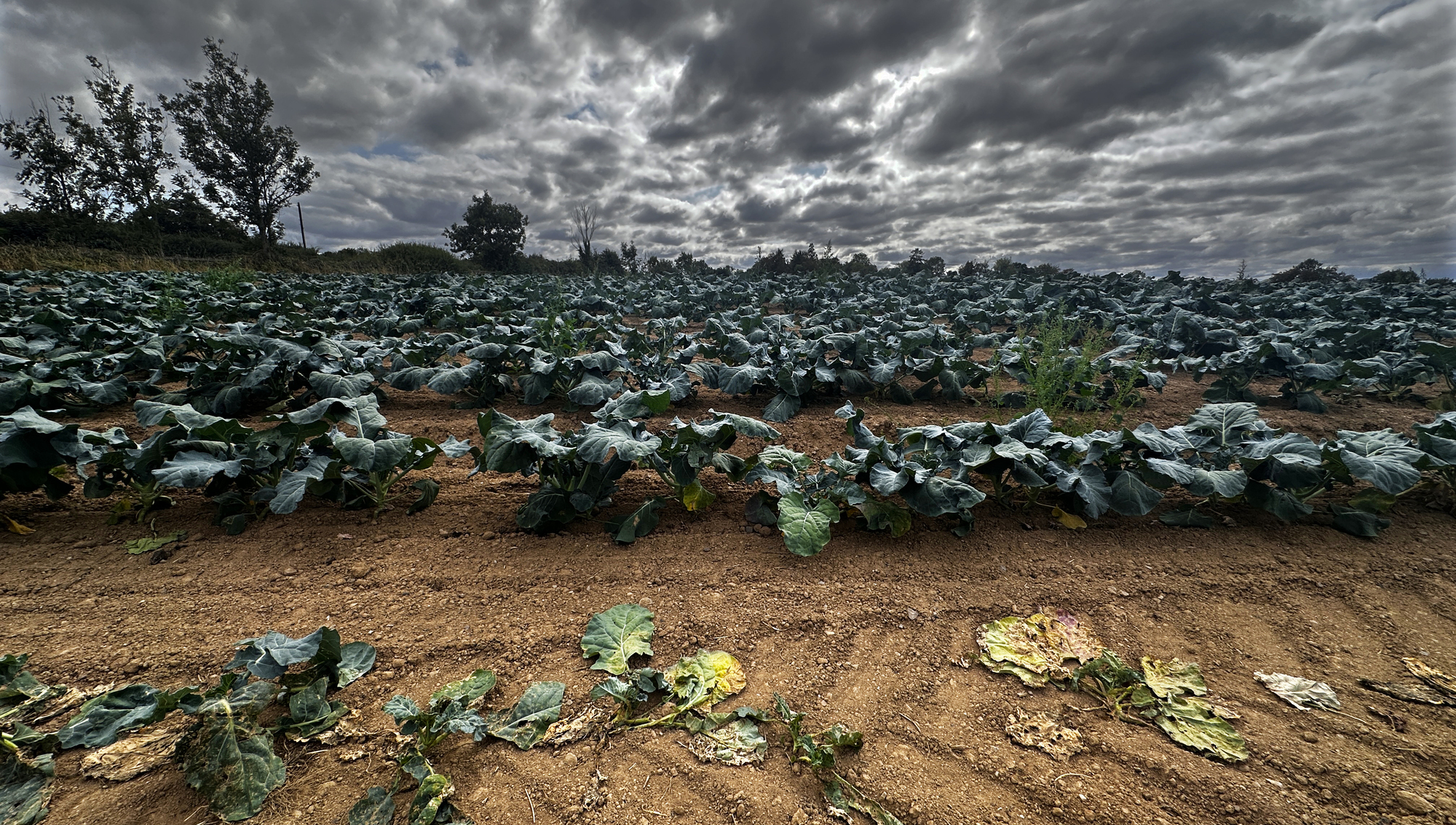
Vegetables wilting in parched fields in Naas Co Kildare last Friday. Picture: Eamonn Farrell/RollingNews
Section 15 of this country’s Climate Act 2021 — legislation designed to copper-fasten Ireland’s climate ambitions and tackle climate change head on — has long been a source of controversy.
Five years ago, the Oireachtas agreed unanimously that our collective attitude towards necessary climate action could no longer depend solely on political goodwill or commitments which could be conveniently brushed aside when thorny decisions had to be made.
Section 15 of that legislation requires all public bodies to consider all actions they might take in terms of climate impact and to ensure that all decisions they make ensure that climate commitments and aims survive political manipulation.
It established legally binding carbon budgets and sectoral ceilings and laid out the 51% emissions reduction target by 2030. That deadline is now only four years away and widely regarded as unachievable.
The current administration is therefore in something of a pickle. If it does not achieve certain objectives, we will be subject to massive fines imposed by the EU, not to mention widespread and justifiable derision for its unwillingness to take the steps necessary to meet its own targets.
We have witnessed clearly in the past few years the obvious and terrifying effects climate change is wreaking on the globe and to hear public expenditure minister, Jack Chambers, expressing the thought that further curbs on climate legislation might be necessary if it is found to be harming infrastructure delivery, is deeply concerning.
Of course, the building of massive projects is necessary to keep Ireland’s economic development on track, but if that is to be achieved by blithely ignoring or voiding legislation to protect us from greater dangers, there’s something wrong somewhere.
It is an undoubtedly good thing that the State is set to spend €275bn on housing, transport, energy, and water infrastructure in the next decade. What is unacceptable is that this be done without thoughtful and wholly necessary regard to our climate responsibilities.
The Government is facing many crises across the health sector at present and, as we examine in today’s Examiner, there’s another headache brewing in the dental sector.
A nosedive in the numbers of dentists carrying out work for medical cards holders in the period from 2012 to 2024 — down from 1,452 to 810, a 44% decrease — has left publicly funded dental services in the throes of a crisis we are all too familiar with.
Large numbers of disadvantaged children and medical card holders are unable to access even basic dental services.
Patients are facing excessive backlogs for public treatment largely due to measures introduced as far back as 2008 when the economy was embroiled in the global economic crash.
Official figures show there were 1.06m dental treatments carried out in 2025, a 31.72% drop from the number recorded in 2009. During the same timeframe our population has grown by over 1m.
The result is that over 55,000 children across the country eligible for dental screenings who have yet to avail of the service due to backlogs, while gum disease and periodontal disease are now at worrying levels.
According to the Irish Dental Association, a lot of teeth that could be saved are not and preventative care and treatment that should be provided is not happening.
This deterioration in screening services means that many more children are now presenting in dire pain and requiring emergency repair work.
While some parents are able to pay privately for dental work on their children, many more are not and, in cases where braces need to be fitted, they are facing a wait of up to three years.
Not alone is this patently unfair but it is placing both parents and children in a desperate quandary — cough up thousands for necessary treatment or face years waiting for the public health sector to come to their aid.
Sadly, this problem is one which is mirrored across so many sectors of the health services, but this particular one has gone on for two long without being addressed — with obvious and painful consequences.
Ireland’s housing problems have seen few upsides over the past two decades, but one glimmer of hope has emerged via the Government’s Croí Cónaithe scheme.
In Cork City and county since 2022 local authorities have paid out over €40m in grants to bring some 800 vacant properties back to life.
This vacant property refurbishment grant scheme has only been in operation for four years and was initially intended to help restore vacant properties in towns and villages but has since been expanded to include derelict properties across all rural areas and in cities.
Run under the auspices of the Department for Housing, the scheme has actually matured considerably with eligibility having been extended to properties built up to and including 2007 and broadened to include buildings intended for rental.
Grant levels have also increased to €50,000 for a vacant property with a further €20,000 top-up available for derelict buildings. Cork’s two local authorities have been very busy in this area and between them have approved 1,663 grant applications.
The effect has been startling. A total of 811 homes have now been brought back into use as a result of the scheme. And while that is very good news in a sector desperate for any positives, it is still sobering to reflect that according to the Central Statistics Office, there are still more than 8,500 vacant homes in Cork City and county alone.
But if these positives can be mirrored across the entire country and while the grant scheme has already been tweaked in a number of areas to try and maximise efficiency, other adjustments, such as the introduction of staged payments, might make it even more productive than was ever hoped.
CONNECT WITH US TODAY



Be the first to know the latest news and updates