Irish Examiner view: Social media firms must take responsibility for misuse of their platforms
TikTok's Dublin headquarters. While the investigation into the Kildare motorway tragedy is still ongoing, Taoiseach Micheál Martin, justice minister Jim O’Callaghan, and Garda Commissioner Justin Kelly have all criticised the behaviour of people engaging in dangerous activity for social media attention. Picture: Sasko Lazarov/RollingNews
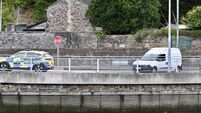
The reckless driving that led to the deaths of five teenage boys and shattered the lives of a family on their way to a wedding is shocking. That such behaviour may be fuelled by the pursuit of ‘likes’ on social media makes the tragedy, in the words of Garda Commissioner Justin Kelly, “even more appalling”.
The investigation into Sunday’s devastating incident is ongoing. It is not yet known if the young occupants of the stolen car had participated in, or been influenced by, the abhorrent recent trend of teenagers stealing cars and filming their dangerous exploits for social media.
But the Garda Commissioner highlighted the trend in his comments on the crash and on another incident earlier this month when nine people were injured in a collision which similarly involved a car being driven in the wrong direction on a motorway.
The phenomenon may be new to much of the public, but clearly it is familiar to gardaí.
On Saturday, a little over 24 hours before Sunday’s tragedy, The Journal reported that gardaí were “responding nightly” to gangs of teenage boys stealing cars and posting footage on TikTok. The cars were not being stolen to order, but for the thrill of reckless driving, with footage of the exploits — including encounters with gardaí — then posted online.
Sunday’s carnage, which left five teenagers dead, two sisters critically ill in hospital, and another sister and young nephew seriously injured, has again drawn attention to the enormous challenges faced by gardaí. A failsafe method of stopping a reckless driver without potentially creating even more danger for other road users has yet to be found.
Read More
There is, however, another aspect of this problem that must be addressed.
Social media platforms should be required to act quickly when their services are used to glorify criminal behaviour. Simply removing these posts on foot of complaints is not enough; platforms should be legally obliged to suspend accounts promoting such reckless and dangerous acts, and to co-operate fully with Garda investigations.
Teenagers were stealing and crashing cars long before social media existed. However, social media can turn bad behaviour into a spectacle, rewarding it with attention. The platforms must take responsibility for stopping their services being used for the glorification of dangerous criminal behaviour.
News that the body responsible for planning and procuring public transport in this country has no funds available for new public transport services this year is of concern.
As reported yesterday in the 'Irish Examiner', the National Transport Authority (NTA) does not have sufficient funding to provide new public transport services in 2026, apart from a small number of schemes delayed from 2025.
Plans for new and enhanced services under a number of programmes, such as the one to overhaul the bus systems in cities, and to increase the availability of public transport in rural areas are being developed — but will not progress in 2027 unless funds are made available.
Ambitious plans to improve public transport access are welcome, but plans without the money to support them are of little use to anyone.
It has been Government policy for some years now to encourage commuters to switch from car use to public transport. There are environmental, economic, and social reasons for the policy — traffic congestion adds to harmful emissions, costs money, and eats into time people could better spend elsewhere.
Government actions to support the policy have included subventions to reduce fares, investment in major infrastructure problems, and permitting residential developments served by public transport rather than private cars. But efforts to nudge people onto public transport will fail unless people can get the bus, light rail, or train from where they are to where they want to go.
There have already been several reports this year of problems caused by the lag between building homes with no parking and the provision of accessible public transport. Meanwhile, many commuters who would be more than happy to ditch the car and take the bus cannot do so, because there is no bus.
Demands on public funds are great, but if we are serious about reducing car dependency and supporting sustainable development, the Government must make sure that investment in improving public transport keeps pace with our ambitions.
Well over half a million of us are expected to tune into RTÉ tonight to watch the selection of the 2026 Rose of Tralee.
Most will be watching here at home, but viewers in more than 100 countries from the United States to New Zealand, and from Mexico to Kenya, are likely to be among the 200,000 or so who will watch on the RTÉ Player.

For an event that has faced regular criticism and ridicule over the years, the show has remained hugely popular. It may not be in the same league as live sporting events such as All-Ireland finals and Six Nations fixtures, but the Rose is up there with and in terms of audience numbers.
Its attraction is no great mystery.
Certainly, some will watch to have a laugh over a contestant’s unorthodox party piece or a gaffe on stage.
Most, though, will tune in to relax in front of an entertaining and wholesome show that has stood the test of time.


CONNECT WITH US TODAY



Be the first to know the latest news and updates