Mugabe’s legacy is a looted, broken state
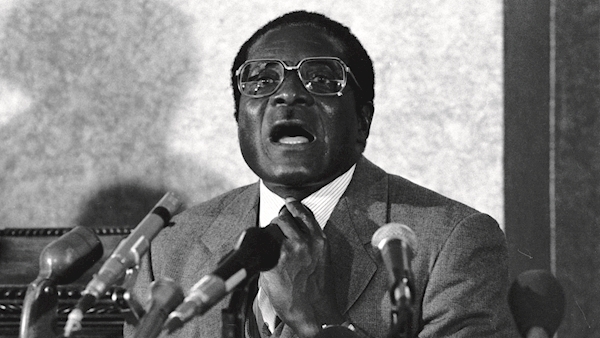
Though Robert Mugabe’s successor, Emmerson Mnangagwa, described his mentor, who has died aged 95 in Singapore, as “an icon of liberation” Mugabe was an African freedom fighter turned kleptocratic despot straight from central casting — maybe central casting at London’s Ealing Studios where tales of empire were gilded and offered as history rather than entertainment.

Mugabe’s legacy is a looted, broken state

Though Robert Mugabe’s successor, Emmerson Mnangagwa, described his mentor, who has died aged 95 in Singapore, as “an icon of liberation” Mugabe was an African freedom fighter turned kleptocratic despot straight from central casting — maybe central casting at London’s Ealing Studios where tales of empire were gilded and offered as history rather than entertainment.

The map of Mugabe’s life and many of his African peers was certainly laid out in London.

If Mugabe was a fallen angel from central casting then Zimbabwe is a country symbolic of the inestimable, crippling bill empire leaves.

That it was, for most of the last century, known as Rhodesia tells all. Cecil Rhodes was one of the most rapacious empire builders in history; in today’s terms almost a one-man China.

He was a force of nature and a diamond millionaire at 19.

His, and many others too, determination to Europeanise and exploit Africa made the tyrannies of Amin, Abacha, Toure, Nguema, Al-bashir, Gaddafi, and Mugabe all but inevitable. Sad but all too true.

Tempting as it may be, especially as England is convulsed by empire wistfulness, to say this exploitation is another example of Albion’s perfidy that would be dishonest.

Any European country with the capacity to impose itself onhapless Africa did so, many with the help of Irish adventurers dispossessed by earlier cycles of colonisation.

This confirmed, again, that the desire to dominate seems a human trait rather than any particular national characteristic.

That domination and the efforts to end it have left Zimbabwe an impoverished, battered country — so much so the country’s economic data may not be reliable.

Yet, some of the figures published during Mugabe’s presidency are incomprehensible.

The economy imploded after 2000, leading to endemic poverty, 95% unemployment and hyperinflation which peaked at 231 million percent in 2008. Zimbabwe has forcibly redistributed most of the country’s white-owned, commercial farms. The new occupants, many prominent members of Mugabe’s ZANU-PF, were not as productive as those they replaced.

Idle land, once hugely productive, has reverted to subsistence farming.

Three years ago “low levels of production and the attendant trade gap, insignificant foreign direct investment and lack of access to international finance due to huge arrears” were identified as core issues making Zimbabwe one of the world’s poorest countries.

This, despite the promise of his early years, is the legacy of Mugabe, as is the culture of political violence that has, predictably, become a tool of the Mugabe-tutored Mnangagwa.

For all that, Mugabe embodied Africa’s justified rage against colonialism.

His army kept him in power despite his assertion that “only God could remove him from office”.

That support, as it always does, eventually ended but not before an unhinged, intelligent, ruthless, bitter, man became the central actor in the destruction of the country he loved.

At a moment when democracy is stretched in the country that gave Africa Rhodes the lessons offered by the trajectory of Mugabe’s life and career, and the destruction of Zimbabwe, are so very stark that they cannot be ignored.

More in this section

Revoiced

Newsletter

Had a busy week? Sign up for some of the best reads from the week gone by. Selected just for you.

Cookie Policy Privacy Policy Brand Safety FAQ Help Contact Us Terms and Conditions

© Examiner Echo Group Limited