Irish Examiner view: Drive to steer us away from SUVs
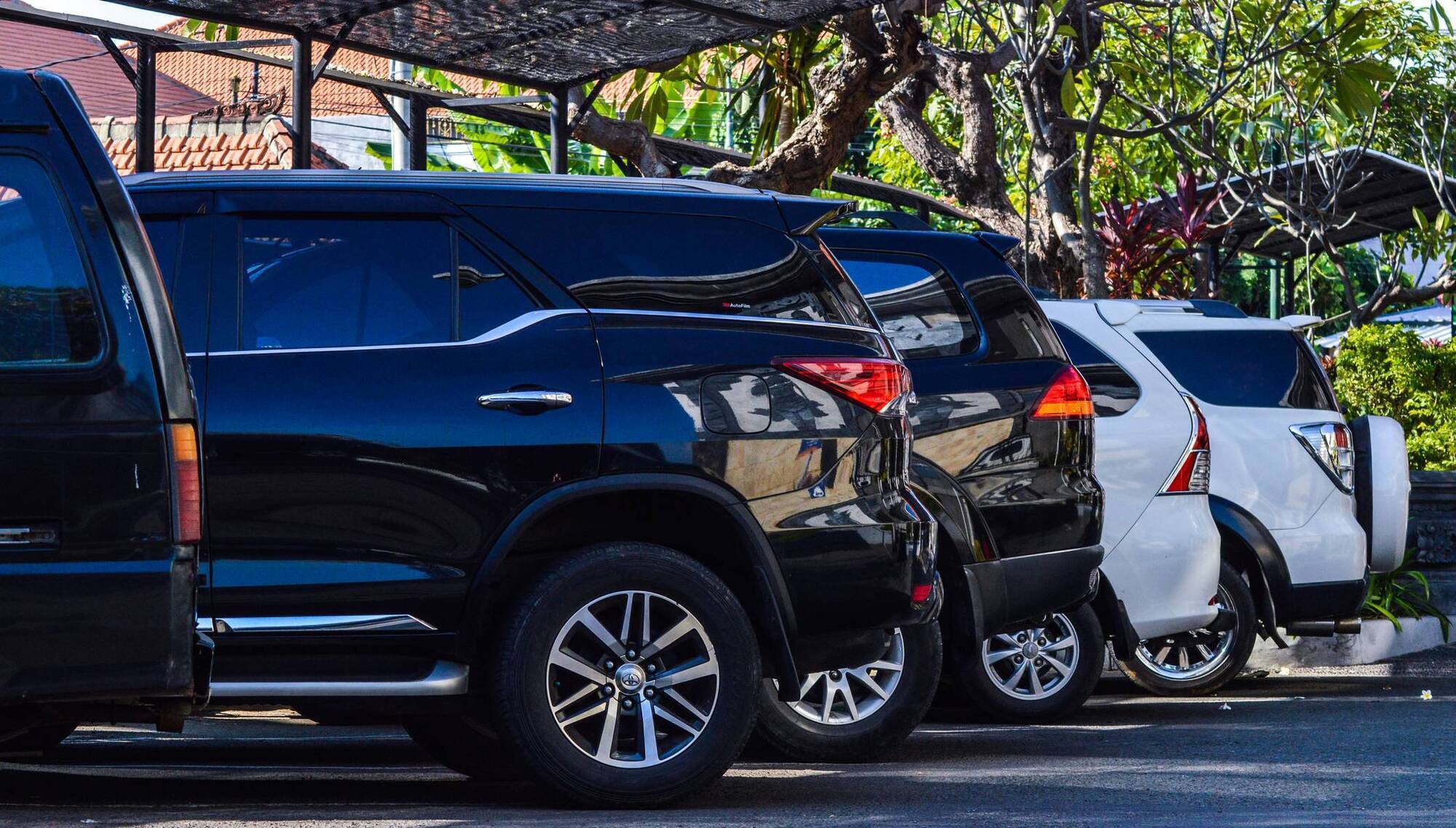
'Public health experts have long struggled to convey the risks posed to people without sounding hysterical or alarmist.' Picture: iStock
The world has had a growing love affair in the last couple of decades with the SUV, and we here in Ireland have not been ignorant of the trend.
Our love of these cars has reflected the increasing global affection for what are, in many cases, automotive behemoths.
All of that may be about change, however, as a growing international movement attempts to steer us away from dependence on vehicular transport — and cars, especially SUVs.
There were 19,934 people killed on EU roads in 2024, even if they are still among the safest in the world. Globally, traffic collisions cause 1.9m deaths every year.
However, an increasing focus on the statistical dangers of being involved in a collision with an SUV, as well as their unwelcome effects on air quality and the concomitant battle against climate breakdown, not to mention increasing volatility of petrol and diesel prices, are combining to fuel a movement away from cars and particularly those big ones.
Public health experts have long struggled to convey the risks posed to people without sounding hysterical or alarmist. They will point out that these are effectively loud machines in cages, the large majority of which burn fuels that foul the air and heat the planet.
That they do so while zooming past schools, homes, and hospitals, ride on rubber tyres which kick up road dust and launch microplastics into the air, drive on an outsized infrastructure which deprive cities of cycle paths, and force commuters to drive more and exercise less, is also a concern.
So too that the road network limits the space for parks in which people can socialise and enjoy nature, while paving over green spaces leads to hotter heatwaves, bigger flash floods, and higher stress levels.
Cities around the world are increasingly emboldened to reallocate road space in the pursuit of cleaner air and many drivers — for reasons of health, money, comfort or the environment — want out from behind the wheel. A recent pan European Ipsos poll has found that in the last five years, personal car use has diminished considerably.
The war in Iran has focussed minds even more and, in March, the International Energy Agency encouraged carsharing, driving slower, and working from home to cushion the shock of fast-rising fuel costs.
Yet, as the reasons to limit car dependence mount, so too grows the size of cars on sale — even despite the fact that they waste more fuel, cause more pollution, take up more space, and pack more clout in an accident.
The choice ahead for many countries is simple: Either embrace the growing trend towards compact, affordable electric cars, or give the green light to bigger, more expensive, SUVs and mega pick-up trucks.
The answer seems simple, but the reality is a lot more complicated.
The recent news that the United Arab Emirates (UAE) was to withdraw from the Organisation of Petroleum Exporting Countries (Opec) roiled global oil markets but also — and perhaps more significantly — illustrated the fracture in once close relationship between the Emirates and its neighbouring Gulf powerhouse, Saudi Arabia.
The Emirati decision to leave Opec in May signalled a rejection of Saudi domination of the cartel and its ability to sway global oil prices.
Not so long ago, the de facto Saudi leader, Crown Prince Mohammed bin Salman, and UAE leader, Sheikh Mohammed bin Zayed al Nahyan, were seen as being ideologically in lockstep, fighting together against the Houti rebels in Yemen, isolating neighbour Quatar over accusations it was supporting terrorism, and co-ordinating closely against regional adversary Iran.
Today, that relationship looks rather different. They both increasingly back opposing sides in regional conflicts, pursue conflicting energy strategies, and compete for global investment.
For many years, the Emirati city of Dubai was the regional hub for multinational companies, logistics, and finance, but Saudi has started muscling in on the act, now requiring international companies seeking lucrative government contracts to establish regional headquarters in its capital, Riyadh.
The message was unmistakable — Saudi wanted more economic power to go along with its oil wealth and political influence.
There are now fundamental tensions between the leaders of both countries and in a time of massive regional upheaval, the strained relationship between the two nations is highly likely to influence the politics in the Middle East for a considerable time to come.
A chilling warning for Ireland came in the last week with the release of a report which indicates that Norwegian fish farms are filling the country’s fjords and coastal waters with nutrient pollution equivalent to that of the raw sewage of tens of millions of people annually.
Norway is the largest producer of farmed salmon in the world and nutrients from fish feed are excreted directly into coastal waters.
The report conducted by the Sunstone Institute found that Norwegian aquaculture release 75,000 tonnes of nitrogen, 13,000 tonnes of phosphorous, and 360,000 tonnes of organic carbon last year alone.
That nutrient time bomb is equivalent to the untreated sewage of 17.2m people for nitrogen, 20m people for phosphorous, and 30m people for organic carbon.
The net result is the sort of destructive organic algal blooms which bloat areas of the Irish coastline from time to time.
Analysis by the institute calculated the mass of nutrient inputs that remained in the water, using data from the national fisheries directorate and veterinary institute.
Fish sludge from nutrients can fertilise phytoplankton and lead to destructive algal blooms that deplete oxygen levels and the Norwegians maintain that current production is well within nature’s carrying capacity.
But the warning signs, it has to be said, are ominous and perhaps there are lessons to be learned for us here in Ireland, where commercial fish farming is a growth industry.

CONNECT WITH US TODAY



Be the first to know the latest news and updates