System will help curb road carnage
It is part of a radical shake up of our traffic laws in an attempt to curb the carnage on our roads. Only speeding drivers will initially be targeted, with on-the-spot fines of 80 and two penalty points.
Those who accumulate 12 penalty points within a three-year period will automatically be banned from driving for six months.
Of course, drivers will have the right to contest the on-the-spot fines in court. However, those who do so will be liable to a fine 10 times greater 800 and they will risk the imposition of four penalty points. This is designed to discourage frivolous challenges.
The penalty points system will eventually be extended to a range of 60 other road traffic offences, such as not wearing safety belts. This will be introduced in about six months times.
Next year the system will be extended to other offences, such as careless driving, running red lights and driving while using a mobile telephone.
Offending motorists will be further penalised by insurance premium hikes. Firms plan to increase insurance rates for drivers who receive any penalty points. This will allow them adjust their risks more equitably.
However, this must not be a one-way system that allows them increase rates without passing on the savings to the more responsible drivers.
A spokesman for the Department of Transport insists the penalty points system is the cornerstone of the Government's programme to curb the carnage on our roads.
It is not designed to put drivers off the road but to bring about a radical change in our speeding culture, which saw 320,000 drivers stopped for speeding offences last year.
Officials anticipate that the new system will dramatically curb speeding and that this should lead to a drop in fatalities of as many as 80 people a year. This, in turn, will save a lot of grief.
Many of those killed or maimed each year are totally innocent. They are the victims of the recklessness, or the crass stupidity of others.
Although totally innocent, they are killed, or maimed, just as surely as if they were at fault.
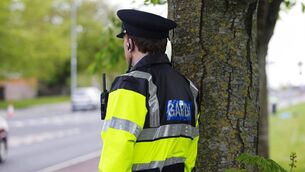
The system was first promised and agreed by the Cabinet in 1998 but the idea met a certain amount of resistance from within the Garda Síochána, where there were strong reservations about the extra paperwork it would entail.
The scheme was delayed while a new computer system was introduced to process the penalty points.
Representatives of the Department of Transportation have dismissed fears that the Garda Síochána would still not co-operate with the new system because of the
extra paperwork.
They explain that a private data firm will be appointed within days to process all the paperwork. This should afford the gardaí more time to tackle the other main contributing factor to road accidents people driving under the influence of alcohol or other drugs.