Ireland can learn from Brazil's victory over disinformation
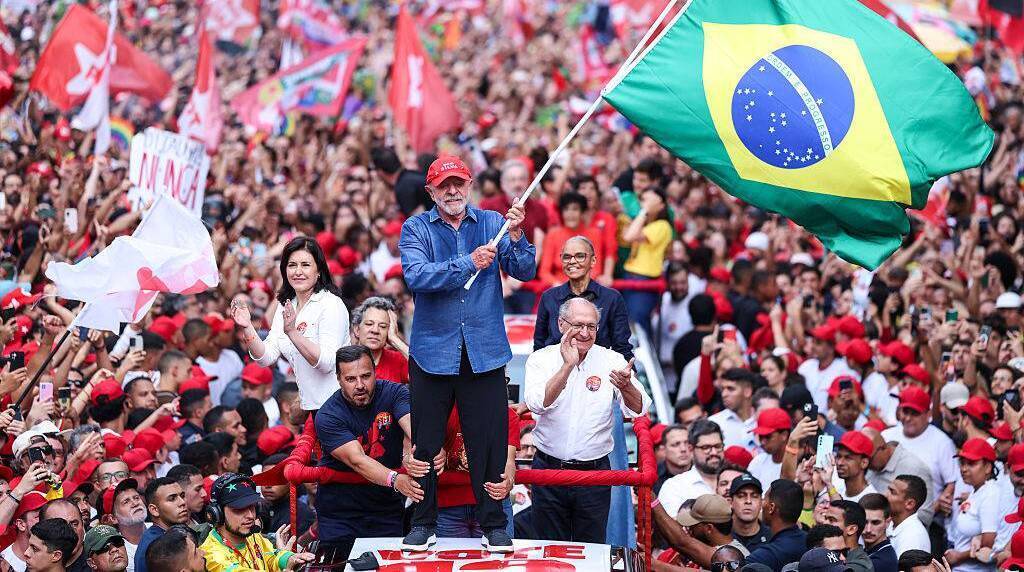
Luiz Inácio Lula Da Silva waves a Brazil flag during a rally ahead of the presidential run-off at Avenida Paulista in Sao Paulo, Brazil, last month. Photo: Alexandre Schneider/Getty Images
The past couple of weeks have been encouraging for many of us — a global pattern of threatened authoritarianism is finally facing pushback.
We saw the resilience of Serbian civil society, and most recently in the US midterm elections, where Republicans surrendered crucial seats to Democratic and progressive candidates. Now the conversation has shifted in a direction that the US government did not expect, especially Trump.
The outcome has sent a powerful message directly from the streets: when civil society realises the threat of authoritarian policies and organises around the protection of fundamental human rights equally for everyone, it can dismantle authoritarian rhetoric — whether in Trump’s America or Bolsonaro’s Brazil.
Across the globe, this mobilisation of civil society is proving that democratic survival does not depend on political elites or tech corporations, but on ordinary people coming together to defend their communities.
In the tense weeks leading up to Brazil’s 2026 presidential election, the real battle was not taking place on television screens, political podiums, or social media. Across Brazil’s civil society, a new strategy to fight the far-right narrative had to be implemented.
Read More
This strategy turned out to be simple: people to people, local problems, and local solutions. Activists set up grassroots fact-checking booths, distributed door-to-door print guides to debunk viral online lies, and held open-air demonstrations to protect their communities.
It was a raw display of people-power standing directly in the path of a powerful far-right machine.
Across Latin America, North America, and Europe, far-right narratives have expanded rapidly, shifting from fringe rhetoric to mainstream political disruption. But this rise isn't happening in a vacuum.
It is turbocharged by massive tech corporations and social media platforms that profit directly from outrage, sensationalism, and division. We should know who is behind the largest social media platforms — because once we do, we quickly understand why misinformation is one of the main problems we face today.
Their algorithms weaponise engagement, amplifying fake news while shielding executive boards from accountability. In Brazil, democratic survival depended on citizens recognising a stark truth: tech giants and political elites will not save us — and maybe that was the best realisation for us Brazilians.
As a Brazilian-Irish journalist, this shift is not theoretical — it is deeply personal. Narratives targeting migrants and refugees that were once unthinkable in public discourse have seeped into the mainstream.
We see "protests" outside emergency accommodation centres, co-ordinated online hate campaigns, and hyper-polarised digital bubbles designed to turn neighbour against neighbour. I raise the question: for what?
Having personally navigated the sharp edge of anti-migrant sentiment in this country, I know how fast digital hostility translates into real-world fear on our streets. And that is exactly what they want.
This far-right wave exploits shared issues that everyday people across Ireland are experiencing — housing shortages, underfunded public services, and relentless cost-of-living pressures.
But instead of holding government policy and decades of underinvestment accountable, far-right agitators weaponise this pain. They divert attention and create fear among communities, scapegoating refugees, asylum seekers, and migrants for a crisis that is simply not their fault.
The dangerous myth that "it couldn't happen in Ireland" is not true; it is already happening.
But Brazil’s journey offers a vital blueprint for hope: top-down declarations, political speeches, and institutional press releases will never be enough to defeat extreme polarisation. Real resilience and resistance are built from the ground up, with real people, real stories, and real action.
In Brazil, social movements did not counter hate with empty slogans; they met it with organised community solidarity, radical empathy, and practical action.
Local groups brought people together to address immediate survival needs — food distribution, housing support, legal defence, and future planning — while simultaneously building local media literacy to dismantle online fake news. They showed that when coming together collectively, reactionary scapegoating loses its persuasive power.
The way I see it, this is the path forward for Ireland. To protect our social backbone, we need a unified ecosystem of community-led action:
: Connecting housing campaigners, environmental activists, trade unions, NGOs, and migrant rights groups into local networks that tackle systemic inequality together.
: Equipping local organisers, community centres, and youth groups with the tools to spot algorithmic manipulation, dismantle disinformation, and reclaim their own narratives.
: Building community forums and mutual aid groups that foster genuine dialogue, celebrate diversity, and support struggling families directly.
Democracy and social cohesion are not spectator sports, nor are they guaranteed by institutions alone. They are living practices sustained by everyday people choosing to stand up for one another in their neighbourhoods, workplaces, and online spaces.
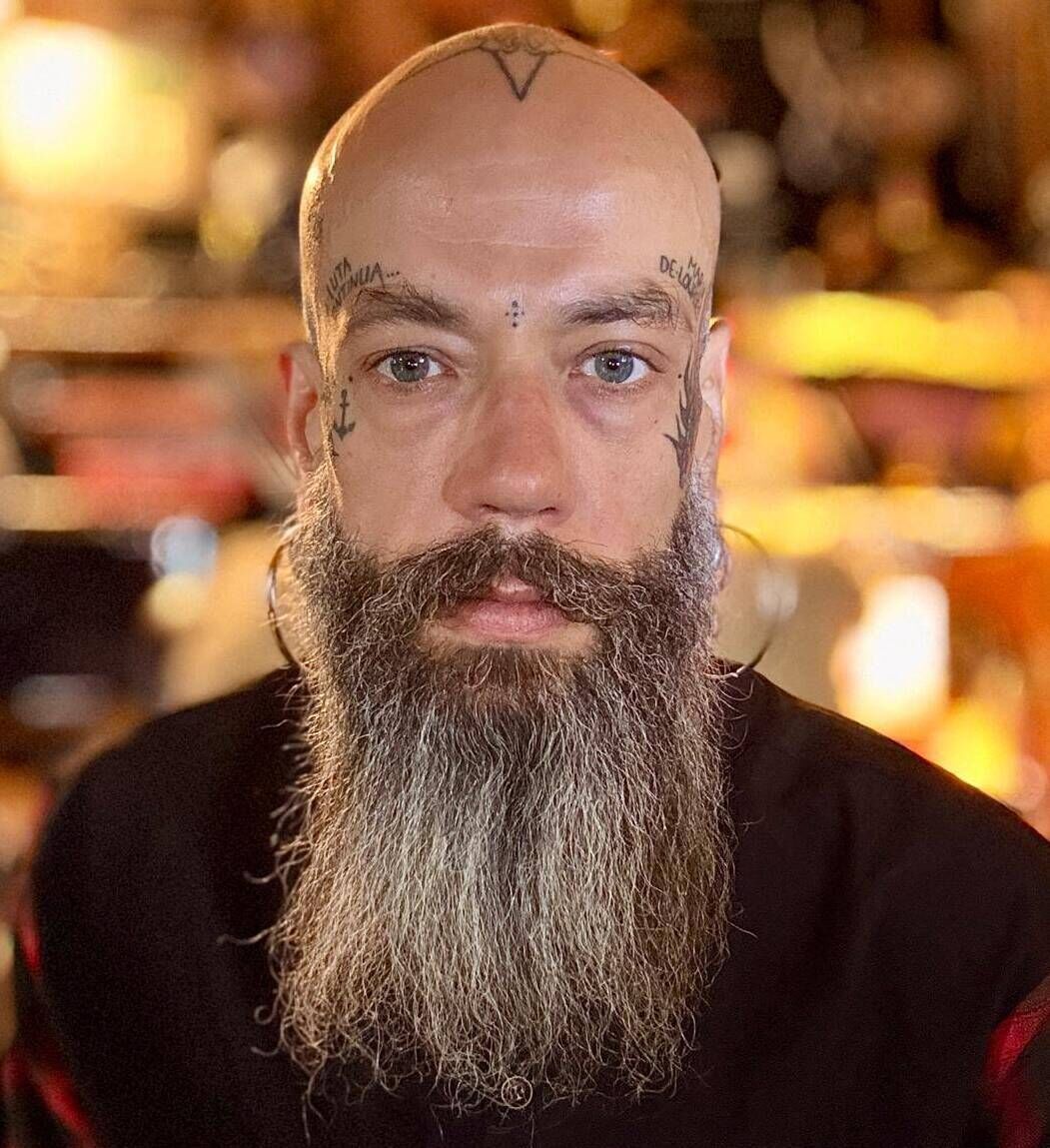
As a migrant and visual reporter documenting human rights and grassroots movements across both hemispheres, I remain convinced that division is not inevitable.
By choosing organised solidarity, shared humanity, and collective action over fear and outrage, Ireland can push back against extremist narratives and build a resilient future for everyone who calls this magical and special island home.
CONNECT WITH US TODAY



Be the first to know the latest news and updates