Ireland is talking about a border poll. Are we ready for the conversation that comes before it?
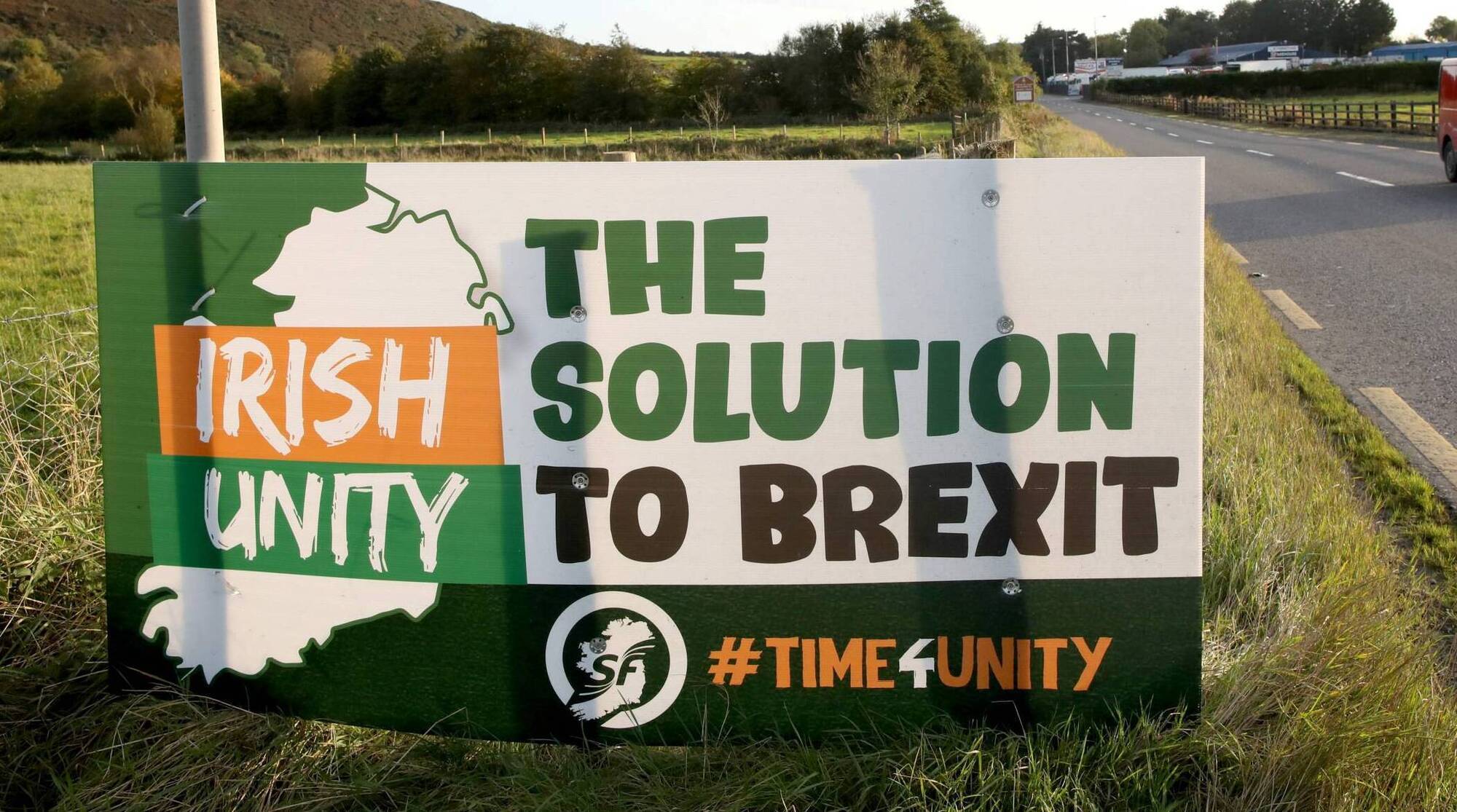
Brexit has undeniably accelerated debate on Irish unity. File photo: Paul Faith/AFP via Getty
As the Good Friday Agreement approaches its 30th anniversary, discussion of a possible border poll — perhaps around 2030 — has become more prominent.
While the agreement provides for such referendums, their timing depends on political judgment, not inevitability. The existence of a mechanism does not mean we are ready to use it.
Research by Analysing and Researching Ireland North and South found that 79% of people in the Republic believe there should be a referendum on Irish unity at some point.
But in Northern Ireland, the picture is much more complicated: among Protestants, 44% supported holding a referendum, 37% opposed it, and 20% were undecided.
Read More
That 20% matters. Behind the political arguments are people who may not have made up their minds, may be uncomfortable with the question, or may simply be uncertain about what a united Ireland would actually mean for them.
The challenge of Irish unification is not simply political or legal — but deeply human. Overcoming barriers, fostering empathy and building trust will be as important as any constitutional arrangement.
Brexit has undeniably accelerated debate on Irish unity. Its economic and political consequences, especially the new trade arrangements or "border down the Irish sea" have disturbed assumptions about the union.
The case for unification however is not sufficiently developed and is more rooted in aspiration rather than supported by a detailed, inclusive and credible plan.
Many stakeholders, including the Irish Government, remain ambivalent about a referendum, even though the Good Friday Agreement has an embedded mechanism to facilitate a border poll every seven years, unlike Scotland which must seek permission from Westminster, to hold a similar plebiscite.
Additionally, the constitutional position of Northern Ireland can change by a wafer-thin margin of 50% plus one.
This may console nationalists but unless the concerns of unionists and loyalists are accommodated and a more comfortable margin of victory secured, a border poll could be destabilising, risk a Loyalist backlash and even a re-run of the Troubles in reverse — south of the border.
Any plan for unity must above all close the gap between an absence of violence and reconciliation.

The Good Friday Agreement achieved what many felt was impossible at the time, namely relative peace, power-sharing institutions and economic benefits. Yet it did not fully resolve deeper divisions in Northern Irish society.
Sectarian identities remain entrenched and political life continues to be organised along the unionist and nationalist fault line. The persistence and even expansion of the most visible illustration of division, namely the so-called peace walls, shows that while violence has diminished, separation endures.
Any roadmap for unity must therefore be ambitious and encompass proposals for governance, identity, culture and especially reconciliation.
A tragic aspect of partition is that people North and South of the border are relatively unfamiliar to each other and have lived apart for generations. This distancing makes the task of rapprochement even harder within Northern Ireland.
Even the timing of reconciliation remains contested with some arguing that Irish unity would create the conditions for reconciliation, while others insist that reconciliation must precede constitutional change.
I am convinced that efforts at truth and reconciliation — if sincere, sensitive and patient — will in themselves be crucial in building trust between the two traditions on the island of Ireland.
The tools of apology and forgiveness can transform even the most entrenched and bitter disputes.
Preparation for a border poll must therefore be psychologically as well as politically informed.
Conflict is rooted in identity, emotion and lived experience and recognising this means engaging with the fears and insecurities that shape perspectives, especially within unionism.
Persistent resistance to discussion about Irish unity could be dismissed as intransigent obstruction, but is better seen as coded behaviour for vulnerability.
It is hard to imagine how, over time, if repeated reassurance and commitments followed by actions to respect and value unionist culture, would not secure their eventual buy-in to a new and better Ireland.
We must build diverse civic and political structures within which unionism can feel secure. This may be unpalatable to some nationalists in the short term who will need reassurance that vetoes of the past are not being reborn, but it is necessary.
Confronting and changing cultural attitudes that automatically alienate unionists, such as discomfort with British symbols or lingering anglophobia, is important. How self-confident are we to fly the Union flag outside our hotels, for example?
Targeted investment in disadvantaged areas of Northern Ireland may see some jobs migrate "up North" but is a crucial move.
Strengthening economic links across the island, working lockstep with the British government to craft a border poll in its timing and wording, while proposing institutional ties with Britain is a challenge of the utmost delicacy but is central to this process.
So perhaps the conversation we need to have is about that 20% who are undecided.
Before we start talking about the mechanics of a border poll, it’s not simply about what people intend to vote for, but how people feel about the possibility of change.
- Declan Lyons is a psychiatrist, author, and former peace activist. His book, , was published in October by Oakleaf Press
CONNECT WITH US TODAY



Be the first to know the latest news and updates