‘How did I not know?’: Growing up in Ireland without learning the full story of Drumcree
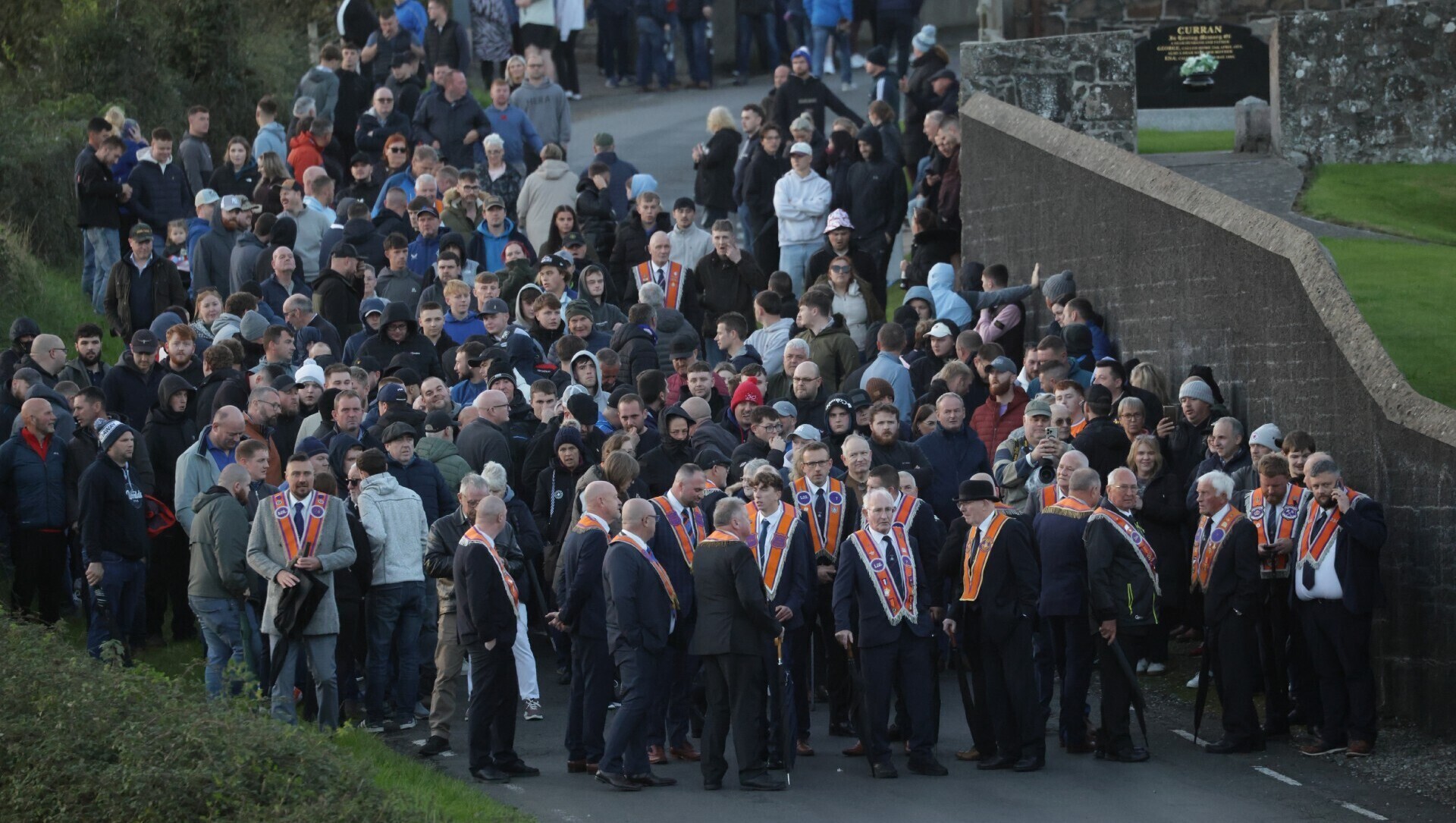
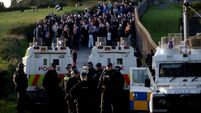
Loyalist supporters and orange men face the police outside Drumcree Church, where they have formed a barricade to prevent them entering the Garvaghy Road. Picture: Peter Morrison/PA Wire
I’ve just turned 27 years of age. I was born in 1999. I grew up in a border county – Donegal, to be exact – and until last weekend the significance of what has happened at Drumcree hadn't really resonated with me.
I knew about the Troubles, sure everybody up at home does, whether they lived through it or not.
I work in news, and have done for a number of years.
I knew about the Quinn brothers – Richard, 11, Mark, 9, and Jason, 8. I knew they were killed after their house was petrol bombed while they slept.
I knew there were protests against Orange Order marches. I thought they were against marches in general and didn't appreciate the significance of where they were taking place.
Neither did multiple people I spoke to since the Parades Commission allowed the Orange Order to to march through the Garvaghy Road road late on Saturday.
I spoke to one friend about it. She told me about one particular part of it, having looked it up after she heard. Once I looked it up myself, I was horrified.
How did I not know?
I like to think I’m fairly knowledgeable on the Troubles, but having grown up in a post-Good Friday Agreement world, it seems I am not. And neither are many young people who were born during the years after – or just before – that Good Friday Agreement document was signed.
Read More
What I learned about the Troubles, up in rural Donegal, was largely through word of mouth. Stories from my parents and grandparents about how they impacted our community and the wider county. They lived through the Troubles. They watched it on their television every day.
The Troubles were so far from me growing up, in my safe Good Friday Agreement cocoon. The Troubles were a series of stories often told about how far we had come, as though they were a lifetime ago.
But they weren’t.
I heard about Bloody Sunday, the Omagh bombing, the hunger strikes and Bobby Sands.
But a key thing that those who lived through the Troubles may have forgotten is that not everybody lived them.
We weren’t there.
This brings questions.
Did they try to shelter us from the worst of it once it ended?
Did they just try to sweep it under the carpet, as is the traditional Irish thing to do?
There have been many calls for a border poll of late, with even Donald Trump weighing in on a united Ireland during his recent visit to Ireland, saying that it “may as well happen now”. Sinn Féin holds the majority in Stormont – Northern Ireland’s first minister is the party’s vice-president, Michelle O’Neill.
Indeed, at the start of this month, wrote that “For many people under the age of 30 living in Northern Ireland, the controversy around the Drumcree dispute belongs to a bygone era.”
And the same can be said for those of us in the Republic.
Sure, we weren’t even born the last time there was a march in Drumcree.
Until this weekend.
That’s the issue.
It’s inherited history. I speak to people who have heard this, or saw that. And they tell me the story.
Three boys died – countless others did too. It is estimated that 3,500 people died over the course of the Troubles. How many of them were children?
We see it on . Those who get it, get it, and those who don’t, don’t.
I thought I got it.
I remember watching the show with an American friend of mine, and she was shocked at how those teenagers had to live.
“Sure that’s just how it was,” I’d say.
But I didn’t live it. I don’t know how it really was.
And I hope I never will.
I actually said it on RTÉ’s as a young student journalist, when the discussion of the week was the Good Friday Agreement and Brexit’s impact on it – is the closest I’ve seen to a hard border.
It’s the closest I’ve seen to the Troubles, the protests, the riots, the massacres.
My generation grew up without needing to know about every petrol bomb that went off, every area that needed to be avoided, or who I could talk to and who I couldn’t.
Many would love to see a united Ireland in their lifetime, particularly those born in a post-Good Friday Agreement era, but in a practical sense, as Fergus Finlay put it this week, we’re not ready – on either side of the border.
Níl tuile dá mhéad nach dtránn.
Nothing lasts forever, and indeed, nothing stays the same.
But for lasting peace, things must change.

CONNECT WITH US TODAY



Be the first to know the latest news and updates