With war ongoing, Ukrainians can't go home — so why have we withdrawn our support?
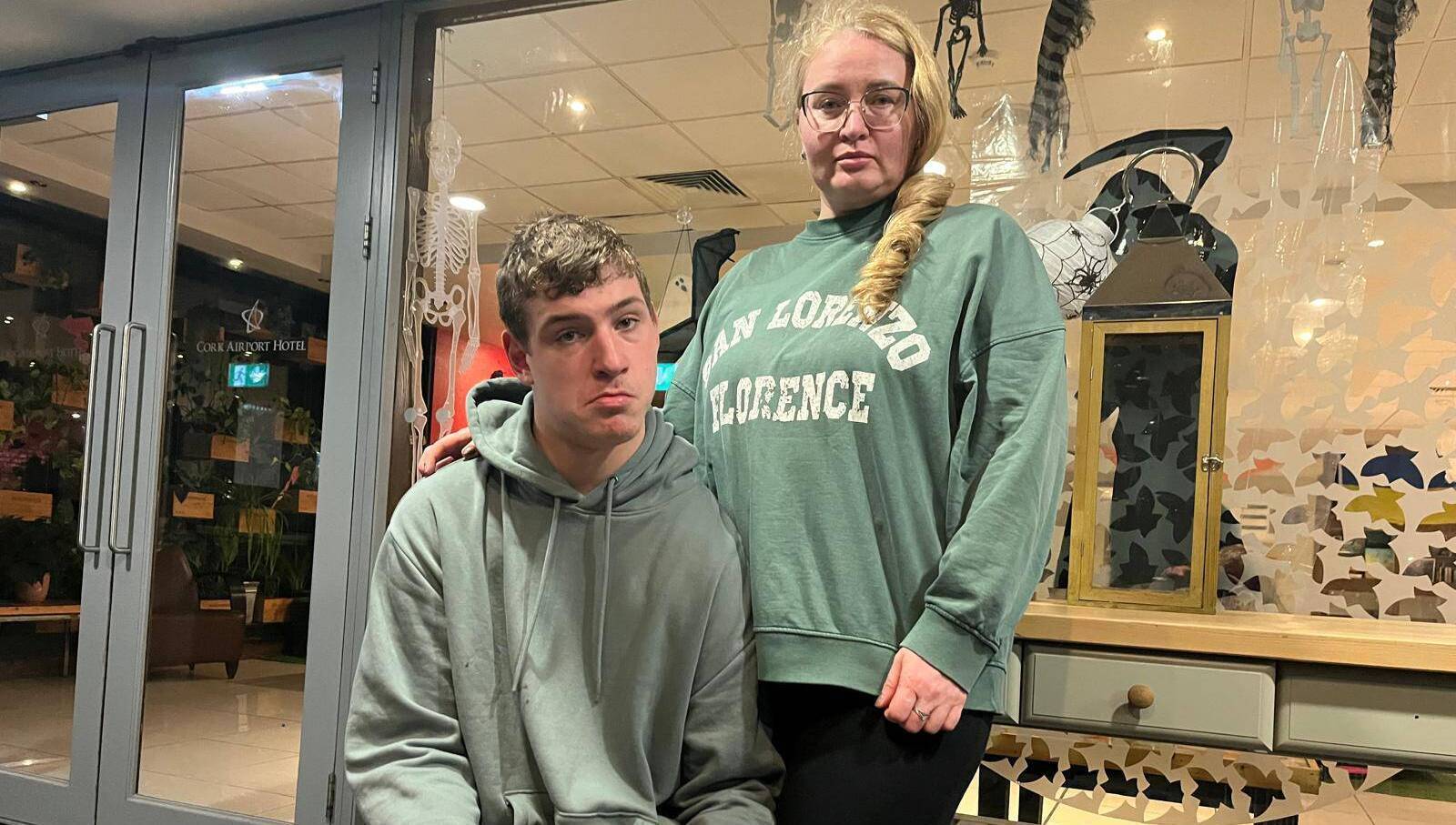
Max (left) and Natalia Taranchuk (right) are facing uncertainty as they must leave their current accommodation in the old Cork Airport Hotel by January 31. Picture: Donal O’Keeffe
It took me a minute to place the familiar face looking back at me when I opened the on Tuesday.
It has been years since I’ve seen Max and his mum Natalia. Years since they came into our community hub, tired and bewildered, reluctant to take the things they needed, despite our encouragement and clumsy use of Google Translate.
With gestures and smiles, we found out that Max, like so many of our own children, liked Lego. Something familiar, something he knew how to put together when everything else had fallen apart.
After Max came Polina, heavily pregnant, trying to get comfortable on a hard plastic chair while we searched for a replacement wheelchair for her elderly, disabled mother. The bus couldn’t carry hers.
Then there was Svetlana and her three wide-eyed, silent children, uprooted from their schools, friends and clubs and, most painfully, their father, who remained in Ukraine.
And the two sisters who had first come to Ireland as ‘Chernobyl children’, returning with children of their own to the family who had sheltered them from one disaster, now seeking safety from another.
Read More
A steady stream of women who had homes, jobs and independence, now dependent on the kindness of strangers for toothbrushes, wheelchairs — a roof over their heads. Biochemists, teachers, airline staff, standing in the cold hall of our local GAA club, clutching their phones as they showed us photographs of their husbands, fathers, brothers. The lives they had left behind.
The club had given us use of its facilities to operate the hub. The changing rooms became collection points, the showers sorting rooms, and the Burco boiler was kept on a rolling boil for the busloads of bewildered refugees arriving with whatever they had managed to carry.
Attics were emptied as local families gladly passed on baby equipment, bicycles their children had outgrown, coats and blankets, pots and pans. We did what we could, what we should.
Our hub remained open for three busy months until the changing rooms and showers filled again with the hurlers and the footballers and we all moved on with our lives. But not the Ukrainians. They still can’t.
Max is now 18. He lives with a rare genetic condition and depends on specialist support. He is also studying for his Leaving Cert. An important year for a young person, a year when we try to ensure our own children face as little disruption as possible.
Yet Max and Natalia have been given until January 31 to leave the former Cork Airport Hotel, along with the 87 other residents who have also made it their home. Natalia does not know where they will go or how she will continue to access the care her son needs.
Government assurances that vulnerable people will be "looked after" are vague. Will Max be able to stay in his school for his Leaving Cert? Will he still be able to attend the Crann Centre and Enable Ireland?
After everything he has already lost, how much more uncertainty should this young man, this child, be expected to bear?
We all know supports can’t remain unchanged forever. I imagined, however, that they would stay until the emergency eased, not be withdrawn while missiles were still falling.
I’m not unaware of the serious problems our own country faces but they were not created by the people who stood in a GAA changing room looking for a wheelchair, a toothbrush — a box of Lego. Moving them from room to room won’t solve our problems.
I still have the receipt for the Lego we bought for Max, tucked into a folder crammed with till receipts. Reams and reams of thin white paper, the faded ink detailing underwear and socks, toothbrushes and sanitary products, adapters for two-pin plugs.
Small pieces of dignity, of kindness, paid for with donations from people moved to help.
Because Max and his mother are still here. So is the war they fled.
I hope there will be room for Lego in Max’s next temporary home, wherever that may be.
I hope too that the smiling men on the women’s phones are still alive, not buried beneath the blue and yellow flags that flutter over ever-expanding cemeteries.
For now, it feels like everything is coming to an end — accommodation, public support, even empathy and kindness.
Everything except war.

CONNECT WITH US TODAY



Be the first to know the latest news and updates