From Tralee to Limerick and all over Ireland, we are barred from the countryside
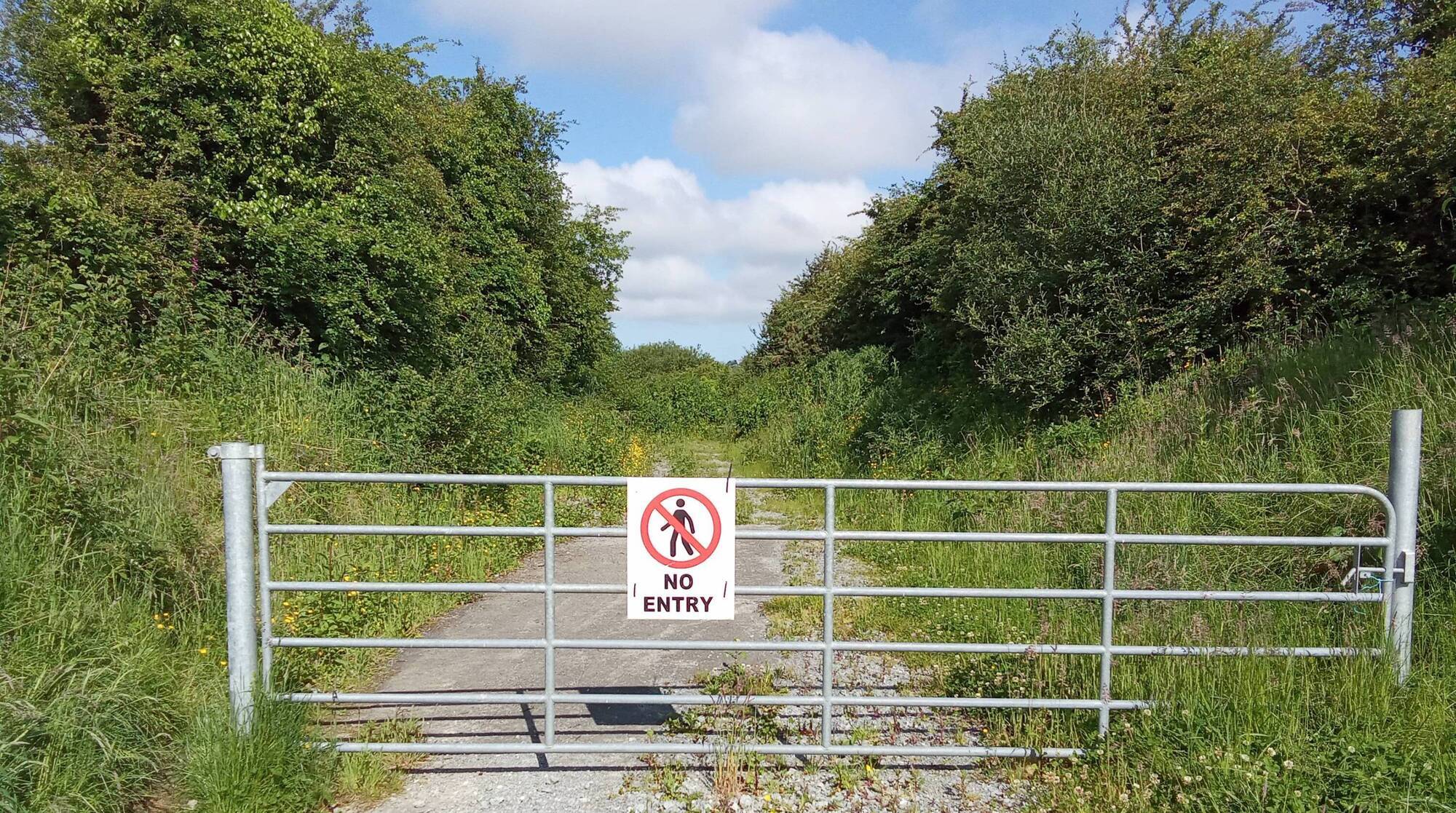
In the early stages of a 678km walk from the Dingle Peninsula to Co Down, I found myself two kilometres outside Tralee on the line of that same old railway, facing an aluminium gate fixed with a 'No Entry' sign.
In 1988, Shannon Development, the regional development agency for western Munster, came up with a brilliant idea for the disused Limerick–Tralee Railway, which had closed to passenger traffic in 1963: they would turn it into a public trail.
It would not be primarily for cyclists, who were well served by the existing boreens, they said, but for “the horse rider and the long distance walker for whom bridle paths and footpaths are non-existent”.
Thirty-six years later, in the early stages of a 678km walk from the Dingle Peninsula to Co Down, I found myself two kilometres outside Tralee on the line of that same old railway, facing an aluminium gate fixed with a “No Entry” sign and an impenetrable thorn thicket beyond.
Clearly the plans of the now defunct Shannon Development agency had never come to fruition (they faced immediate opposition from local landowners and gave up on the idea in 1991). And across not just North Kerry and Limerick but the whole of Ireland, bridle paths and public footpaths are, if not non-existent then still vanishingly rare.
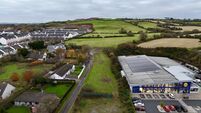
The current status of the old Limerick–Tralee Railway is a neat illustration of the sorry state of public access to the countryside in Ireland and the dysfunctional official approach to improving matters. While the northernmost stretch has reopened for freight traffic, the middle 50km between Rathkeale and Listowel is now a “multiuse trail” — though not the sort of rustic path for walkers and horse riders originally envisaged by Shannon Development.
Read More
It is a strip of glossy tarmac, complete with road signage and flanking fences — a mini-motorway termed a “greenway”. The southernmost section between Listowel and Tralee, meanwhile, is reportedly in the “planning stages” for an extension of that greenway.
But for now it remains much as it was when I tried to walk its length two years ago — blocked by fences and silage bales, subsumed into fields and even private gardens, and largely impassable.
If the southernmost section ever does become a functioning greenway, the cost will likely be astronomical. Earlier this year, Kerry County Council defended its spending on a separate 27km greenway between Glenbeigh and Caherciveen, which came in at €72 million.
This staggering cost was not only driven by the enthusiastic involvement of consultants and engineers; it came about because the only way for the authorities in Ireland to guarantee public access to a piece of countryside is for them to buy it.
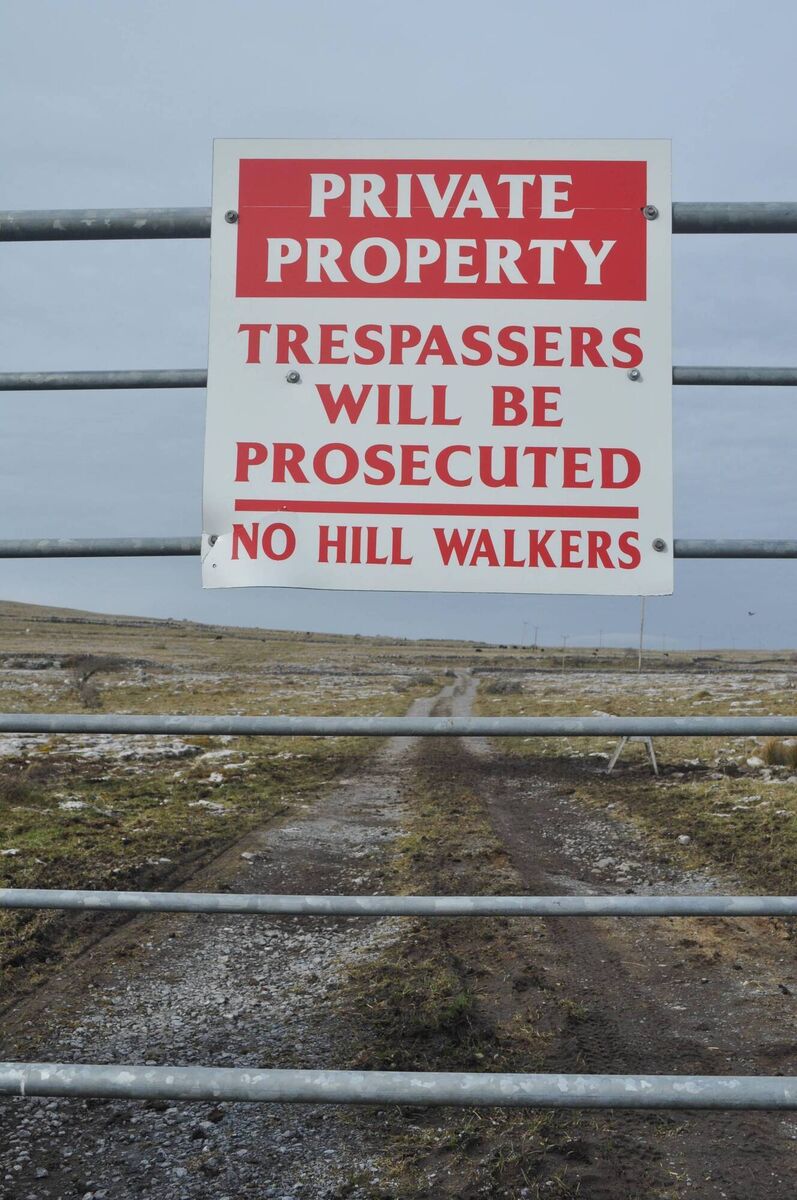
Ireland is an anomaly in Europe when it comes to public access to the countryside. During a recent event in Galway to discuss the book I wrote about that often frustrating 678km walk, and about the troubled history of land and access in Ireland, I spotted several audience members nodding in vigorous agreement throughout.
They each came up to speak to me afterwards: French, Italian, Polish, Ukrainian, English and several Irish people who had lived abroad — all now living in Galway and shocked to discover that the field-edge, riverside and woodland walks they had taken for granted on their own doorsteps elsewhere were missing here.
Legislative provisions for public access to the countryside vary across Europe — from the footpath networks of France and England to the open access to forests and mountains in Central Europe and Scandinavia and the near-total “right to roam” in Scotland. But each country has a system to guarantee some right to move through the landscape beyond the roads.
Ireland has no such guarantees. What access does exist here — in the national parks and Coillte forestry lands, for example – is usually only permissive, which means it can be withdrawn without notice. Incredibly, even the pilgrim trail up Croagh Patrick in Co Mayo is not a public right of way.
Keep Ireland Open, a tiny volunteer-run organisation, has been campaigning on this issue for years, but with little success. The particular historical sensitivities around landownership in Ireland are obvious; but the practical objections to increased public access are largely baseless.
Ireland is hardly unique in that most of it is privately owned. Elsewhere, the rights of ownership and access are robustly disaggregated, and the walking trails that crisscross Britain and mainland Europe often run across private farmland.
Nor does the prominence of cattle-rearing in Irish agriculture make this landscape uniquely ill-suited to public access: there are thousands of kilometres of public footpaths on family-owned dairy, beef and sheep farms in Wales and the English West country.
Most importantly of all, the idea that the threat of personal injury claims is what makes access to private land an impossibility in Ireland is a myth. Since 1995, the Occupiers’ Liability Act has strictly limited landowners’ legal responsibility for recreational users, and the 2023 Voluntary Assumption of Risk Amendment tightened things still further.
Any walker, cyclist, or, indeed, trespasser, who enters private land voluntarily accepts the latent risks involved. No payouts, then, for an ankle twisted on uneven ground or a bruise sustained in a stumble from a stile.
In fact, there appears never to have been a successful claim by a recreational user against a landowner since 1995. Objectors often cite the notorious Wicklow Way case, in which a walker made an initially successful claim against the National Parks and Wildlife Service after a 2013 fall on the boardwalk below the Sally Gap. But few remember that the claim was rejected on appeal by the High Court.
For now, overengineered and overpriced greenways seem likely to remain the default access model for local authorities in Ireland, each new proposed route a bonanza for consultants and a prompt for protests by landowners. But imagine the alternatives that new countryside access legislation could provide.
We could begin modestly, with a confirmed right, rather than a mere permission, to access uncultivated state and semi-state lands; then develop a mechanism to formally protect existing access paths to beaches and mountains; and perhaps eventually move towards a recovery of the mass paths and other customary footways that once ran through the Irish fieldscape.
With that legal framework in place, the possibilities would be endless.
Earlier this year, a new “King Charles III England Coast Path” opened around the entire 4,328km perimeter of England. Imagine an Irish equivalent — a real Wild Atlantic Way running through Cork and Kerry and every other coastal county. Imagine the visitors from across the world who would come to walk it and the billions they would spend along the way.
It would probably be very good value too. The King Charles Coast Path involved no tarmac and no compulsory purchase orders. In fact, it required no land acquisition at all, just the scheduling of some new rights of way. Expenditure on the project was £28 million (€33 million) — less than half the cost of a 27km greenway in Kerry.
- Tim Hannigan is the author of

CONNECT WITH US TODAY



Be the first to know the latest news and updates