What will 2026 make of Ali G, now just one twit among many?
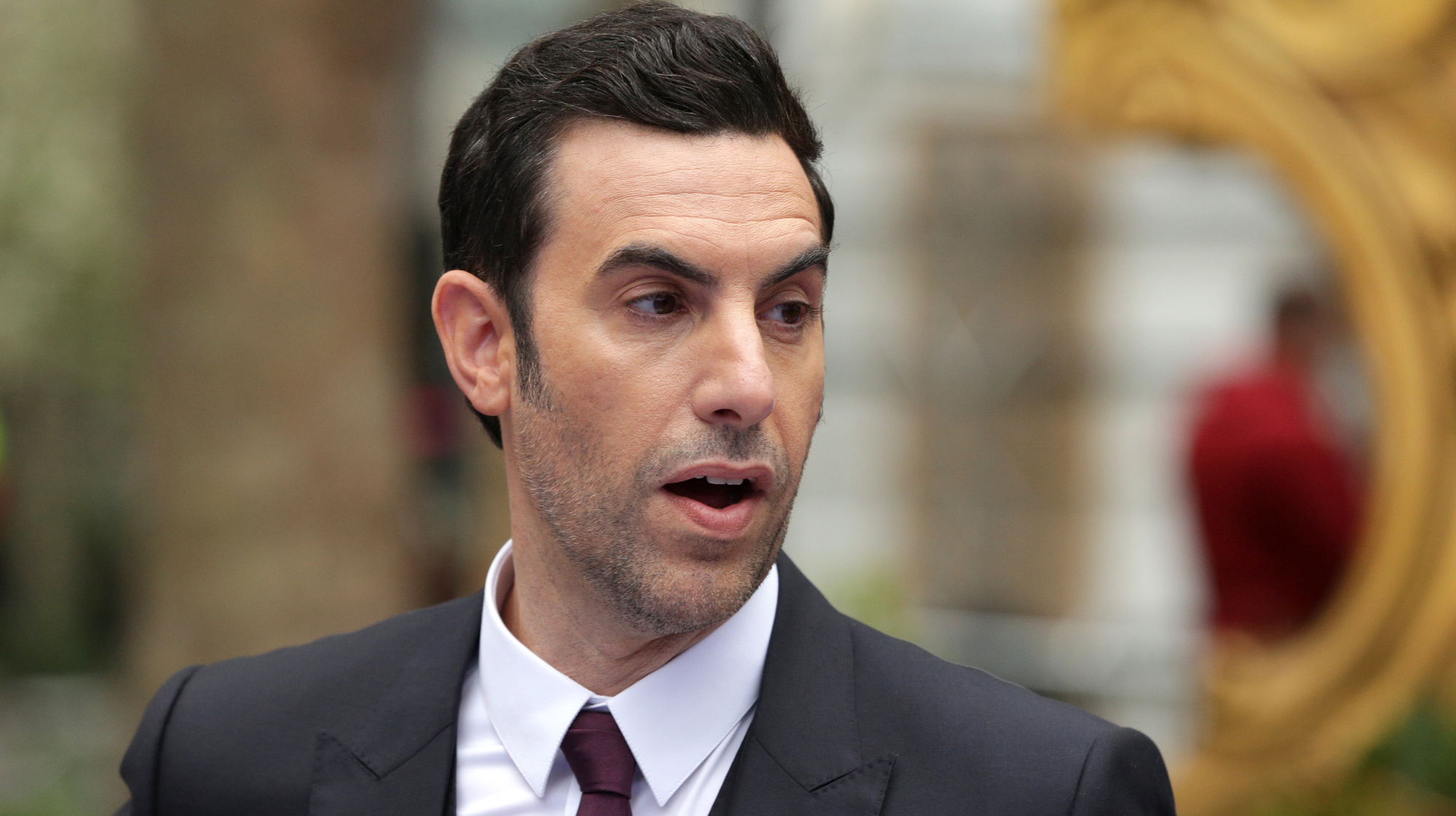
Sacha Baron Cohen grew up among London’s Jewish middle-class, studied history at Cambridge but had always had a hankering for the stage. File picture: Daniel Leal-Olivas/PA
"What year is it again?" I asked myself the other day when a bus shot by bearing a garish movie poster of a man in a giant puffer jacket. Not 2002, that’s for sure, but that looked a lot like Ali G. Turns out it was.
Whether you like it or not (and a lot of people don’t), the suburban rasta man is back, in a new film released today. Its title, , implies an impending identity crisis, and so it proves, as Ali is forced to confront the inconvenient truth that his longtime girlfriend ‘ma’Julie’ is pregnant.
When she hands him the pregnancy test as proof, he thinks it’s a vape and tries to smoke it. “This tastes of piss,” he says. “That’s because i just pissed on it,” Julie replies. You get the gist.
The original Ali G had a relatively short shelf life for the obvious reason that it became impossible to interact with ordinary people if everyone knew he wasn’t real. And perhaps his creator, Sacha Baron Cohen, hopes that after all this time a new generation will have arisen that’s forgotten all about Ali. That may be true.
But Ali’s trademark transgressive humour faces a bigger hurdle than that, in a time where societal norms and taboos have been steamrolled by a tsunami of post-truth social media nonsense. Once upon a time Ali G stood apart, a magnificent twit: now he’s just one twit among multitudes.
For a comedy to work, it must first be funny, and therein may lie the problem for this resuscitated Ali. But make no mistake about it, back in the day Ali G was very funny indeed.
It’s important to remember, too, that for the first five years or so of Ali’s existence, his creator was pretty much unknown. Baron Cohen did no press, made no public appearances, because he wanted audiences — and celebrity interviewees — to believe, or at least half believe, that Ali G was an actual person.
And it was accusations of racism that turned Ali, and his maker, into superstars.
Sacha Baron Cohen grew up among London’s Jewish middle-class, studied history at Cambridge but had always had a hankering for the stage. After studying with the master clown Philippe Gaulier, Baron Cohen began showing up on youth TV shows. In 1996, on a Granada talk show,
, he appeared as a character called MC Jocelyn Cheedle-Hume, a posh nitwit with gangster stylings who tragically yearns to be hip.
It was Ali G, but without the Jamaican patois, which was added in order to create a kind of grey area about who and what this strange person was. Baron Cohen wanted a character he could disappear into, like his idol Peter Sellers, and gave Ali a backstory.
His real name was Alistair Leslie Graham, he hailed from a leafy Surrey suburb, was not very bright and had appropriated the style and speech patterns of his favourite pop and rap stars. Inside his head, a gaping emptiness which Baron Cohen planned to exploit for comic effect.
“The core idea of Ali G,” he explained recently, “was would it be funny to have the world expert on something [sitting down] with the biggest idiot in the world? That juxtaposition would be really funny if the world expert takes it seriously…”
Looking back on those interviews Ali did on and other series, one is struck by the sheer balls of the man as he managed to remain stubbornly in character, never laughing, while uttering ridiculous things.
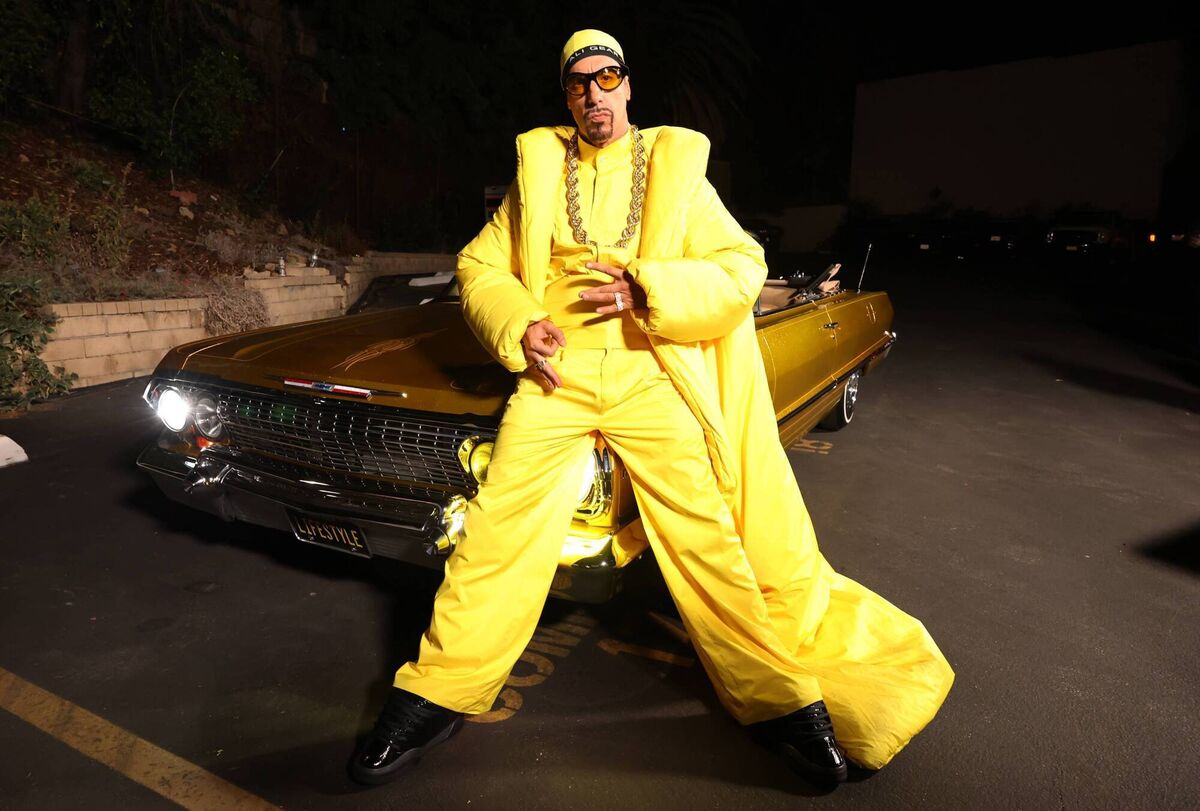
With his ghastly tracksuits, blinging jewellery, silly hats and faux patois, he was an affront to good taste, and every celebrity he interviewed. The clever ones, like Naomi Klein, saw him coming, and didn’t rise to his anti-feminist musings.
He once mistook author Gore Vidal for the hairdresser Vidal Sassoon, asked political philosopher Noam Chomsky to explain the subtle difference between ‘bisexual’ and ‘bilingual’, and so annoyed Donald Trump with his absurd business ideas (ice-cream gloves etc) that the future president stormed out in a huff a minute into their interview. Not often that man can be willingly parted from a TV camera.
He called Buzz Aldrin Buzz Lightyear, told Tony Benn that strikers during the 1984 British miners’ strike were “pulling a sickie”, and repeatedly referred to UN Secretary General Boutros Boutros-Ghali as ‘Boutros Boutros Boutros Boutros Ghali’.
In my favourite Ali G interview of all, then-mayor of Belfast Sammy Wilson was asked if he was Irish. When the DUP politician answered sternly, “no, I’m British”, a perplexed Ali replied, “so is you just here on holiday?”
The central conceit of the Ali G concept was that somehow, Ali had managed to persuade himself that he was a person of colour. All of that stemmed from a TV report Ali did on an environmental protest in London.
Having infuriated the protestors by suggesting that a planned multiplex cinema might be more important than the trees they were protecting, he jumped over the barriers to join the march. And when a policeman stopped him, Ali asked “is it cuz I is black?” This quickly became a catchphrase, but Ali’s antics incensed some people in the black British community, who felt he was making fun of them, and appropriating their culture in order to slyly demean it.
Baron Cohen, though, has always insisted he was laughing at pretentious white boys in suburban bedrooms who appropriated patois and recreational ‘ganja’ use because they wrongly imagined it might make them cool. And while Ali G adopted Yardie speech patterns and wore Bob Marley beanies with fake dreads hanging out the back, the joke was very much on him, and on Baron Cohen himself, who as a teenager had briefly entertained similar affectations.
Ali G “never wore any make-up,” he explained recently, and “he never spoke about his own ethnicity”. The joke was his insisting on his ‘blackness’ when all evidence contradicted it.
Knowing the game was up, Sacha Baron Cohen moved on to another wonderfully offensive creation, Borat, and retired Ali G in 2007. But Ali has made several comebacks at awards shows, and proved difficult to entirely shake.
Baron Cohen became fatally associated with broad comic characters and skits early on, and has struggled to move past that. And while we all enjoyed his portrayal of King Julian in , serious acting roles have been hard to come by.
There have been missteps: his Austrian fashion reporter Bruno was objectionable in all respects; his 2012 satire was a megawatt stinker.
Since then, pickings have been relatively lean: little wonder then, that Baron Cohen has revived his most compelling and original creation. What will Ali G make of 2026, or it of him? The answer lies in your local multiplex.

CONNECT WITH US TODAY



Be the first to know the latest news and updates