Childcare is infrastructure — and we need to start treating it that way
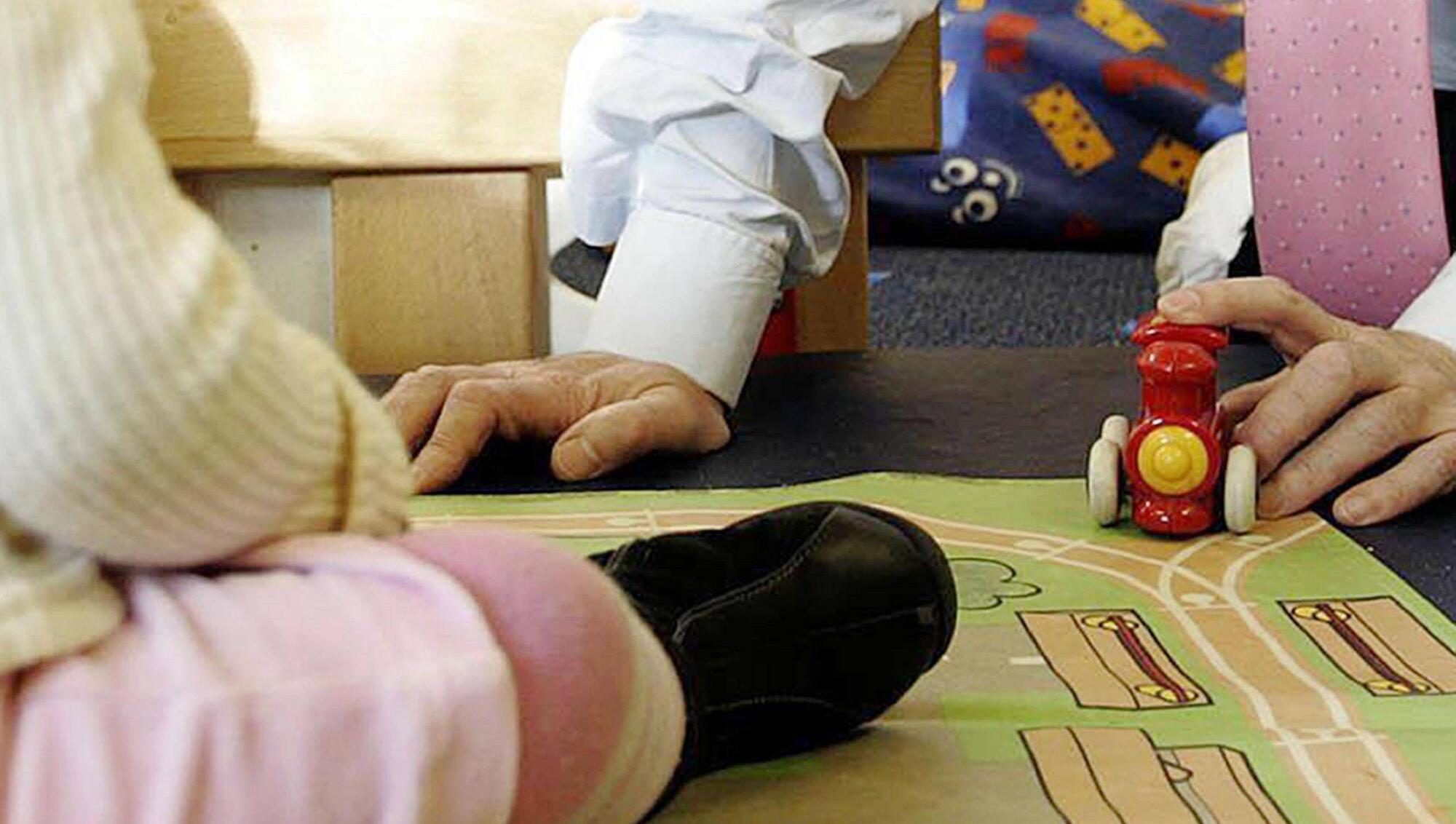
Affordable childcare only makes a difference when families can access it. File picture: PA
October is a busy time for families and communities. Children and parents are settled back into school and childcare routines, while attention has turned to Budget 2027 and what it means for households across Ireland.
But Budget decisions have consequences that go far beyond what is left in a parent’s pocket at the end of the month. Childcare is one of them.
Budget 2027 introduced measures aimed at making childcare more affordable for families. However, it didn’t sufficiently address the shortage of childcare places, with Early Childhood Ireland reporting that waiting lists for children under three have now reached up to 46,000 nationwide.
Affordable childcare only makes a difference when families can access it. We need to start thinking about childcare not as a luxury that only some families can afford, but as essential employment infrastructure.
Access to affordable, reliable childcare can determine whether a parent can take a job, return to education or take the next step in their career. And, disproportionately, that parent is still a woman.
Ireland has made enormous progress in women’s participation in the workforce. ESRI research tells us that there were more than 1.3 million women in employment in the second quarter of 2026, almost 90% more than at the beginning of 2000.
Read More
The number of women whose principal economic status is recorded as being engaged in home duties has also fallen substantially, from more than 520,000 in 2010 to fewer than 200,000 in 2025.
These are significant changes. But the headline figures do not tell us the story behind each of those working women. For women facing multiple forms of disadvantage, the route to sustainable employment can still be blocked by barriers that are unrelated to their ability, ambition or determination to work.
Childcare is one of those barriers, but it rarely exists in isolation. Housing costs, access to transport, poverty, caring responsibilities, discrimination and access to education and training can overlap and reinforce one another.
A woman may be ready to return to education but unable to find childcare that works around her course. She may find a job but discover that the cost of childcare and transport makes it financially difficult.
A lone parent may have no flexibility when a child is sick or childcare arrangements fall through. A migrant woman may have qualifications and years of experience but face discrimination, a lack of Irish work experience or isolation from employment opportunities.
Solving one part of that equation does not necessarily solve the problem. We have seen this first-hand through Rethink Ireland’s Mná na hÉireann, Women of Ireland Empowerment Fund.
Created in partnership with Bank of America and the Department of Rural and Community Development and the Gaeltacht via the Dormant Accounts Fund, the three-year, $1 million fund is specifically to reach women who were among the furthest from the labour market.
The focus was not simply on getting as many women as possible into jobs. It was on providing deeper, more holistic support to women facing multiple forms of disadvantage and helping them move towards sustainable employment.
Through five organisations — EQUAL Ireland, Jobcare, Meath Travellers Workshop, One Family and Saoirse Ethnic Hands on Deck — more than 880 women accessed education and training and over 350 gained employment.
Behind those figures are women who gained a qualification, secured a first job or found a route back to paid work after years spent parenting or caring for relatives. The experiences of the women involved shows that progression is rarely linear.
For a woman who has spent years outside the labour market, entering employment may not be the first step. The first step might be returning to education. It might be developing a new skill, receiving mentoring or simply rebuilding the confidence to recognise her value.
We saw this in one woman who came to One Family following a difficult separation, having become isolated at home and lost confidence in her own abilities. With mentoring, peer support and practical preparation for returning to employment or education, she took a step she could not have imagined: applying to further education.
Another woman, a professional seamstress living in direct provision, was already informally teaching other women to sew when she first connected with Saoirse Ethnic Hands on Deck.
With the right opportunity and support, she progressed from taking part in classes to becoming a peer facilitator, delivering sewing workshops in her community and ultimately becoming a member of the organisation itself. What changed was not the value of the skills she had, but the opportunity to use and share them.
These experiences remind us that the journey into employment often begins long before someone applies for a job.
If a woman cannot access childcare, it is not only today's job that may be out of reach. It’s the course she cannot attend, the qualification she cannot complete, the extra hours she cannot accept or the promotion she cannot pursue.
And the economic consequences accumulate. Time spent outside the labour market, reduced working hours and missed opportunities for progression diminish earnings, career development and pension contributions. This is money — income or pension — that can’t be recovered later. It’s just gone.
If we are serious about recognising childcare as infrastructure, we must also recognise the people who provide it. Decent work, decent pay and good conditions must form part of that conversation. Ultimately, getting women into any job cannot be our only measure of success.
Economic empowerment means more than employment. It means having the opportunity to stay in work, progress, build financial security and make choices about your future.
At Rethink Ireland, we back social innovations that are tackling some of Ireland’s biggest challenges. What the Mná na hÉireann, Women of Ireland Empowerment Fund has reinforced is that the barriers facing women furthest from the labour market are structural, and no single intervention will remove them all.
But it has also shown what is possible when women are given targeted, holistic and sustained support by organisations that understand their circumstances and hold their trust.
It’s the possibility that a mother can return to education. That she can take a job. That she can pursue a promotion. That years spent caring for others need not mean sacrificing her own economic security.
Ireland has made remarkable progress in women’s participation in employment. As a nation, we want women (and men) to be able to both have children and work — a real choice.
Our next challenge is ensuring that women who face the greatest barriers are part of that progress too. Many mothers will choose employment, if it is a real option.
Recognising childcare as essential employment and economic infrastructure is what will turn that key, creating opportunity for women, supporting families, and addressing our employment needs. We can do this, if we choose to.
- Deirdre Mortell, CEO of Rethink Ireland

CONNECT WITH US TODAY



Be the first to know the latest news and updates