Bottling Irish magic: the renaissance women of Ireland's distillers
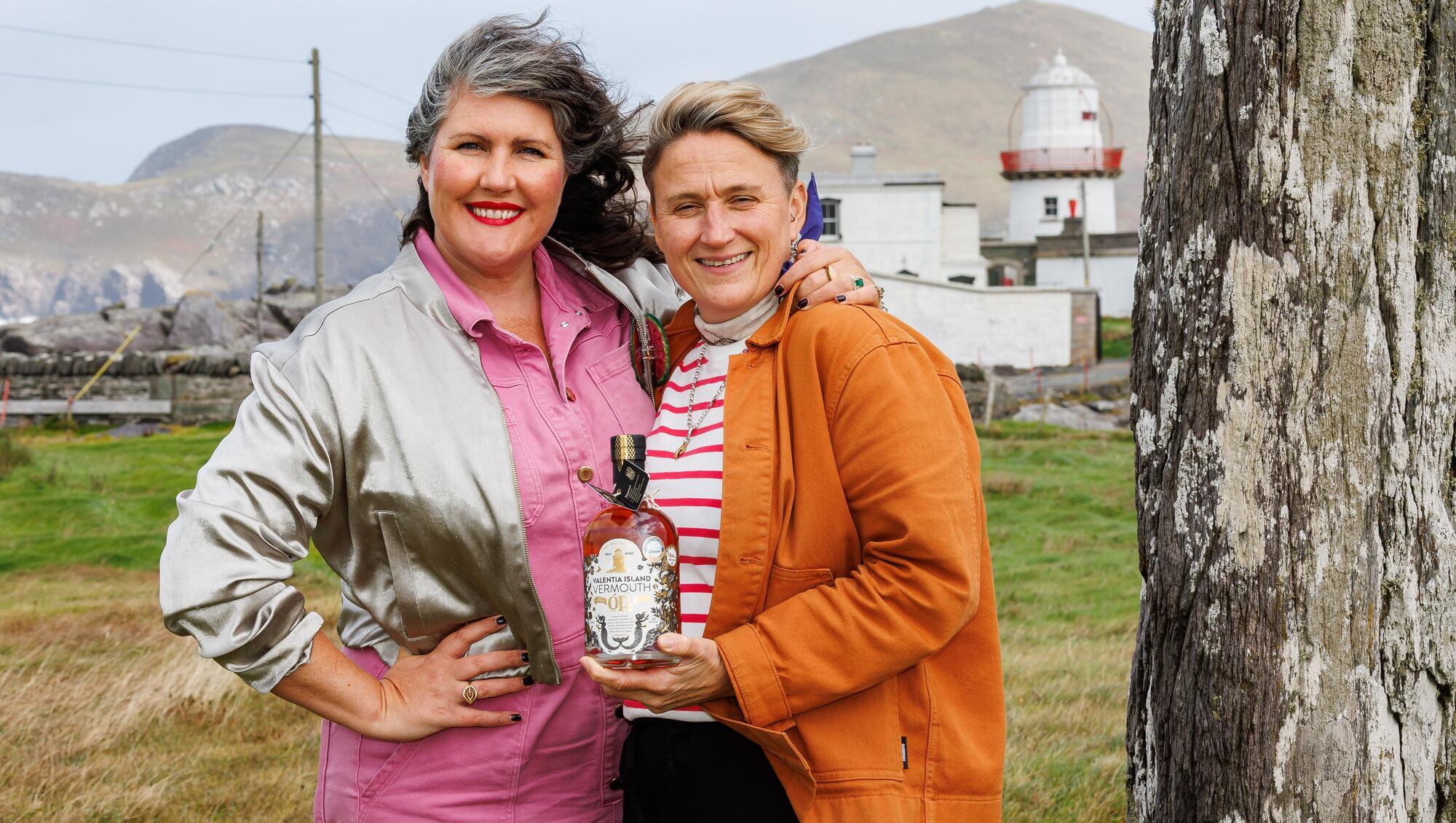
Orla & Anna Snook-O'Carroll founders of Valentia Island Vermouth pictured at the Cromwell Point Lighthouse on Valentia Island, Co Kerry. Picture: Alan Landers.
The renaissance of the Irish distilling sector over the last few decades has seen many pioneering women carve out a role for themselves in what would have traditionally been a male preserve. Amongst these women, there is another more exclusive club of female foragers employing their knowledge of the natural world to bring uniquely Irish flavours to the bottle and the glass.
Seasonality obviously has a big impact on their work so, for the season that’s in it, we also asked each to supply a special drink recipe with a seasonal twist.
Orla and Anna Snook-O’Carroll’s launched their Valentia Vermouth, created on Valentia Island in Co Kerry, in 2021, and the reaction throughout Ireland has been nothing short of extraordinary, the pair slaving over the last few years to create an entirely new beverage market for this continental aperitif staple.
Vermouth is a fortified wine that owes its unique bitter-sweet flavour profile to the addition of a selection of botanical ingredients, wormwood (vermut, in Spanish), chief among them. What makes Valentia Vermouth so special is that their recipe includes the results of their foraging around Valentia Island, the place they now call home.
Anna was born east of Cambridge but moved “home” to Bristol when she was 18. “Bristol shaped me,” she says, “doing bar and restaurant work was where I learned about aperitivos and vermouths.”
Bristol is also where the couple met in their late 20s as post-graduate art students on a masters programme at University of West England.
Orla grew up in Wicklow, the daughter of teachers from Kerry. “They were hippy-ish,” she says, “Seventies hippies. Mum got married in bell bottoms and clogs, no white dress, both as hairy as each other.” Orla’s father was also responsible for her introduction to the natural world.
After the masters, the couple began an immersive theatre company that mixed theatre, comedy, and fine dining for one-off events. The business proved to be enormously successful, including many corporate clients, but after Brexit, everything changed and, in 2018, they moved to the little cottage they had bought on Valentia Island as a holiday bolthole in 2016.
“Brexit wasn’t something we believed in or wanted to be a part of and it really helped pushed us to move over,” says Orla.
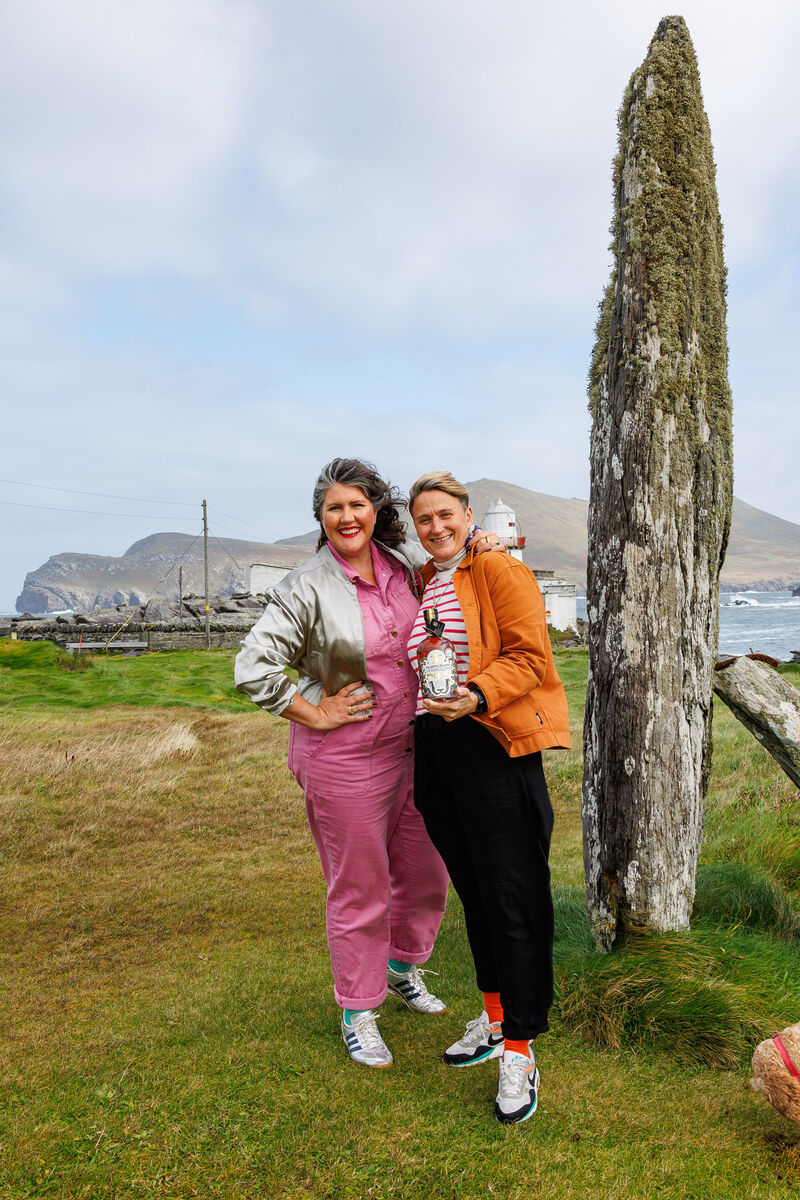
While Orla worked remotely as a communications manager for an international company, Anna returned to her roots in hospitality, taking a job in the kitchen of the Royal Hotel on the island. “That’s how we got to meet and get to know everyone on the island,” says Orla.
Their love affair with vermouth began when Anna was invited to a vermouth tasting in Bristol, in 2016.
“She came back hammered,” Orla chuckles, “carrying empty bottles to show me the labels and raving about the flavours. And that’s how we learned about vermouth as a sipping drink, about how it is a very popular aperitif, especially in Spain.”
They almost immediately began experimenting at home, turning their kitchen into a lab with all manner of obscure herbs steeping in vodka, as they set about creating a library of botanicals. But it was only in Valentia that hobby turned to profession.
“My dad is a beekeeper,” says Orla, “and as a child, he’d take us out introducing us to all the various plants, and so we began picking gorse blossoms, meadowsweet, elderflower, nettles and so on, and steeping them — roots would be bitter, petals, lighter and more floral — and began working on our own vermouth recipe.”
Eventually, they had created so many different batches, they had begun to bamboozle even themselves.
“A friend came over one Christmas from Bristol and she tasted one version and said, ‘do you know, this is good’. We sent a sample of it off to Kate Hawkings [drinks writer and their ‘vermouth mentor’].”
They had found their recipe and a stint in the SuperValu Food Academy provided them with all the business knowledge required for a commercial launch. Late last year, the business had grown sufficiently for Orla to quit her job and come on board full time.
“It’s a bittersweet magic,” says Anna, of their
vermouth, “you take a sip, instantly get the sweetness of the caramel, and then other flavours start popping out and you watch people tasting and their expressions, going ‘wow’, as they try to work them out.”
“Jess D’Arcy, co-owner of a brilliant restaurant, Mamó [in Howth],” says Orla, “has family in Kerry, loves Kerry, and she said, when she and her family first tasted it, they said, it tastes like Kerry smells in summer, grasses, floral, salt, heat — and manure in the heat, in a good way!”
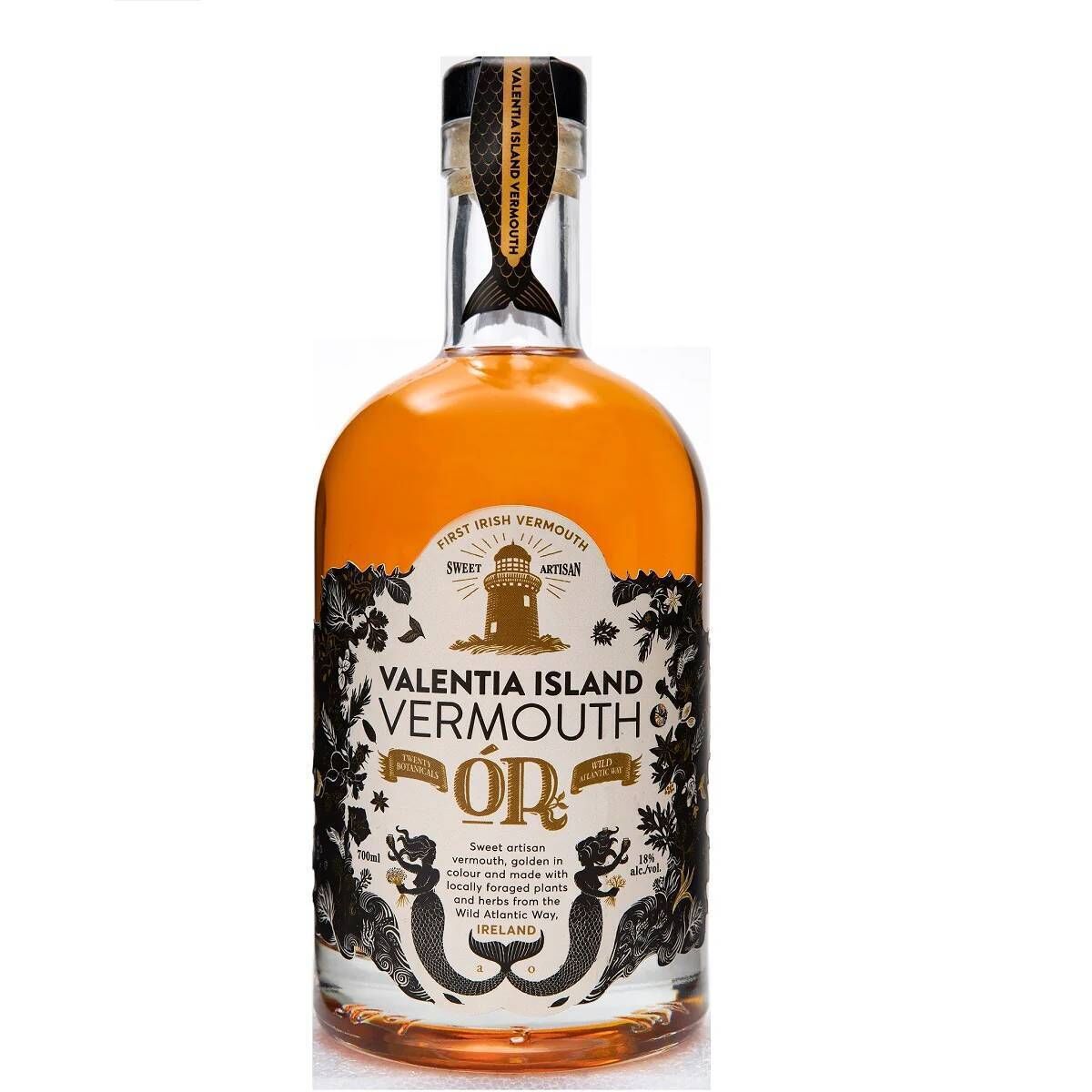
- 50ml Valentia Island Vermouth
- 50ml fizz (cava, Prosecco, or Champagne)
- 1 dash cherry liqueur
- Maraschino cherries
Fill a big wine glass with ice and add the vermouth, fizz, a dash of cherry liqueur, and garnish with maraschino cherries. Luxardo is the cherry liqueur we used. Add a dash of soda water if you wish.
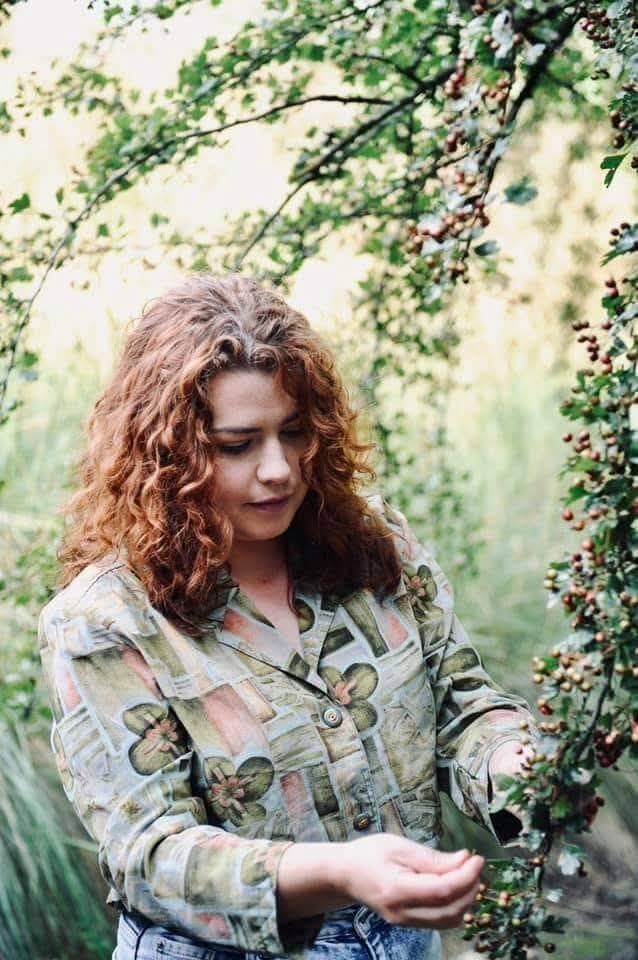
Linda O’Flynn spent the first 10 years of her life living on her grandparents’ farm near Mitchelstown, little realising back then that the unfettered freedom to roam the countryside, immersing herself in nature, would eventually come to bear on her professional career.
Now, as beverage director at Cask, the internationally renowned cocktail bar on Cork’s MacCurtain St, specialising in seasonally changing cocktail menus, she oversees the foraging of wild ingredients to be used in the creation of a range of liqueurs and other liquid additions employed in making uniquely Irish cocktails for the award-winning bar.
“It was a very quiet, isolated way of growing up,” says Linda, “we were given great freedom, no restriction on time, only home when you were hungry. We had that connection with the land and those kind of rhythms, time didn’t really exist.
“My mother and grandmother were both really good ornamental gardeners but I couldn’t grow plants like that or didn’t have any desire to work with plants like that. I didn’t have a green thumb, I thought.
“But in fact it was the weeds, the forgotten plants that aren’t as pretty as a beautiful rose bush that interested me and called me back in my mid 20s: Dandelion, hawthorn, meadowsweet, elderflower, sloes, rosehips, blackthorn.
“Aroma was a a really strong part, especially when the seasons change, there’s a real memory association. It brings me back to that simple, slower way of being. Heady aromas, especially like hawthorn and meadowsweet, naturally relax me because they bring me back to a slower time, they remind you of a change of season.
“I was very aware as a child of cycles and seasons, my perception of time was ruled by the land, we were all very connected to it.”
While studying at UCC, Linda worked in bars, eventually winding up in Cask where after six months she became head bartender, working on cocktail menus with Cask co-owner Andy Ferreira and then beverage director Carl Dalton. At the same time, she was doing a two-year apprenticeship in herbalism, putting real structure on her knowledge of the natural world gleaned as a child.
“I was working with native plants versus what would be used in Chinese medicine or ayurvedic medicine. It was a deep dive into plants, not just for drinks, and a full exploration of native ingredients, so the Cask ethos was perfect
timing. Had it not happened that way, I might well have gone down the herbal medicine route and never really explored plants in terms of flavour.”
In 2019, Linda won World Class Irish Bartender of the Year with her version of an espresso martini, using all parts of the dandelion along with vodka to create a drink with a similar profile to the original classic cocktail. She then went on to represent Ireland at the World Class Cocktail Festival finals, in Rotterdam.
“We were tasked with doing a twist on a classic and the whole idea of using the dandelion was to challenge the idea of what weeds are — after all, its the poster child for the largest weedkiller in the world, it’s on the label of every bottle of Roundup — but it is one of the most nutritionally dense and versatile plants in the world and I wanted to show what it can do.”
Linda left Cask to have a baby in 2022, becoming co-founder of a wild fermentation company, Terra Ignis. During her time away she developed her expertise in the wild fermentation of native plants, using yeasts and bacteria on native plants to kickstart fermentation.
“I returned to Cask with a whole new level of knowledge, my perspective too has changed. I’m a mother now, how I interact with the land has changed. It seems like a really natural shift, four years ago if I tasted pine, I’d just taste resin of pine but now. this year, I’ve been getting citrus and smoke, flavours that I never got before so that opens up a whole new world of possibilities in capturing the landscape.”
While plans are still somewhat under wraps, the Cask team are working on a hugely ambitious plan to create a “fifth season”, a space between seasonality, that truly reflects the landscape and the artisan producers creating food from that landscape. If it comes off, it will be a game changer for the cocktail world.
“We are trying to find a way to express plants all year round without causing havoc to the environment, and paying tribute to the land and the people who work it.”
A fireside take on the classic hot brandy, this version layers Hennessy with blackberry, spice, and a touch of port. It’s rich, aromatic and perfectly balanced — the taste of winter hedgerows in a glass.
- 40ml Hennessy VS
- 15ml tawny port
- 10ml blackberry spice syrup (see below)
- ½ tsp honey
- 60ml hot water (or blackberry leaf tea, optional)
- Lemon peel and cinnamon stick, to garnish
Combine blackberry syrup, honey, port, and Hennessy in a heatproof glass. Top with hot water (or tea) and stir until the honey dissolves. Garnish with lemon peel and a cinnamon stick.
Makes about 250ml
- 150g blackberries (fresh or frozen)
- 100g sugar
- 100ml water
- 1 small piece fresh ginger (about 2cm), sliced
- 1 strip orange peel
- 1 small cinnamon stick
- 2 cloves
- 1 pinch allspice (optional)
Add all ingredients to a small saucepan and bring gently to a simmer. Cook for 10–15 minutes, stirring occasionally, until the berries collapse and the liquid thickens slightly.
Remove from the heat and allow to infuse for 10 minutes. Strain through a fine sieve and bottle. Keeps up to two weeks in the fridge.
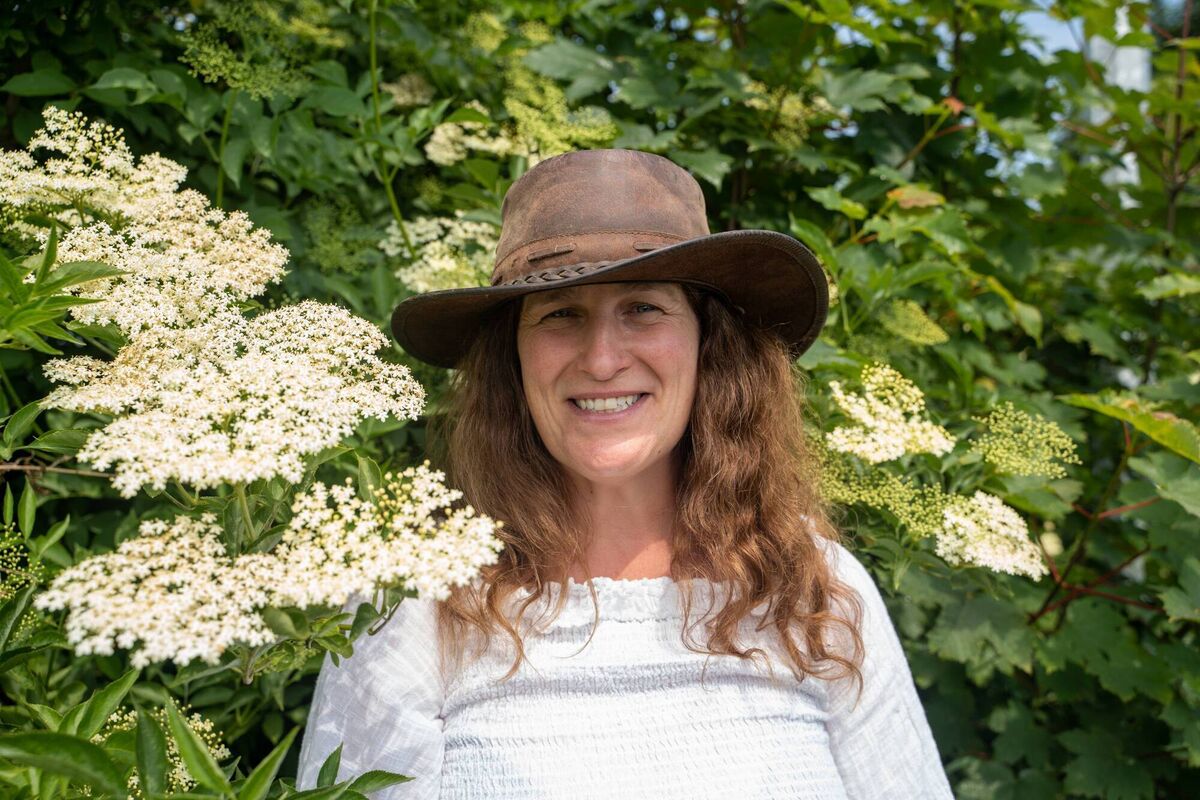
Botanical forager at Glendalough Distillery, Geraldine Kavanagh grew up in Wicklow, near Avondale Forest park, where she passed much of her childhood.
“I was always a very outdoors person,” says Geraldine, “very fond of plants, liked being out in nature. As a teenager, I’d get books on plants.”
Geraldine began studying Russian and French at Trinity but, while working on an organic farm in her third year, realised how much she missed the outdoors.
“I’d go to work barefoot, I had 20 goats, and I was very happy.”
She worked on organic farms throughout her 20s as well as working with retail outlets selling Irish speciality food produce, much of it organic, until she had her first child in her 30s and began to learn about foraging as a hobby.
As her young family struggled to live on her partner’s income alone, in 2011, she started a wild food tours business.
“I still do the tours, teaching people how to forage safely. It wasn’t popular at the start, maybe just two or three people, but now they are always booked out.”
That business soon evolved, as she started selling forage-based ingredients from a food stall, which featured in the press in 2014.
“The guys from Glendalough had just purchased a gin still and made a couple of batches which were nice but had no connection to Wicklow. So they saw an article and called me up and asked would I be interested in creating a gin using wild Irish plants from Wicklow — which is ideal as it has coast, rivers, mountains, and forest.
“They were looking at what could express the county in a bottle. They had a really nice base [gin] recipe and that May, I picked blackberry leaves, blackcurrant leaves, elderflower, honeysuckle, clover flowers, Douglas fir needles, and wild mint, yarrow, quite a lot of different things and some fruit as well.
“The guys took them all back and distilled the gin and were really happy with it. It turned out really well, using fresh botanicals, you get a lot better flavour from fresh rather than dried. After two batches, all the botanicals we are using now will be gone in a few weeks so we came up with the idea of making seasonal gins for that reason and they all had different personalities and have been a huge success, nationally and internationally.”
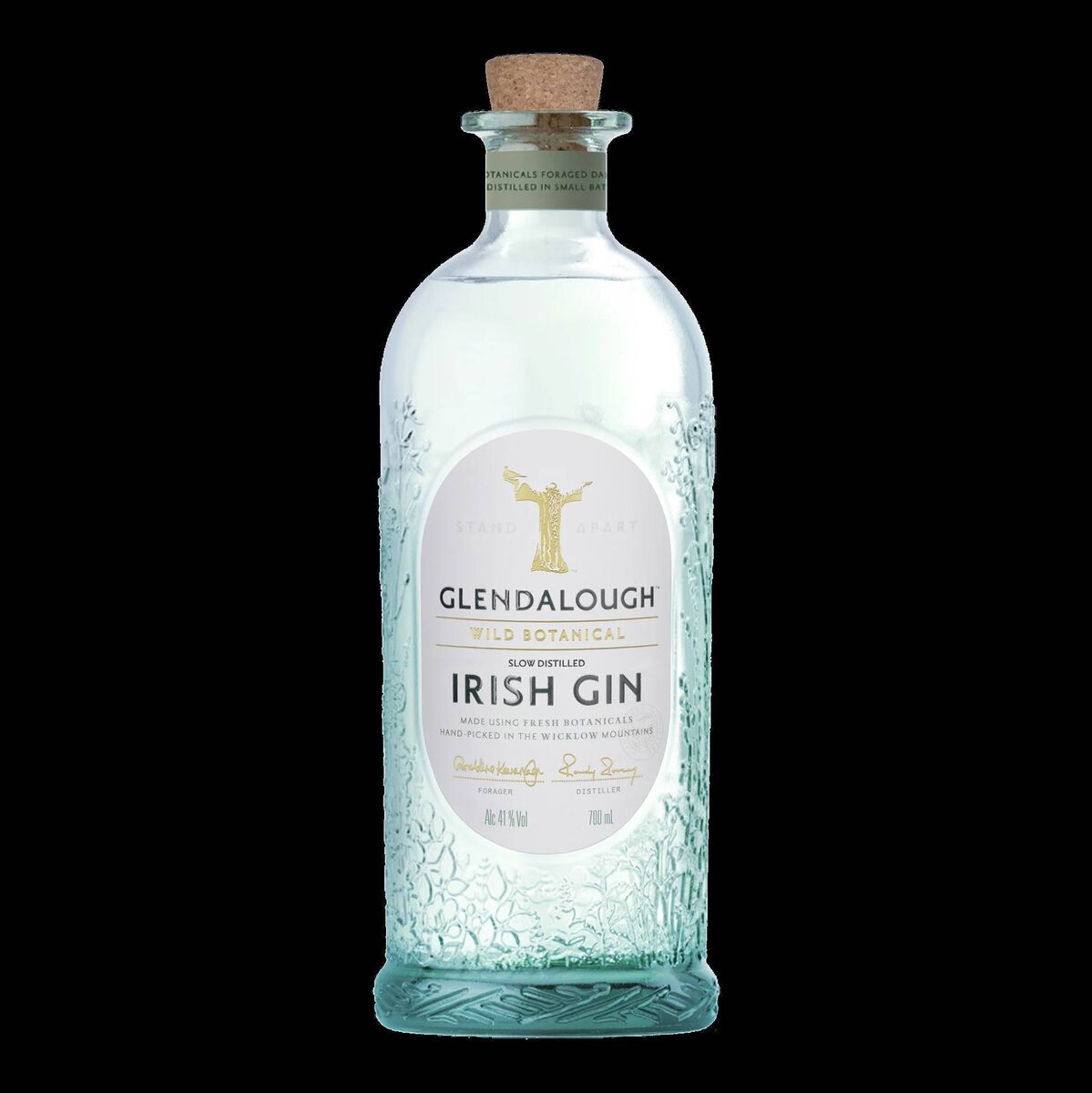
Recipe by Darren Geraghty, Hawksmoor, Bar Manager of the Year 2025.
- 45 ml Glendalough Wild Botanical Irish Gin
- 15ml Highbank Orchard Syrup or homemade apple syrup (see below)
- 7.5ml Monin Apple Pie Syrup
- 2 dashes orange bitters
- 2 dashes Angostura bitters
- 7.5ml lemon juice
- 75ml hot water
- 30ml vanilla cream (see below)
- Freshly grated nutmeg and thin apple slice to garnish
Add Highbank Orchard Syrup or homemade apple syrup, Monin Apple Pie Syrup, bitters, lemon juice, and hot water to a pre-warmed glass.
Pour in Glendalough Wild Botanical Irish Gin and stir gently. Float vanilla cream on top, and garnish with freshly grated nutmeg and a thin apple slice.
Combine 240ml good cloudy apple juice with 160g demerara brown sugar in a small pan.
Bring to a high simmer, add the sugar, and reduce to a third of the overall volume. Cool before use.
Lightly whip 75ml vanilla essence with 510ml cream.