'People can’t cope with the stress, they can’t eat, can’t sleep, they can’t function'
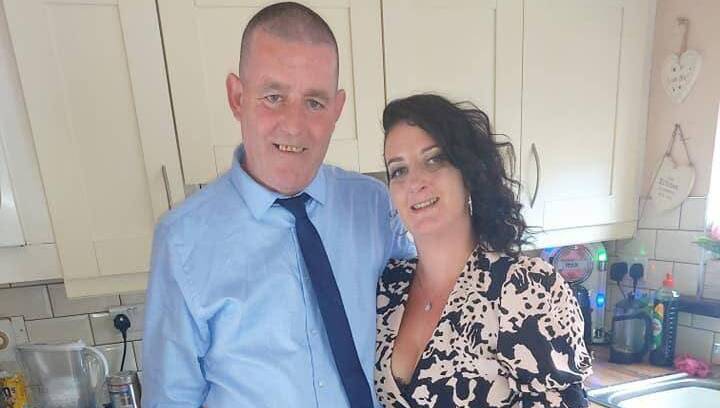
Philip and Kim English, who, along with two of their children, died after their home in Waterford was petrol-bombed.
Waterford City councillor John Hearne says about 40 people have come to him in the last three years because of drug-related intimidation.
He has dealt with cases of people being beaten with hammers, mothers paralysed with fear in their homes and attempting suicides due to the stress of constant intimidation.
The Sinn Féin councillor has also dealt with numerous arson attacks, both on cars and family homes.
He visited Birchwood estate on Tuesday after news spread of the petrol-bomb attack that morning, which killed parents, Kim and Philip English, and their sons, 12-year-old Callum and Jayden, aged nine.
The couple’s two other children, aged six and 14, remain in a critical condition at Crumlin Children's Hospital in Dublin.
Gardaí are investigating if the firebombing of the English home was part of an escalating campaign of intimidation over a drugs debt.
It is thought Mr English had taken on the debt of someone close to him and was being intimidated over payments.
The person he took the debt on for is not connected to the home in Birchwood.
Three years ago, the family car was covered in paint outside their home — after which the couple spoke to local WLR radio — and, last month, there was an arson attack at the house.
Read More
The gang suspected of being behind the intimidation is led by brothers from another part of the city. Garda searches took place at homes connected with them on Tuesday night.
“I had met Philip numerous times," Cllr Hearne said. "He'd often be up to me with various issues with his house. I knew his dad well and his sister — sound out people.
“I’ve dealt with roughly 40 people in the last few years,” he said. “People come to me because they are too afraid to go to the guards. I pass on the information to the guards and they investigate. The system works well and, in fairness, I can’t fault the guards, they have had great success.”
He said gardaí in Waterford have even caught people “red-handed” about to throw petrol bombs at houses, the result, he suspects, of gardaí placing surveillance on targets they had received information about.
He said people might sometimes meet with the dedicated divisional officer that deals with drug-related intimidation and some are brave enough to go to court.
Each Garda division has an appointed inspector to deal with drug-related intimidation.
Mr Hearne said he had come across cases of people owing “up to €70,000” to dealers.
“I’ve gone to women in their homes and they have bars on the windows and are drinking cups of Solpedine to try and cope," he said.
“There was one person who had three different outfits kicking in her doors. A couple of years ago, I had a case where a petrol bomb was thrown in through the window.
He added: "People can’t cope with the stress, they can’t eat, can’t sleep, they can’t function — it’s on the brain all day.”
Drug-related intimidation cases often feature in Waterford courthouse.
Last week, three brothers pleaded guilty to a violent attack on a man who was lured to a shed in St John’s Park, beside Birchwood estate, over a drugs debt.
Michael McDonagh, Andrew McDonagh and Bernie Patrick McDonagh, with addresses in Cahir, Co Tipperary, and Waterford City, admitted their roles in the assault.
Waterford Circuit Criminal Court heard that, last October, the victim was lured to a shed at St John’s Park in relation to the debt. All three men attacked him using copper pipe bars and a hammer.
The victim was unable to walk for three days after the attack. He suffered a bleed on the brain and a fractured skull and spine.
The brothers will be sentenced in January.
Last March, gardaí secured significant prison sentences against two men, one from Dublin, in relation to calling to the home of a person in the city and demanding €10,000 for an alleged drug debt.
The multiple fatalities in Waterford follow the deaths of four-year-old Tadgh Farrell and his grand aunt Mary Holt, aged 60, when their home in Edenderry, Co Offaly, was fire-bombed last December in a drug-related attack.
The Drive (Drug-Related Intimidation and Violence Engagement) Project revealed last May there were 1,027 reported cases of drug-related intimidation nationally in 2025 and 2024, when systematic recording started.
The report said drug-related intimidation was “pervasive and under-reported” and affected both urban and rural areas.
Waterford had the fifth highest number of reported cases (33), after Dublin, Cork, Tipperary and Limerick.
Of the 1,027 recorded incidents, 558 (64%) involved threats to the individual owing the money and 218 (25%) involved threats to the family.
Some 88 of the incidents involved property damage, 171 involved violence to the individual targeted, and 40 incidents involved violence to their family.
In 30% of cases, the intimidation went on for longer than a year. In only 98 cases (10%) did the victim report the matter to gardaí.
It said reporting remains low due to “fear of reprisals, proximity to intimidators, stigma and limited awareness of supports”.
The project was set up in 2020 by the Department of Health and is managed by a national oversight committee comprising State agencies, drug taskforces and voluntary groups.
Much of its work since has been trying to set up a reliable and accurate data system and support services.
Last September, drugs strategy minister Jennifer Murnane O’Connor said she was allocating €65,000, in addition to recurring annual funding of €280,000, to Drive.
Mr Hearne, whose own car was damaged in 2014 as a result of highlighting drug-related intimidation, said he would like to see a "mini-CAB" operating in the area, referring to the Criminal Assets Bureau.
He said he was also concerned at the impact of the tragedy on other affected families: "Of course it will affect them, so we have to crack down on the those intimidating them all the more. And people should know there are people out there, in the community and the gardaí, who are there to help."


CONNECT WITH US TODAY



Be the first to know the latest news and updates