Paul Hosford: Covid has made it difficult for Governments to refuse financial dig-outs
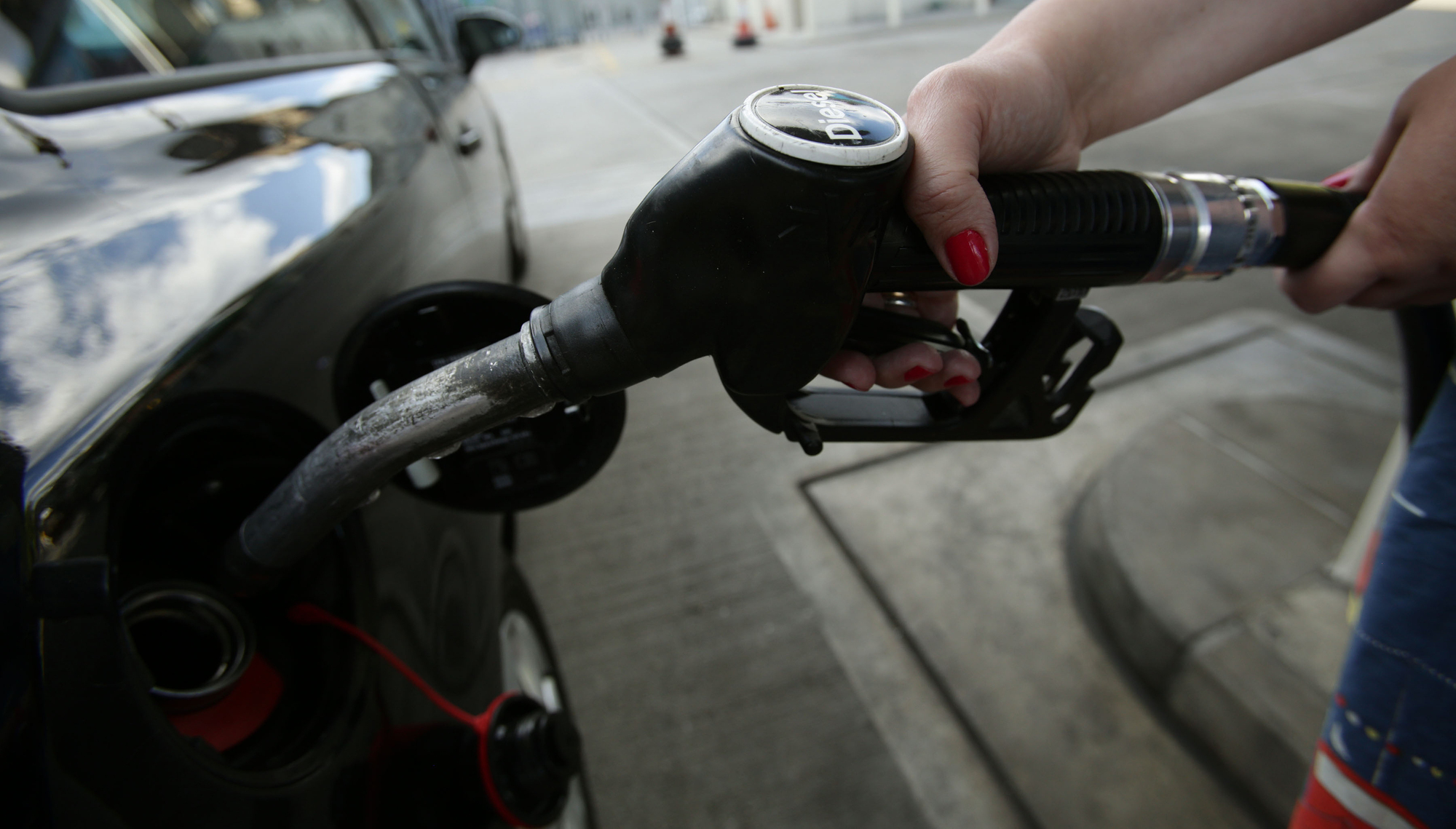
The problem is particularly acute with fuel because taxation is a major component of the pump price and because motorists have relatively limited short-term alternatives. A government can therefore produce an immediate and visible reduction in prices by cutting tax. File photo: Yui Mok/PA
It is hard to believe that it is now six-and-a-half years since covid-19 lockdowns ground the world to a halt.
While most have thankfully put that grim period behind them, an aspect of that time's architecture remains with us. In the days and weeks around lockdowns, the Government unleashed billions in payments to keep people employed where businesses had taken earnings hits and to pay those who were suddenly out of jobs.
The two years of lockdown saw €9.1bn in pandemic unemployment payments and €9.5bn in wage subsidies paid out in a bid to keep Ireland's economy and public buy-in to public health measures strong.
The fast pace of the economic recovery and the relatively good performance in protecting against the virus showed that these were justifiable outlays, but they showed the Government's hand in many ways.
No longer could a scheme be called too complex or a financial outlay be deemed too high. That the Government then followed with six rounds of cost-of-living packages totalling some €12bn further increased the belief that the two parties in the current coalition will open the coffers often.
The announcement last week and confirmation by the Cabinet on Thursday that cuts to excise duty on fuels due to roll back next week and in October would be deferred until November illustrates a growing difficulty for governments. Once intervention becomes the political response to rising prices, withdrawing that intervention can become almost as difficult as introducing it.
In March 2022, the Government cut excise duty by 20c a litre on petrol and 15c on diesel, at an initial cost of about €320m. The cuts were explicitly described as temporary, yet they were repeatedly extended as fuel prices remained high.
And make no mistake, the intervention did provide immediate relief. A driver filling a 60-litre tank saved roughly €12 on petrol and €9 on diesel from the initial reductions. But it also created a political expectation: when prices rise, the State will step in to cushion consumers. That expectation is difficult to reverse.
The same pattern appeared with the wider cost-of-living crisis. Temporary electricity credits, welfare lump sums, Vat reductions and fuel supports became successive rounds of government intervention.
In February 2023, for example, the Government extended the fuel excise reductions and introduced a phased restoration rather than immediately returning to normal taxation. The extension alone was estimated to cost €383m.
The problem is particularly acute with fuel because taxation is a major component of the pump price and because motorists have relatively limited short-term alternatives. A government can therefore produce an immediate and visible reduction in prices by cutting tax.
But every reduction also means less exchequer revenue, while restoring the tax subsequently appears politically as a price increase. This latest timeline means rolling back cuts just weeks after the Budget and again ahead of Christmas.
Will the Government have the stomach for such a fight?
This is where intervention can become a habit. What begins as an emergency measure gradually becomes the baseline against which consumers judge prices. Removing the subsidy then feels like imposing a tax increase, even when the original tax is simply being restored.
There is a legitimate case for temporary intervention during an extraordinary shock, particularly to protect low-income households and economically vulnerable sectors. But permanent or repeated universal subsidies are harder to justify.
The danger is not intervention itself. It is losing the distinction between an emergency response and normal economic policy.


CONNECT WITH US TODAY



Be the first to know the latest news and updates