Liz Carolan: Migrants pay a deadly price in Ceuta disinformation disaster
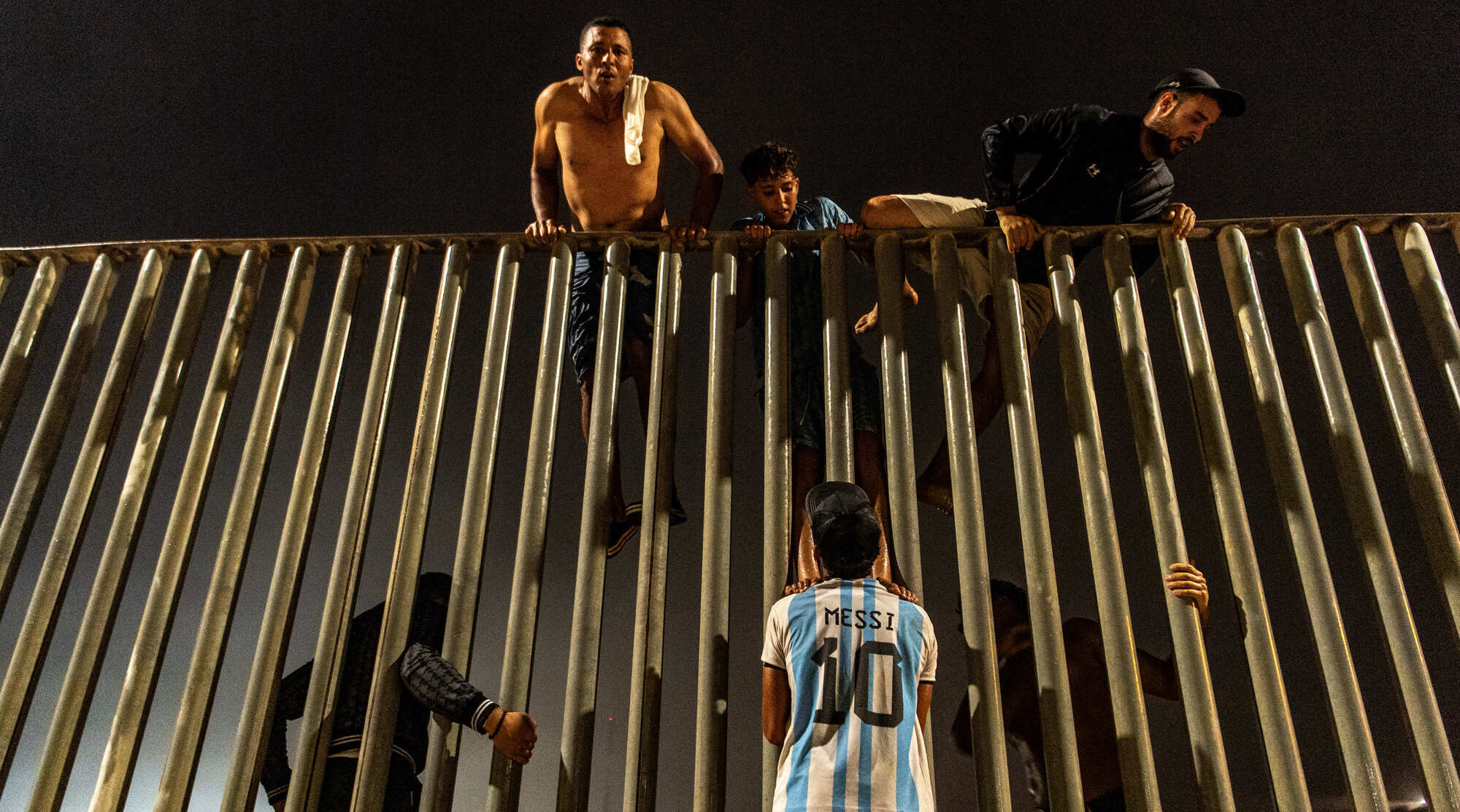
Migrants try to cross from Morocco into the Spanish enclave of Ceuta on Friday. Photo: AP/Antonio Sempere
The normally obscure Spanish territory of Ceuta found itself at the centre of a global news frenzy this week.
The and BBC were among many outlets leading with the story through the weekend of how over two days more than 50,000 people crossed illegally from Morocco into the Spanish territory. Hidden within that political story is a tragic one of lies, manipulation, and broken dreams, likely facilitated by social media, that left dozens dead.
And now a further wave of disinformation on the situation is sparking a bitter Europewide political fallout. It is as if all the layers of neglected dysfunction in our information environment have come together into one deadly, toxic mess, in one chaotic weekend.
A picture is emerging of a deliberate disinformation campaign that convinced tens of thousands of young people in Morocco that a recent Spanish Supreme Court ruling had opened a window of opportunity to a better life, and that crossing into Ceuta would be easy.
Read More
We do not yet know who was behind this campaign, but fingers are starting to be pointed at everyone from human traffickers to Trump to Morocco’s King Mohammed VI.
It will not be long before the social media platforms that facilitated the spread of this campaign become a part of the web of culpability, with predictable questions about Ireland’s role in governing these firms.
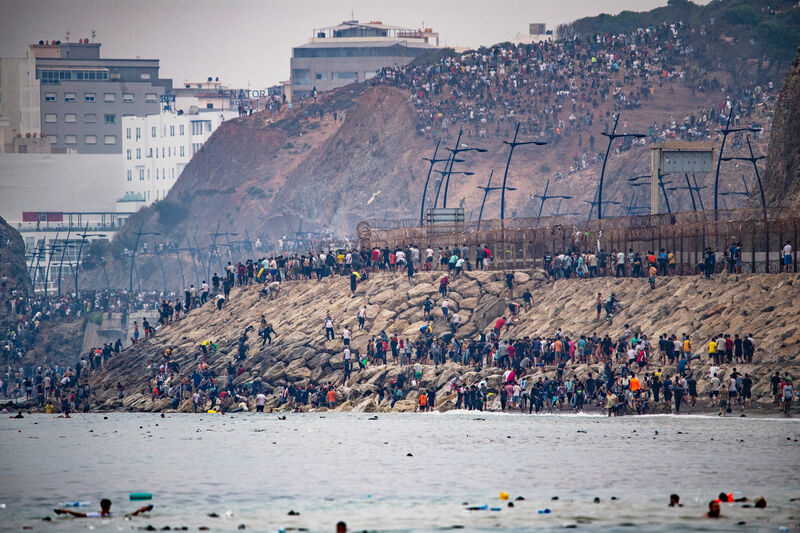
Between Thursday and Friday of last week, an estimated 50,000 to 60,000 people overwhelmed the border crossing of Ceuta, a small peninsula home to about 84,000 residents that has been owned by Spain since the 16th century. Many opted to swim the stretch of open sea that bypasses the heavily fortified border checks, a distance that has been variously reported as between five and 10 kilometres.
It appears that many young Moroccans travelled from across the country to attempt the crossing in response to online rumours and stories. One young woman interviewed by Reuters on the Moroccan side of the border was waitress Dounia Kherradi, who lived a nine-and-a-half-hour drive away.
"I came here to seek a better future,” she said, “my salary is not enough to take care of my parents and I have a daughter... may God help us."
Another was 16-year-old Ayoub El Abyad, who told Reuters that after seeing Instagram videos of migrants boasting about their successful crossings he and his cousin decided to try their luck, despite being a 12-hour drive away.
Over the past few weeks social media algorithms have pushed content at young Moroccans amplifying rumours that a July Spanish Supreme Court judgement meant that in effect, the border was open. They also portrayed the journey into Ceuta as relatively simple.
Spanish online newsite found that hundreds of accounts were set up on popular platforms such as TikTok and Instagram targeting Moroccans and sharing practical information on making crossings. While many were shut down, they soon reappeared with new handles and profile descriptions claiming they “do not encourage migration”.
identified dozens of these so-called “burner profiles” sharing influencer-style videos with upbeat music and young Moroccans documenting the steps in their journey, ending with them walking freely through Ceuta's streets and celebrating on local beaches.
Videos give practical advice on the ideal group size (seven people), equipment (wetsuits, snorkel and fins), and what to do for small children and those who can’t swim (“we recommend using flotation devices”, the videos advise, according to this reporting).
This was not a reflection of reality. At least 67 people died trying to make the journey. Speaking with reporters at , the mostly young people spoke of how they had to pass dead bodies on the journey, of how they were treated with violence once they arrived, and were refused access to food.
All this, only to be told that there was no path for them to go anywhere but back home to Morocco. They had been lied to.
One young man told the DW reporter:
By the end of the weekend, it is estimated that all but about 4,000 had returned, most voluntarily walking back through the land border.
In one widely shared interview you can watch the dawning realisation on an unnamed young man’s face as the reporter tells him that despite what he read “on Facebook and Instagram”, he could not claim asylum and stay. It is the look of a man who just risked his life for a lie.
As to the origins of what appears to be an organised disinformation campaign, little is known, but fingers are starting to be pointed. The Spanish prime minister has blamed human-trafficking networks for misleading migrants about the ease with which they could remain on Spanish territory.
Some are looking to the Moroccan state. A representative of the International Crisis Group has said that evidence points to “some sort of Moroccan official role in this to send a message”. According to the , several migrants said in interviews that Moroccan police officers on that side of the border waved them through or even encouraged them on.
And, per the same reporting, Spanish officials have complained during previous waves of migration that Morocco saw migrants as a kind of currency, leveraging border security to extract financial concessions from Spain. Over the weekend Spain approved €30m in aid to Morocco for border policing.
Meanwhile, the reports that on the ground conspiracy theories are spreading that Trump could even be involved, “given his enmity towards Spain’s left-wing prime minister Pedro Sánchez and closeness to Morocco’s King Mohammed VI”. The White House for their part has blamed "far-left globalist policies" for the situation.
The initial disinformation campaign was quickly succeeded with a second, which may have further reaching political implications. The Ukrainian foreign minister commented on X that his Government had identified an “intensive Russian propaganda campaign across Europe using pictures from Ceuta to sow destabilization”.
The story has become fodder for far-right groups across Europe, who suggested that the people who made it across the border now had free access to the EU.
This is not the case; none of the would-be migrants made it beyond Ceuta to mainland Spain, a journey that requires additional document checks.
But a disappointingly large number of EU Governments including France, Denmark, Finland and Italy have either toughened border checks, criticised Spain or called for their suspension from the Schengen zone.
Interior ministers from across the EU were called to an emergency meeting on Tuesday to discuss the matter.
In Ceuta, disinformation had at least a double impact, from the immediate and tragic to the longer term and political.
It is hard to see how we reach this point without our rotten information architecture, the manipulation machines inside our phones delivering harms that compound each other.
Those deaths, and any resulting irrational shifts in policy are the price we now have to pay for a decade of failing to assign real accountability for disinformation to social media platforms, and for not forcing them to do better.
And as the EU’s digital rulebook enforcer, a big part of that blame sits right with us here in Ireland.

CONNECT WITH US TODAY



Be the first to know the latest news and updates