Bohemians FC shows power of community — the EU could learn from it
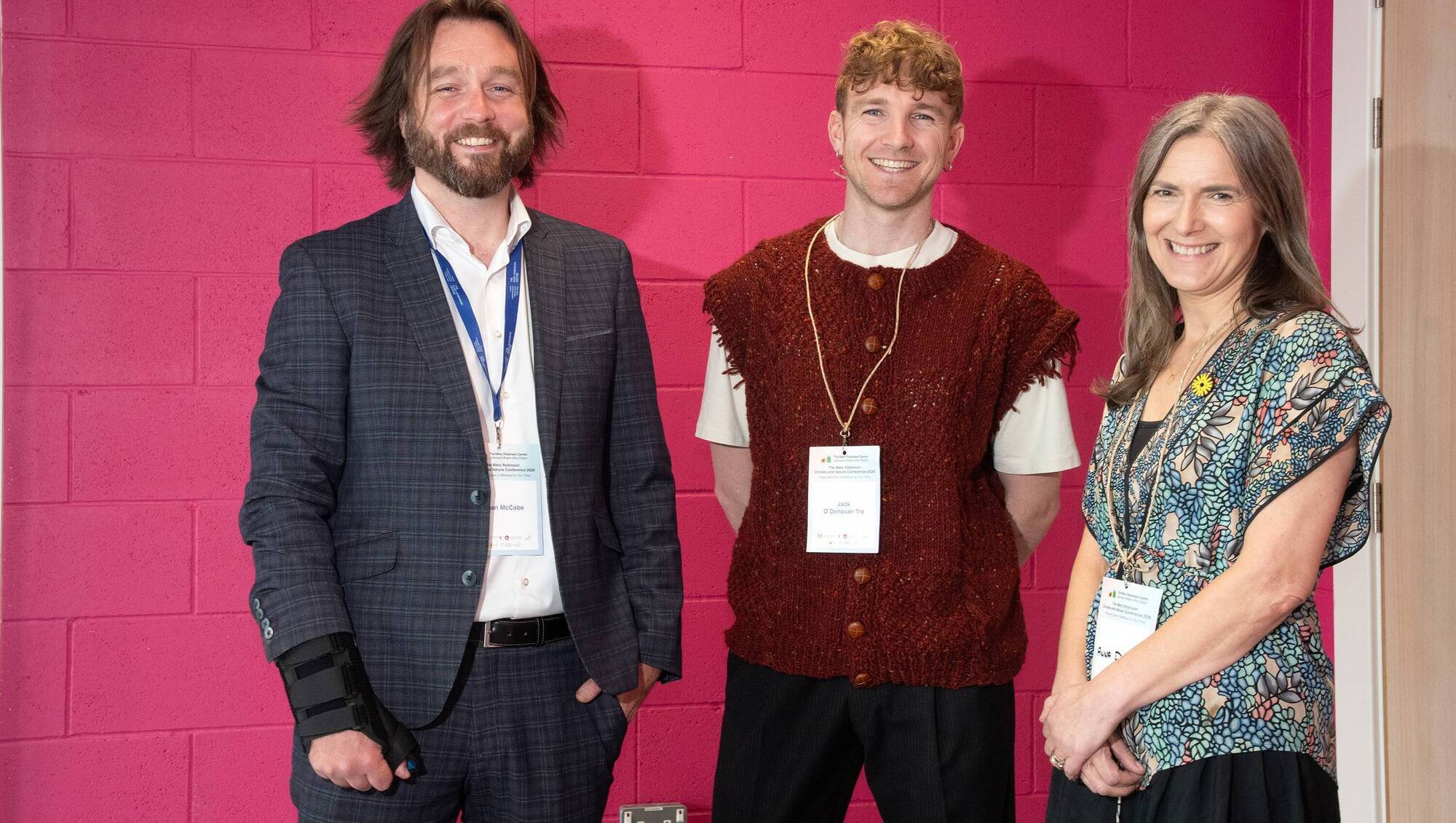
From left: Seán McCabe, Bohemians FC; Jack O'Donovan, Fairseas; and Professor Anna Davies, TCD, at the Mary Robinson Climate and Nature Conference — Food and Care: A Meitheal for Our Time — at St Mary's Secondary School, Ballina, Co Mayo. Picture: Alison Laredo
“Nobody is coming to save us. That’s not a tragedy, it’s a permission slip.” This is how Seán McCabe of Bohemians Football Club begins his talk on community wealth building at the Mary Robinson Climate and Nature Conference in Ballina.
Bohs is a member-owned club with a unique focus on sustainability and solidarity, demonstrating social justice that can be achieved by a community brought together by sport. As an opener, it was less a warning than a call to action. The kind that makes you put your phone away and lean forward to catch every word.
I particularly like the "us". If we are in a pickle, at least we’re in it together. I’m soon thinking about how some communities enable individuals to pull each other up, while in others, little headway is made.
While Seán speaks about building community agency, I find myself admiring the new Project Dandelion badge I received on arrival at the conference, and thinking how I’ll fix it to my highly coveted Sustainable Development Goals lanyard when I get a minute.
Read More
If nobody is coming to save us, why am I wasting time on conspicuous displays of activism? Or is my willingness to don the figurative green jersey the sign of positive momentum? People’s readiness to wear badges, emblems, logos or symbols is a useful, if crude, performance indicator, a confirmation the mission is shared, that a sense of common purpose has been achieved.
Symbols make belonging clear. They are touchpoints that help tell the story of who we are and what we want. They give us permission to take action, and that is particularly important when it comes to the issue of climate, so stiflingly complex it can make individual agency evaporate.
Mary Robinson is a symbol of climate justice in her own right, both locally and globally. She co-founded Project Dandelion, a women-led global campaign for climate justice. The dandelion was chosen as a symbol of hope, because it spreads like a weed, resilient, relentless and taking root in "any opening in every path".
But a successful movement is more than its badge. There must be a shared benefit, a common purpose, a sense of belonging and then something tangible that can express that belonging. So, for example, the dandelion is inviting, but behind it is a short list of goals around shifting to renewables and helping those least responsible but most impacted (by climate breakdown), so everyone in the community knows what they are asked to do.
Anyone can join Project Dandelion. Even men. You only need, the website says, "above all, to act". The staff and volunteers from the Mary Robinson Centre prove this point, giving up summer days to host a significant climate and nature conference in Ballina, to make something tangible happen.
And those symbols must be tended, because neglected symbols can be co-opted to hate. After which it’s difficult to retrieve them.
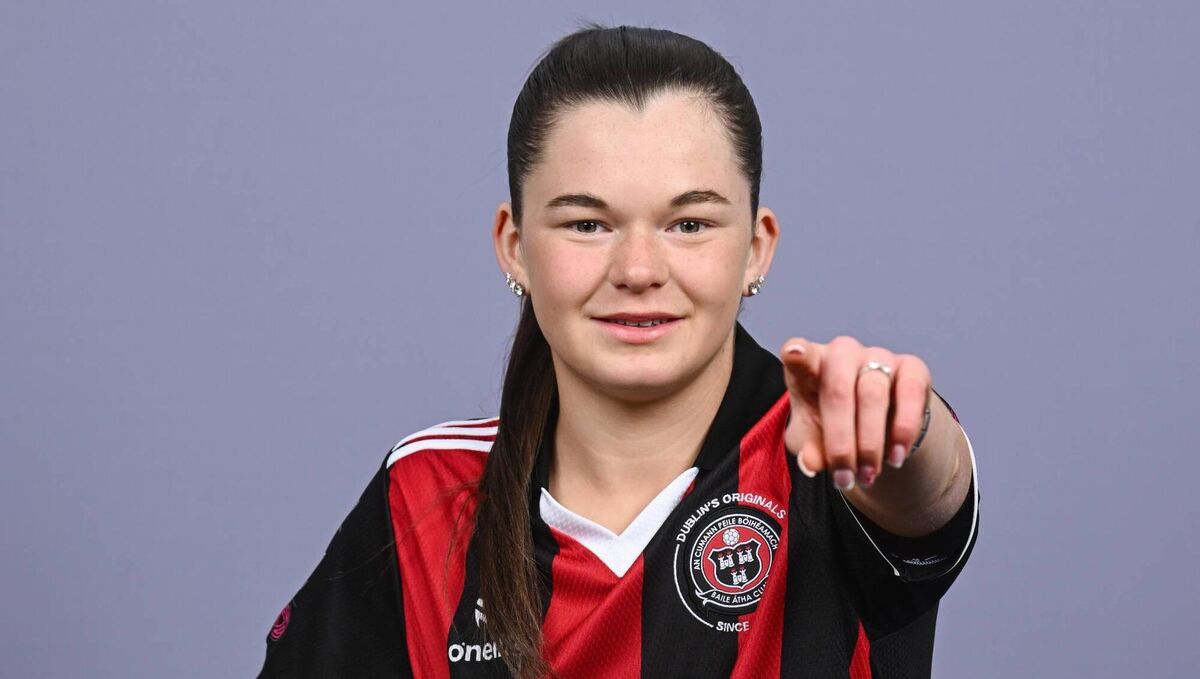
Look what happened to the Irish flag. We got a gift of a stick of rock recently and even on a piece of candy, the tricolour looks strangely intimidating now. Bohs, by contrast, has a community identity so strong its brand can carry messages of solidarity on its uber-cool football jerseys. Among corporate sponsor logos, there’s Bob Marley and Fontaines DC, Palestine and an invitation: Refugees Welcome.
Communities are there at every scale, from neighbourhood associations and football clubs to a political union of 27 countries. Some communities, Bohs, or the GAA for example, are easy to be part of. Others struggle to create a sense of belonging.
The European Union is a community of 450 million people, but it's not very good at expressing itself as such. The shared benefits are so clear: investment in roads, Erasmus, the EU Green Deal, chemicals regulation, the common market.
But with 27 diverse member states, a sense of shared purpose, and a sense of belonging, is harder to cultivate. From April to June 2026, the commission reportedly spent more than €30m on an advertising campaign: ‘Protect what matters: our democracy’, highlighting the union’s contribution to freedom of speech, freedom of press and academic freedom. The campaign is much needed, but unfortunately, the content was quite bland.
Its response on Gaza completely undermined my sense of belonging to the EU, yet I still believe as a community it represents one of our strongest chances to work together to save ourselves and the planet.
With so many challenges, climate and cohesion chief among them, the EU needs to invest more in generating a sense of shared purpose and a sense of belonging. Metaphorically, it needs better merch. More importantly, it needs people who want to wear it.
Nobody is coming to save us. I wonder if I could get that made up in neon lights?
- Angela Ruttledge is head of policy at FoodCloud

CONNECT WITH US TODAY



Be the first to know the latest news and updates