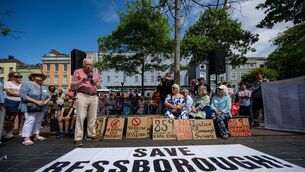
Limerick’s superblock trial needs everyone’s buy-in
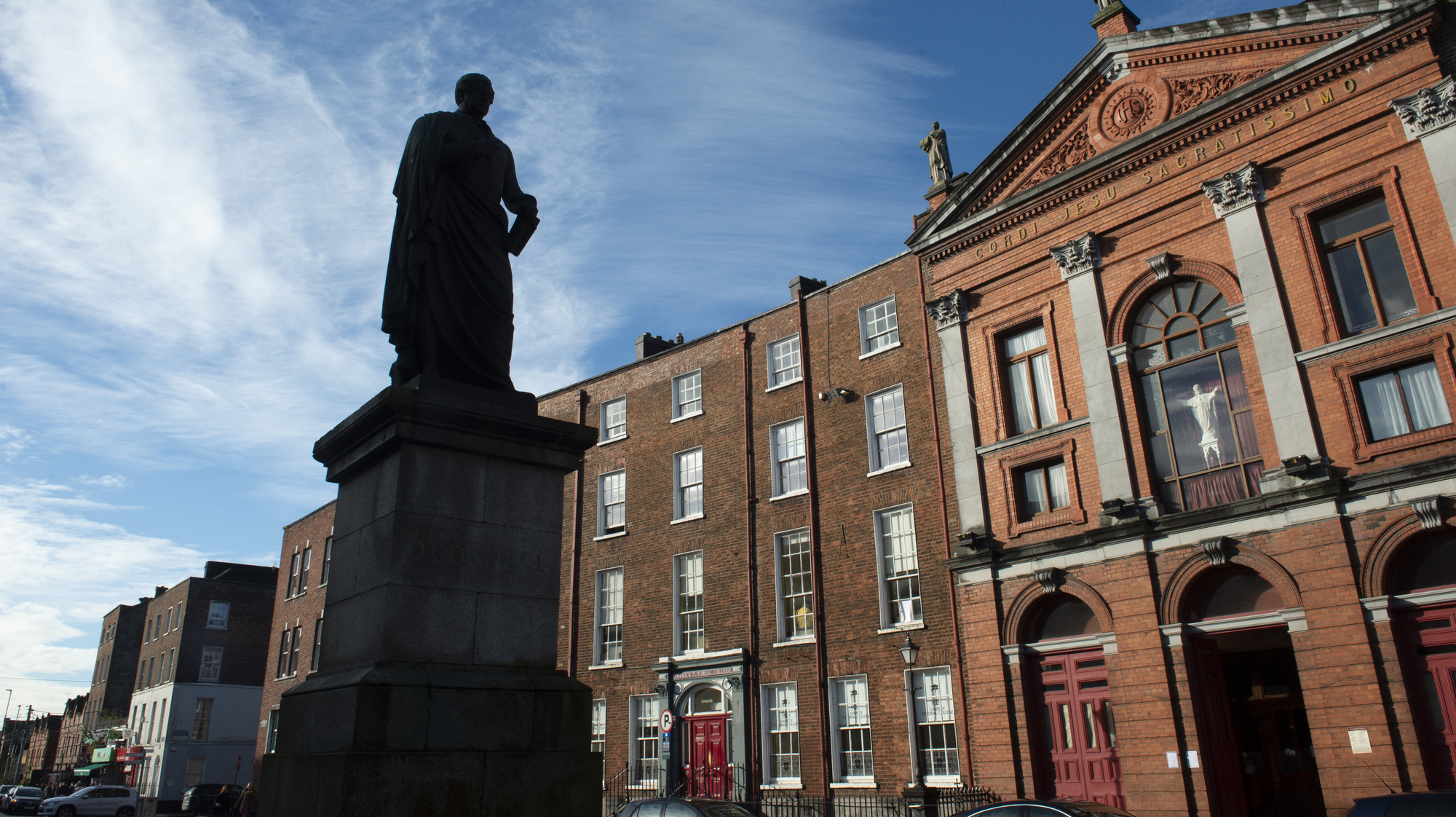
Reticence from local businesses about the superblock plan is understandable, especially in light of the negative experience reported by retailers during the trial closure of The Crescent in 2024 to allow local organisations to host outdoor events. File picture: Dan Linehan
This summer, Limerick finds itself in an enviable position. It has the rare opportunity to embark on the kind of far-sighted civic undertaking that could catapult it into the vanguard of European planning, charting a path for other Irish cities to follow.
In June, the city’s directly elected mayor, John Moran, announced a programme of transport trials, cultural events, and public space enhancements to be implemented during July and August. Arguably, the most transformative and therefore the most contentious is the creation of a superblock, an intelligent traffic flow system executed in a defined grid.
While local residents, emergency services and commercial deliveries are permitted to circulate within the grid, through traffic is redirected along its perimeter, freeing up space for pedestrians, cyclists and local commerce.
Since first being introduced in Spanish cities like Barcelona and Vitoria-Gasteiz, it has been the biggest phenomenon to hit urban planning since the advent of the city bike scheme. And like that innovation before it, it has quickly spread among enlightened urbanists eager to demonstrate progressive credentials.
Now, every Sunday for the rest of the summer, Limerick too will join the list of cities like Berlin and Vienna that have taken the bold step towards making cities more liveable, people-centred places. If this project is going to be successful, it needs the buy-in of the traders and retailers who stand to benefit or lose out depending on how well it is executed.
Read More
At the moment, it has tentative support from local businesses. In a survey by Limerick Chamber of Commerce, 30% of respondents expected the superblock trial to have a negative impact on trade, while 24% objected. Another 45% were in favour, while 12% of respondents wanted to see changes made to the plans.
In correspondence directed to Mr Moran, Chamber CEO Donnacha Hurley said: “In several cases, high levels of neutrality suggest that businesses are reserving judgement until they see greater detail on what will actually be delivered.”
This reticence is understandable, especially in light of the negative experience reported by retailers during the trial closure of The Crescent in 2024 to allow local organisations to host outdoor events. Some business owners reported that road closures led to a drop in footfall and sales, resulting in similar plans being cancelled in 2025.
Why, then, should Limerick’s business community embrace the initiative this summer? Because a superblock, properly deployed, is very different from an isolated, ad-hoc road closure.
Cutting off access to one road in a piecemeal manner merely causes an overflow of traffic to spill onto neighbouring streets. By contrast, a superblock treats the city centre as a wholly integrated network, avoiding localised chokepoints by acting as a smart filter or valve in a circulatory system.
After a decade of trial and error in the implementation of superblocks in Spain and elsewhere, the numbers are in and the benefits are undeniable.
One district in Barcelona saw a remarkable 30% increase in local business after converting to a superblock, refuting the argument that a reduction in car traffic translates into a reduction in footfall: new businesses are not attracted to areas that lack the customer base to support them.
In another Barcelona district, 60% of residents reported a marked improvement in walking comfort, noting the improved accessibility for people with strollers and reduced mobility.
Bicycle and personal mobility vehicle use increased by 30.94% and public transport demand grew by 2.16%, according to the same study.
What this demonstrates is that replacing fast-moving vehicular traffic with slow-moving pedestrian traffic — specifically families and older citizens — is a major boon to commerce.
Then there is the public health benefit.
Peer-reviewed modelling estimates that a full implementation of the superblock model across Barcelona would prevent 667 premature deaths every year by slashing toxic nitrogen dioxide air pollution by 24%, translating to an estimated €1.7 billion in annual public healthcare savings.
In the Irish context, a four-year study by the Economic and Social Research Institute found that emergency inpatient admissions for just five health conditions causally linked to air pollution — including stroke, adult and childhood asthma, COPD, and ischemic heart disease — consumed 63,572 hospital bed days, racking up €56 million in direct emergency hospital costs alone.
The policy measures proposed to combat these deleterious effects are exactly those that a well-planned superblock is designed to promote — reduced car use, active travel and public transport.
As with any public initiative, execution is key, and past misfires have understandably made some retailers wary. But now Limerick has a tried-and-tested template to work off.
Rather than looking for reasons to object to the plans, they should look at the international data: we know that it works, and we know the benefits it can bring from both a business and a public health perspective.
The sooner superblocks or equivalent measures are rolled out in every Irish city, the sooner we can spread those benefits — and Limerick can lead the way.
- David Uwakwe is an Irish freelance journalist based in Spain covering infrastructure, transport and urbanism
CONNECT WITH US TODAY



Be the first to know the latest news and updates