Louise Burne: Bill Kenneally victims deserve more than words from the State
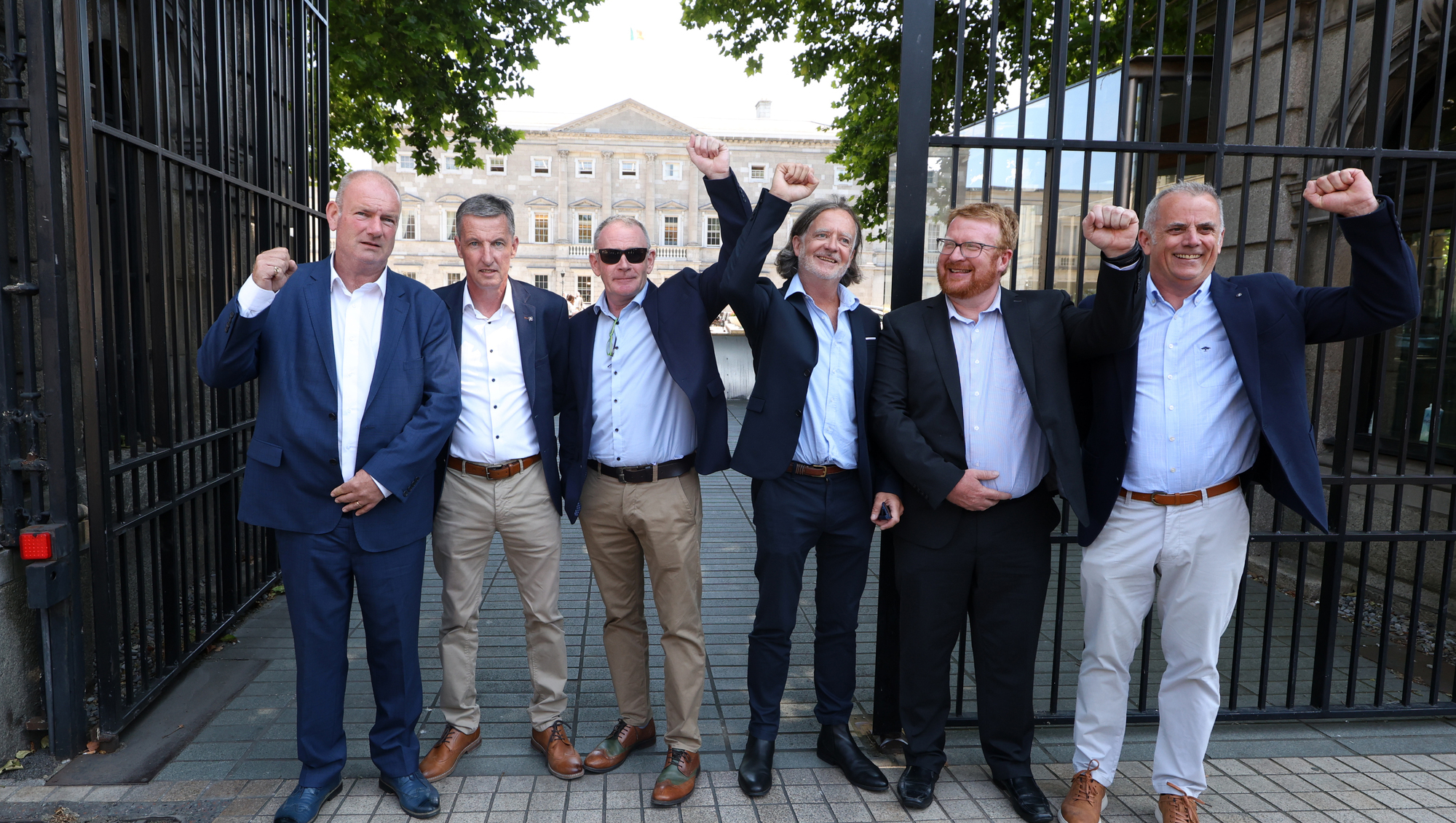
“Ireland has become far too comfortable with empty apologies.”
Those were the words of Social Democrats leader Holly Cairns, as she listed off the scandals that have shrouded Ireland in the last number of decades, as well as some of the inevitable State apologies that followed.
This included the trauma suffered by those in mother and baby institutions and those who experienced abuse in schools.
However, Ms Cairns noted that even after apologies have been given and redress schemes have been established, survivors still end up fighting the State.
On Tuesday, Taoiseach Micheál Martin apologised to the survivors of those who were abused by Waterford paedophile Bill Kenneally.
The Dáil heard repeatedly how Kenneally, who was from a powerful family with deep Fianna Fáil roots, abused his position of power as a basketball coach.
He bribed young boys throughout the 1970s and 1980s, lavishing them with flashy gifts.
He plied them with alcohol, took pictures of them with a Polaroid camera, and shamed them into silence.
When they attempted to report the abuse, they were ignored and shushed.
The South-East Commission of Investigation found that senior gardaí knew of the predator’s heinous crimes in the 1980s.
Fianna Fáil TDs Billy Kenneally Sr and Brendan Kenneally, as well as Monsignor John Shine, all relatives of Bill Kenneally, did nothing to bring his crimes into the public domain or bring him to justice, despite the commission finding that they were all aware of his actions.
As he stood up in the Dáil, the Taoiseach acknowledged there had been “clear and serious dereliction of duty” by the State to the victims of Bill Kenneally.
“This has been a major failing by an organ of the State that cannot be downplayed,” he said.
Mr Martin also apologised that “two former public representatives from my party so comprehensively failed to defend and protect young children from their nephew and cousin”.
Read More
Towards the end of the statements in the Dáil, justice minister Jim O’Callaghan confirmed that there would be a compensation scheme established.
However, as we have seen with successive State apologies and redress schemes, there is oftentimes more talk than action, resulting in many of the promises ringing hollow.
The apology to the Kenneally victims is at least the ninth State apology since 1999.
In 1999, then taoiseach Bertie Ahern made a “sincere and long overdue apology to the victims of childhood abuse for our collective failure to intervene, to detect their pain, to come to their rescue”.
The apology came following the exposure of physical and sexual abuse experienced by children in State-funded religious-run institutions.
This was followed by an apology by Enda Kenny in 2013 to the survivors of Magdalene Laundries, with apologies in 2021 and February 2026 given to those who survived mother and baby institutions and survivors of abuse and neglect in industrial and reformatory schools, respectively.
Other apologies came in 2018, when Leo Varadkar apologised for both the CervicalCheck scandal and the criminalisation of homosexuality.
In 2025, Simon Harris apologised to the survivors and families of the Stardust tragedy.
An apology was made to the family of hit-and-run victim Shane O’Farrell last year.
Oftentimes, however, we have seen these apologies make big promises without substantial follow-through.
Despite receiving their apology in 2021, survivors of mother and baby institutions are still fighting for justice.
Read More
Dozens of people have argued that they are being unfairly kept out of the redress scheme and are not being given access to the compensation scheme set up after the apology.
The special advocate for survivors, Patricia Carey, said in May that the Government had “clearly reneged on apologies” and was continuing to heap shame on survivors by keeping those who were boarded out, or in homes for less than 180 days, out of the scheme.
The Magdalene Laundries Restorative Justice Ex Gratia Scheme was also criticised for its narrow eligibility criteria, with the ombudsman criticising its “flawed administrative process.”
The Stardust survivors have repeatedly criticised the redress scheme put in place, telling the it “makes a shambles of the State apology”.
The establishment of the Cervical Check Tribunal promised to ensure that no woman would have to go to court.
It received just 26 claims and made no awards, while hundreds of women took cases to the court.
What will happen now that the State has apologised to the victims of Kenneally?
Will Fianna Fáil conduct a review into the structures that allowed the Kenneally family to keep this secret about their uncle and cousin Bill hush-hush for so long?
The commission of investigation criticised Brendan Kenneally for falling "substantially below" the standards expected of a TD, and found that he should have reported the abuse to child protection services when he was first told of it back in 2001.
Rossa Fanning, the attorney general, has written to the Law Reform Commission and asked it to examine the fact that there is no offence concerning serious dereliction of duty by a public official.
There are questions too for the gardaí and why they did not act on the allegations about Kenneally, why they allowed victims of Kenneally to suffer for so long, and why they ignored what appeared to be under their noses for decades.
Speaking on RTÉ Radio 1, Darragh Mackin of Phoenix Law said that many of his clients are currently pursuing civil actions against the State.
He said that now that a State apology has been given, there should be “no need for litigation” and “no need for further court battles”.
Justice minister Jim O’Callaghan confirmed that he has instructed officials in the Department of Justice to secure compensation for those who have suffered because of the failures outlined in the report.
“The exact details will be worked out with engagement from the victims themselves,” he said.
As Ms Cairns outlined in the Dáil, so many of these compensation schemes have not delivered what they should have for victims.
“The point of a State apology is not whether it is moving,” she said.
“It is whether it results in change, whether every recommendation of the commission is implemented, whether survivors receive justice without having to spend another decade fighting for it, whether this Government will finally get its head around the fact that accountability does not end with saying, ‘Sorry’.
"It begins there.
“These men deserve more than words.”
As the commission report illustrated, the victims of Bill Kenneally were let down by every arm of the State, even when the victims begged them for protection.
The Government must ensure that it protects them now, rather than forcing them to fight for what they should be entitled to.
They have already fought enough.

CONNECT WITH US TODAY



Be the first to know the latest news and updates