'Violence against women is now a matter of life and death’
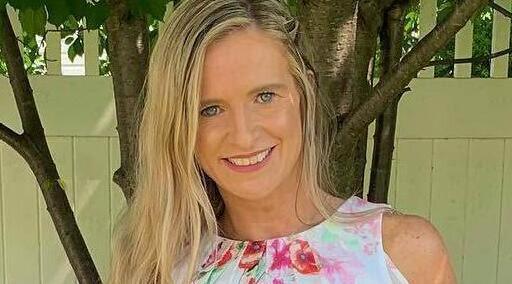
Jamey Carney was the second woman killed in her own home in Ireland in less than three days. Picture: Facebook
The murder of Jamey Carney in her own home in Killarney last week brought the number of women violently killed this year to eight.
Just over halfway through 2026, the number of women killed has already overtaken the figure for the whole of last year. Seven women were killed in the 12 months of 2025.
Ms Carney was the second woman killed in her own home in less than three days.
On Sunday, July 5, Adina Raluca Constantin, aged 50, was killed in her home on Church St, Portlaoise.
Her husband, Eugen Constantin, 72, was charged with her murder on Tuesday, just hours before Ms Carney’s body was found.

Jamey Carney was killed late on Monday night or early on Tuesday morning. She was badly beaten and suffocated before her body was covered with the duvet on her bed.
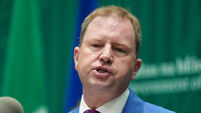
The number of women killed in Ireland is “not going in the right direction”, Taoiseach Micheál Martin said.
He called for a societal response to the problem of violence against women.
On Thursday, the Oireachtas justice committee published a report which found that significant gaps exist in how Ireland prevents and responds to domestic and gender-based violence.
Amongst its 26 recommendations is a call for additional refuge spaces for both men and women who are experiencing gender-based violence.
Four counties remained without domestic violence refuges as recently as last month — Cavan, Laois, Leitrim, and Monaghan.
There are 20 refuges across Ireland to provide temporary emergency accommodation to those fleeing domestic abuse.
But demand often far outstrips supply for these limited spaces.
Survivors may suffer physical violence and emotional, sexual, financial, and technology-facilitated abuse, Emma Reidy, chief executive of domestic violence charity Aoibhneas, told the .
Tracking devices concealed in children’s toys and spyware installed on people’s phones and computers are some of the ways abusers now use technology to control and monitor their victims, she said. And people suffering serious abuse now often feel trapped in their homes due to the housing crisis.
Some women who get a temporary place in a refuge move back in with their perpetrator when they leave because they feel they have nowhere else to go, she said.
And migrants and refugees, particularly anyone whose legal status is linked to an abusive partner or whose application for asylum is still being processed, also feel particularly trapped and can be too fearful to seek help from any authorities due to their insecure immigration status, she said.
People who are abused by their carer, often a spouse, endure another layer of complexity that State services are often not equipped to deal with, she said.
Abusive carers can withhold medication, smash glasses, remove much-needed mobility aids, leaving the victim extremely vulnerable.
And if someone has medical conditions or is older, homeless hostels may be highly unsuitable places for them to go when trying to escape an abusive home.
Aoibhneas accommodated 265 women and children last year. But it had to turn away 845 families in 2025 because it had no place to accommodate them.
Labour leader Ivana Bacik has called for a €3m fund for the charity Women’s Aid “to provide fast financial support for those who need an escape route”.
Almost 90% of women murdered in Ireland were killed by a man who was known to them.
But the housing crisis is currently “trapping women and children in violent homes,” she said.
The Taoiseach said that he would discuss Ms Bacik’s safe fund proposal with the Government.
In addition to the accommodation crisis for those fleeing domestic abuse, the justice system is another area that requires urgent reform, the Oireachtas report published last Thursday found.
It called for strengthened bail laws, with enhanced consideration of coercive control and breach history during bail decisions.
There should also be a requirement for “clear, risk-based reasoning where bail is granted in such cases”.
The report also urged a full and comprehensive review of the in camera rule, “with a review to reforming family law proceedings”.
Mandatory training should be given to legal professionals and gardaí in relation to coercive control, trauma-informed practice, and victim behaviour.
Emergency medical cards should also be granted to every domestic violence victim who enters a refuge.
The committee also called for more education in schools, particularly targeting the effects of violent pornography and AI technologies.
It called for Ireland’s EU presidency to tackle harmful online content.
It also recommended that any garda under investigation for domestic or sexual violence should be suspended pending investigation.
The report was informed by survivors of gender-based violence, including former garda Margaret Loftus whose former garda husband Trevor Bolger assaulted her in her home with their young children in the room more than 13 years ago.
Trevor Bolger received a three-month suspended sentence in January.
Tackling the problem of violence against women is “a matter of life and death,” Ms Loftus said.
She said that the Taoiseach had promised that if good policies to tackle gender-based violence are put in front of him, that funding for them would be provided.
“Based on his comments and based on this report, I am hoping that every single one of these recommendations will be very quickly executed,” Ms Loftus said.
Sarah Benson, chief executive of Women’s Aid, said that violence, abuse, and even at its extremes, death, are still a reality for many women living in Ireland.
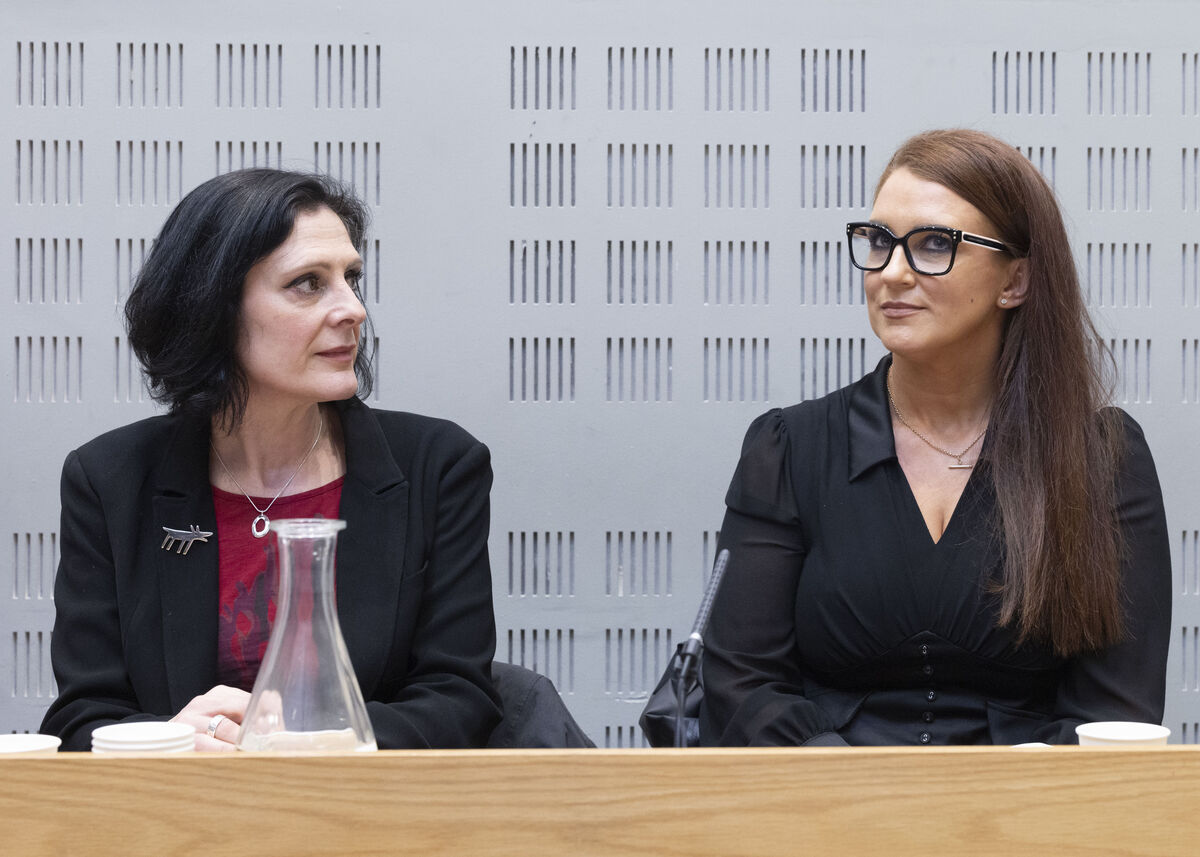
“After the devastating murder of Ashling Murphy in 2022, Ireland said never again,” Ms Benson said. “But Ireland has not lived up to that promise.”
Since then, 40 women have died violently in Ireland.
“Every death is an outrage,” Ms Benson said. “Prevention of all domestic, sexual, and gender-based violence is crucial and urgent.
“In Ireland, one in three women has been subjected to domestic abuse of some kind.”
Teenage girls and women fighting tears brought bouquets of flowers to the Killarney home where the body of Jamey Carney was found on Tuesday.
A social media post from September shows her celebrating getting the keys to that house.
The man international police forces are now searching for in connection with Ms Carney’s murder is her boyfriend, Ahmad Al-Saqar.
Gardaí have described Mr Al-Saqar, 28, as a “person of significant interest” in the murder investigation.

He was with the US-born mother-of-one in her home in Killarney on Monday evening, it is understood.
The 43-year-old’s body was found badly injured in her bed and covered in her own bed linen at about 1.30pm on Tuesday.
However, Mr Al-Saqar left Killarney early on Tuesday morning on a bus to Dublin Airport, it is believed. From there, he took a flight to Turkey.
He left Ireland before Ms Carney’s body had been discovered.
Gardaí are liaising with international police forces to find Mr Al-Saqar. He has not been charged with any crimes in connection with Ms Carney’s death.
Mr Al-Saqar is originally from Jordan, and there are concerns that he may have travelled to Jordan or Syria from Turkey.
He had been living in Ireland for more than one year and was in a relationship with Ms Carney for some months.
Her profile photo on social media is a picture of them together.
Ms Carney was “an insanely caring human being, who dedicated so much of herself, her energy, and her time, to fighting for the rights of others”, Ms Carney’s sister, Devon Bennett, wrote in a tribute.
A GoFundMe has been set up to support Ms Carney’s surviving family. She has a 13-year-old daughter.
“We grew up in New York, but she spent much of her best years with [her daughter] in the states in Bergen County, NJ. But their true home, where they both truly felt they belonged, was the beautiful town of Killarney,” Ms Bennett said.
Ms Carney was so caring and considerate of others that she would “take the shirt off her back if someone needed it”, her cousin Ryan Fox told RTÉ’s Prime Time.

Mr Fox described Ms Carney, who was born in the US, as one of the kindest and most caring people he had known, saying she had always shown compassion towards others and was the type of person who would go out of her way to help someone in need.
The family had “no indication” that there were difficulties in his cousin’s life, he said.
Mr Fox urged people not to respond to her death with prejudice. He said:
The National Women’s Council (NWC) also appealed for unity in tackling the scourge of gender-based violence following Ms Carney’s death.
violence against women is overwhelmingly perpetrated by men known to them, and scapegoating migrants distracts from the real issues and solutions, the NWC said.
It is calling for a trauma-informed justice system; resources for frontline services; and real long-term solutions for survivors, such as housing.
“We all want to see a society where women, and everyone, can live free from violence and abuse,” NWC’s executive director Corrinne Hasson said. “But violence against women remains shockingly high. One in two women in Ireland experience sexual violence in their lifetime. More than one in three women have experienced domestic abuse or intimate partner violence.
“In the vast majority of cases — 84% — the perpetrators of gender-based violence are known to the women, and can be their partners, fathers, sons, friends; the list goes on. Those who choose to scapegoat migrants often ignore violence perpetrated by white Irish men, and in doing so, distract from the real issue.”


CONNECT WITH US TODAY



Be the first to know the latest news and updates