HSE Drugs Group defers decision on drug to treat Friedrich’s ataxia to allow for further research
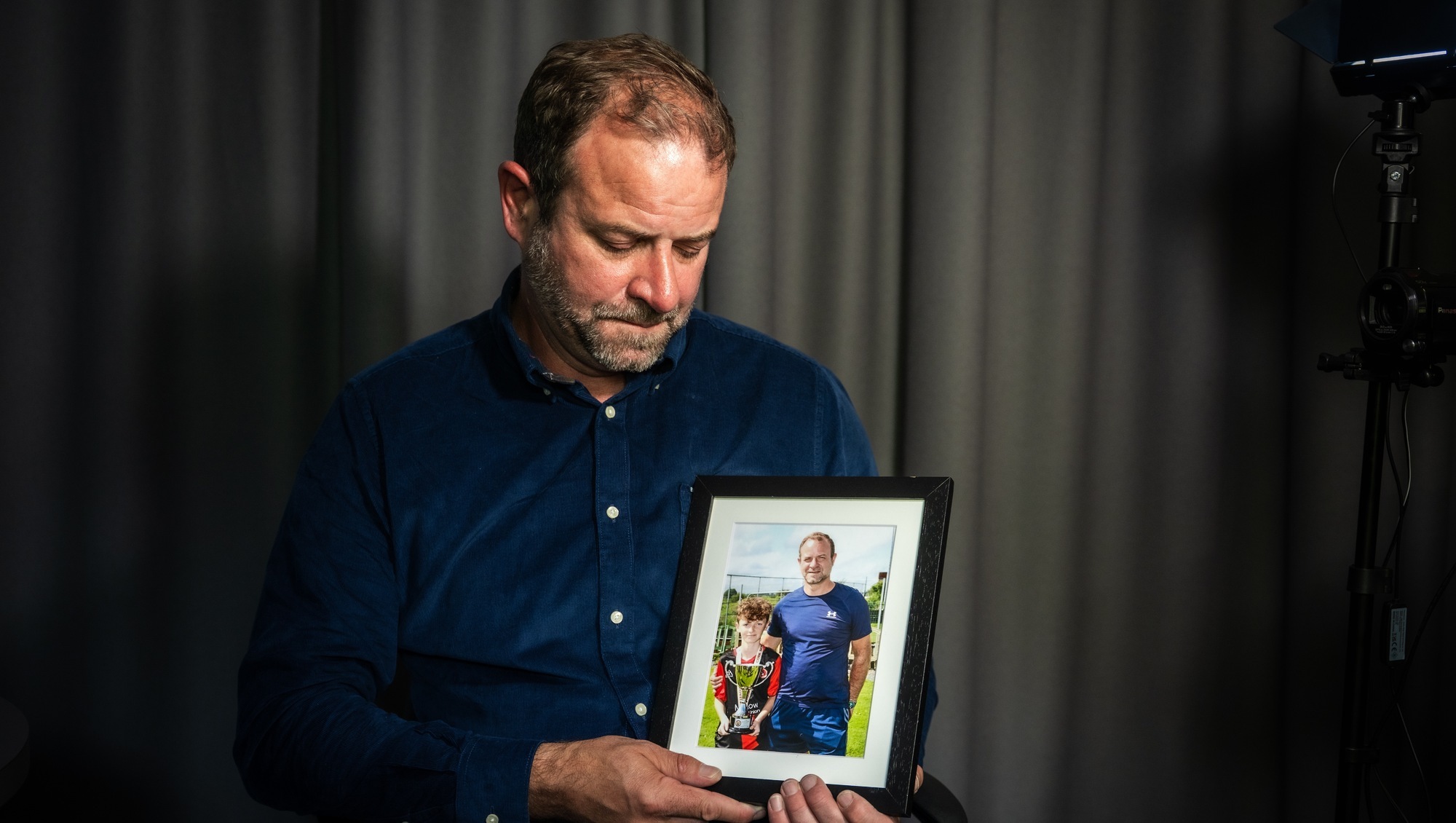
Craig Coady with a photograph of himself and his son Rory celebrating a sporting success. Craig says Rory’s memory gives him the strength to continue fighting for access to treatment for his surviving son, Paudie. Picture: Chani Anderson
The HSE Drugs Group has deferred a decision on the life-changing Skyclarys drug to treat Friedrich’s ataxia so that further research can be conducted.
The group met on Tuesday to discuss the drug, and a decision was made to defer the conversation about whether or not the drug will be approved for reimbursement for between three and four weeks.
Friedreich’s ataxia is a rare genetic disorder that causes progressive damage to the nervous system and can lead to heart complications.
As reported by the last month, Taoiseach Micheál Martin met with Cork father Craig Coady to discuss Skyclarys being made available in Ireland.
Mr Coady’s son, Paudie, 16, has Friedreich’s ataxia. The condition also led to the death of his 13-year-old son, Rory, in September 2025.
The understands that the HSE drugs group met on Tuesday to discuss whether Skyclarys could be approved for reimbursement.
The decision was deferred pending a further review that would seek input from specialists.
Read More
Pádraig O’Sullivan, Fianna Fáil TD for Cork North Central, said that while the deferral was disappointing, it did not mean Skyclarys had been declined.
“There is no question, it is disappointing,” Mr O’Sullivan said.
“It is not a refusal. It is not declined. They have said it could take three to four weeks to get this review conducted.
“What I will be asking for is that the review is done as quickly as possible, and when the review is complete, that the HSE senior management team meet on the very same day or the next day after that review to make a decision.”
In the Dáil on Tuesday, Sinn Féin leader Mary Lou McDonald called on the Taoiseach to ensure a “positive decision” on the drug before the summer recess starts on Thursday.
“I think all of us have met with families and young people who have Friedreich's ataxia as a condition and who are eagerly awaiting the outcome of the drug approval process, and there is a process,” Mr Martin replied.
“It is science-led, primarily. It is not politically-led.
“All of us want a positive outcome in terms of the deliberations that are ongoing, but I think we need to be mindful of the fact... that we have to allow the meetings to happen and people to take decisions, and then it has to move on to the senior clinical team in the HSE.
“We want the right outcome here.”

CONNECT WITH US TODAY



Be the first to know the latest news and updates