Mick Clifford: New intervention in Sophie Toscan du Plantier case will not prompt French rethink
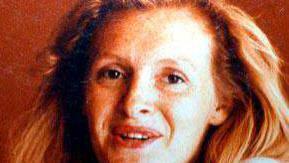
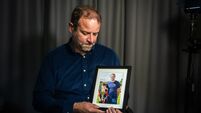
Sophie Toscan du Plantier was brutally murdered at her summer home near Schull in West Cork 30 years ago next December. Nobody was ever charged with her murder in this jurisdiction. File picture
Every so often there is a new piece about the death of Sophie Toscan du Plantier, as if this is the latest clue on a journey that will lead to the truth. It’s a long shot that the destination will ever be arrived at, although some believe they are already there.
Ms Du Plantier was brutally murdered at her summer home near Schull in West Cork 30 years ago next December. Nobody was ever charged with her murder in this jurisdiction.
In 2019, Ian Bailey was convicted of murder in absentia in a French court. He was sentenced to 25 years in prison. Both before and after that trial there were attempts to extradite Bailey to France, but all failed. Bailey died in Bantry in January 2024. Throughout his life he maintained his innocence.
Earlier this month there was a new twist with a blast from the past. Robert Sheehan is a retired solicitor who was working in the DPP’s office in 2001 when he produced an explosive 40-page report into the investigation of Ms Du Plantier’s murder.
The report was scathing of the gardaí and produced an analysis that suggested that Bailey was actually innocent. It surfaced much later, through Sheehan’s retired boss in the office from the time, during a court hearing to determine whether Bailey should be extradited to France (he wasn’t).
Read More
Last month, Sheehan, long since retired, had something to add to his report from 25 years ago. He wrote to the French ministry of justice to say that the 2019 conviction of Bailey should be vacated on the basis of recent developments in this country.
A DNA analysis of material retrieved from the scene has been examined by a process called wet-vacuum microscopic extraction technology (M-Vac). The material from which samples were extracted included a cavity block believed to have been used in the assault of Ms Du Plantier.
Reports suggest that the results from that analysis, while not made official, are inconclusive. On that basis Sheehan believes that Bailey’s French conviction should be set aside.
“I suggest that the French authorities should seek the results and if they do not link Ian Bailey to the murder scene, the French conviction against him should be reconsidered,” Sheehan wrote.
“Such scientific data may fundamentally contradict the evidentiary basis of the French 2019 in absentia conviction of the late Ian Bailey and provide precise statutory grounds for a formal judicial review under the French Code of Criminal Procedure.”
Sheehan was writing in a personal capacity and to a large extent his missive was highly unusual. Quite obviously he believes in Bailey’s innocence. In fact, his 2001 report included elements which pointed towards not just the shortcomings of the garda investigation, but strands of evidence, in his estimation, that suggested Bailey couldn’t have committed the murder.
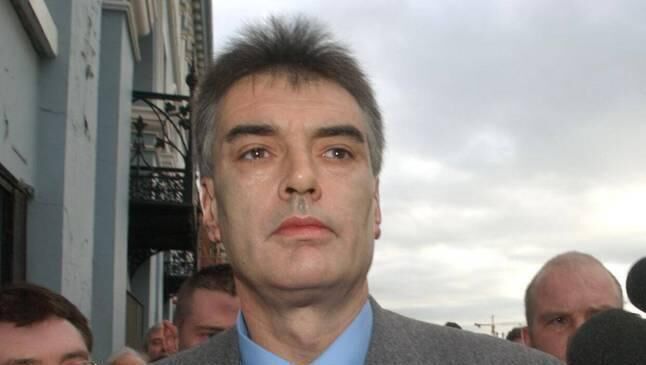
In his letter to the French ministry for justice, Sheehan wrote that the Paris trail in 2019 “relied heavily on historical garda investigation files transferred by the Irish authorities in 2008”.
He went on: “My 2001 internal DPP analysis, which systematically dismantled the garda file was apparently withheld from the French authorities during that transmission.” If he is correct in that assertion there would have been nothing unusual in it as Sheehan’s analysis did not form part of the garda file.
His intervention has received a chilly response in Paris. Alan Spilliaert, a lawyer for Ms du Plantier’s family, told the that it was simply not possible for the French ministry of justice to overturn the conviction.
“The criminal court of Paris is independent and the ministry of justice in France has no power to request such a court to reopen a case — that is simply a matter of legal fact,” he said.
Ms Du Plantier’s uncle Jean-Pierre Gazeau, who is head of the Association for Justice for Sophie, has reportedly written to the ministry requesting that Sheehan’s intervention be ignored.
Sheehan, it is asserted, is using “inferences drawn from the absence, to date, of any public disclosure concerning forensic investigations underway in Ireland.”
Sheehan’s intervention, and particularly the response from Paris, tells plenty about the opposing lens through which the 30-year-old tragedy is viewed. The former prosecutor obviously thinks a miscarriage of justice has been done.
Whether or not he is accurate on that matter, he was absolutely correct to conclude in 2001 that Bailey should not be put on trial for murder. There simply was not enough evidence to charge the Englishman. Nothing changed in that respect in the years and decades that followed.
The attitude in Paris is entirely different. I sat through the five-day trial in 2019 and it was conducted as if it was a hearing to merely confirm Bailey’s guilt.
For instance, there were 22 witnesses listed, nearly all of whom were based in West Cork. These witnesses were given two weeks' notice of the trial and expected to travel to Paris, find accommodation as required, give evidence, and wait to be reimbursed by the French state.
Just two travelled. Another listed witness was deceased in 2019 and yet another was understood to be suffering from a form of dementia.
In a proper trial the testimony of these witnesses — most of whom had interactions with Bailey — would surely have been given serious importance.
Yet the manner that it was handled suggests that the witnesses were little more than an added extra, who might bring a bit of colour to proceedings but whose input was not central to the case.
The trial also included a psychological profile from a professional who had never met nor spoken to Bailey. He concluded that the defendant had a “borderline personality”. That would be all well and good for a TV programme, but this was a murder trial.
Hearsay evidence was also heard, including from a French policeman who told the court that when he travelled to West Cork a garda told him that Bailey had committed the murder.
It might well be posited that the trial was convened primarily to give comfort to Ms Du Plantier’s bereaved family, who are convinced of Bailey’s guilt. Another motivating factor may have been a belief that a guilty verdict would increase the possibility that an Irish court may acquiesce to Bailey’s extradition.
It’s against that background that the former prosecutor Sheehan is appealing to the French to reconsider the guilty verdict.
On the basis of how the verdict was arrived at, there is no possibility of it ever being reversed unless evidence emerges not just that Bailey did not murder Ms Du Plantier, but that a specific other person actually did. Short of that, the French have no interest in viewing the case through any other lens.
Equally, those who believe he was wrongly targeted as the prime suspect would require conclusive evidence to disabuse them of that position.
As such, and in the absence of any conclusive evidence, the entrenched positions on Ian Bailey and whether or not he murdered Ms Du Plantier, will continue to be held tightly.
CONNECT WITH US TODAY



Be the first to know the latest news and updates