Gardaí accused of domestic abuse retain ability to 'track' victims, Oireachtas committee told
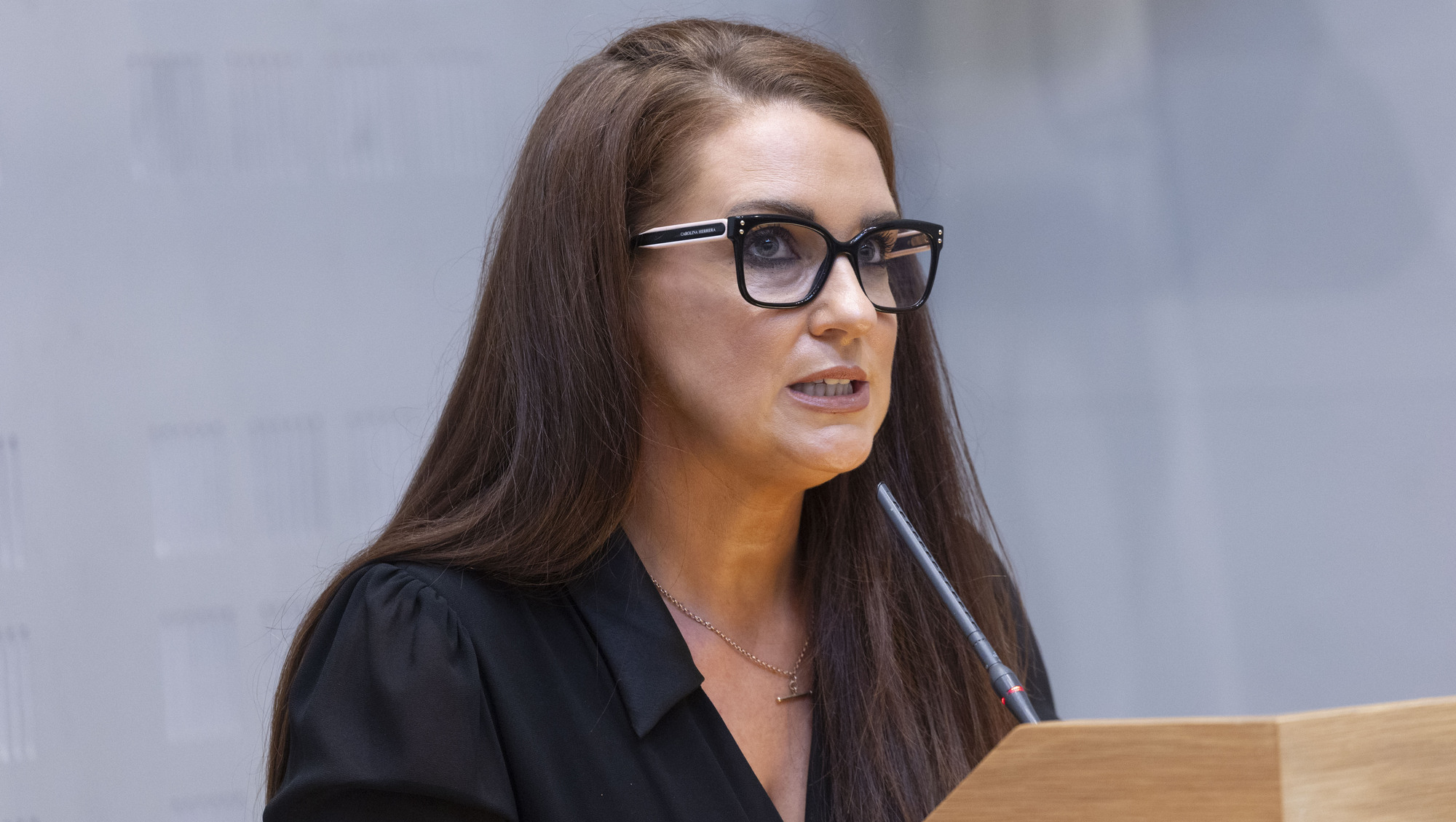
Submissions to the committee, which formed the basis of the report were also published on Thursday, with former garda Margaret Loftus writing to it to highlight loopholes in the rules around gardaí who are accused of domestic violence. File photo: Sam Boal/Collins Photo
Male victims of domestic abuse are "insufficiently recognised" while gardaí accused of abuse retain the ability to "track" victims, an Oireachtas committee was told as it prepared a report on the issue.
The Joint Committee on Justice, Home Affairs and Migration on Thursday published a report with recommendations on how to strengthen Ireland’s response to domestic, sexual and gender-based violence (DSGBV).
Among those, the committee has recommended that any garda under investigation for domestic or sexual violence should be suspended pending investigation, a “full and comprehensive” review of the in camera rule, “with a review to reforming family law proceedings” and a call for strengthened bail laws, with “enhanced consideration of coercive control and breach history” during bail decisions, as well as a requirement for “clear, risk-based reasoning where bail is granted in such cases”.
Submissions to the committee, which formed the basis of the report were also published on Thursday, with former garda Margaret Loftus writing to it to highlight loopholes in the rules around gardaí who are accused of domestic violence.
Her former husband Garda Trevor Bolger was given a three-month fully suspended jail sentence in January for assaulting her in October 2012. The 48-year-old pleaded guilty at Dublin Circuit Criminal Court in April last year to assaulting Ms Loftus.
She says her submission "highlights systemic and institutionalised failures in the policing, criminal justice, and family law systems in Ireland concerning domestic, sexual, and gender-based violence, particularly when alleged perpetrators are members of An Garda Síochána".
She adds that garda members under investigation "may retain full access to policing systems, firearms, and operational powers, which can be exploited to monitor, intimidate, and continue abusing victims".
She also said alleged perpetrators have "institutional capacity" to track victims through Garda Pulse and other internal systems, monitor complaints, and pre-empt investigations, "effectively weaponising their position".
She said internal promotions "may continue despite credible allegations of domestic abuse" and that garda members subject to domestic violence or barring orders are not automatically flagged due to family law in camera protections.
This reliance on self-disclosure leaves systemic blind spots, allowing potential perpetrators to maintain investigative authority over other victims, she adds.
In its submission, Men's Aid told the committee that male victims "remain under-recognised and underserved in Ireland". They said many men "do not identify their experience as abuse, do not believe they will be taken seriously, or do not know where to go for help".
"These barriers can prevent early seeking of help and leave men trapped in dangerous situations for prolonged periods.
"In Men’s Aid’s view, a stronger national response must therefore include practical routes to safety, clearer public messaging, and more visible support options for male victims."
Safe Ireland, the domestic violence charity, called for the creation of a "standalone domestic violence offence to fill the existing legislative gaps and criminalise the full pattern of abusive, controlling and degrading behaviour as a single course of conduct, including early‑stage, low‑level and non‑physical abuse that does not independently meet the thresholds of any existing Irish offence".
Lauren Reilly, the host of the Victim to Victory podcast which explores the subject, wrote to the committee to say that coercive control is often minimised.
"When systems respond only once violence becomes visible, critical chances for early intervention are lost."
She added that it is "a common misconception" that leaving a relationship ends the abuse.
"In reality, many survivors experience increased harassment, manipulation, intimidation and systems abuse after separation, especially where children, housing or court processes are involved.
"Gender-based violence does not begin with a black eye. It often begins with fear, confusion, control, silence and the slow erosion of a person’s independence and reality.
"If Ireland is serious about tackling gender-based violence, systems must be designed to recognise patterns earlier, respond to risk faster and protect women and children before harm escalates further."
- Paul Hosford, deputy political editor


CONNECT WITH US TODAY



Be the first to know the latest news and updates