Business optimism in small firms lags behind larger competitors

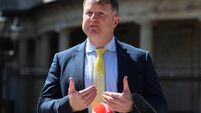
Chief executive of Azets Ireland Neil Hughes said: 'Economic uncertainty and rising interest rates are the clouds gathering on the horizon for Irish businesses'
Optimism among smaller firms is lagging well behind that of their larger counterparts as many “are still grappling with cost pressures they cannot easily absorb”, while economic uncertainty remains the top concern for the year ahead, the latest Azets Barometer shows.
According to the research, Irish business optimism rose to 7.2 out of 10 during the second quarter of this year — up from 6.9 during the first quarter and 5.7 six months ago. This compares to 5.1 in the UK.
However, that optimism is largely focused in larger firms with smaller businesses — with between 10 and 49 employees — recording an economic outlook of just 5.5, as they are carrying less financial buffer, weaker pricing power, and fewer resources to invest.
Only 50% of smaller firms surveyed were optimistic about the outlook.
Chief executive of professional services firm Azets Ireland, Neil Hughes, said that while the research shows an Irish economy that is “resilient and is weathering the impacts of geopolitical instability” underneath a “clear divide is opening up between larger enterprises that are thriving and smaller firms that are still grappling with cost pressures they cannot easily absorb”.
“Economic uncertainty and rising interest rates are the clouds gathering on the horizon for Irish businesses, and their position at the top of the list of concerns tells us that leaders are bracing for a potentially more challenging autumn and winter ahead,” he said.
“Volatility is no longer a temporary disruption, it is the new normal, and businesses are having to build the muscle to plan and invest with confidence despite it.”
Economic uncertainty was the single greatest concern, cited by 71% of Irish leaders, followed closely by interest rates and inflation at 67% and cybersecurity attacks, also at 67%.
Across the survey, 65% of leaders say geopolitical uncertainty has created financial pressure on their business, and 65% are actively restructuring their supply chains in response to geopolitical risk.
When businesses were asked which pressures are having the greatest impact on their business, cost pressures were cited by 22%, level with regulatory and tax changes, followed by workforce challenges at 18%.
During the quarter, firms reported that their financial performance strengthened, rising to 7.6 out of 10 compared to 7.1 during the previous quarter. Smaller firms again trailed, however, recording a financial performance score of 6.5.
The hospitality and leisure sector was the most upbeat on financial performance, followed by the information and communications technology sector.
In the year ahead, 82% of firms said they are expecting an increase in their use of automation and AI tools, 74% anticipating an increase in turnover and revenue, and 70% expecting an increase in profit.
Irish firms report that they are using generative AI mostly for research and analysis, such as summarising information, processing data, and generating reports.
Azets said the top three areas where AI is having the biggest impact on Irish organisations are research and analysis, reducing administrative burden, and supporting decision-making.
The survey said that 82% of Irish business leaders feel that AI will be critical to their organisation's competitiveness within the next three years.
Mr Hughes said the challenge for business when it comes to AI is “closing the gap between ambition and capability”.
“Irish firms are more likely than their peers to point to digital and technology leadership as a gap, and that is where focused investment in people and skills will make the difference,” he said.
For this research, 156 firms across Ireland were surveyed between May and June.


CONNECT WITH US TODAY



Be the first to know the latest news and updates