How one man's fight became a landmark employment case for people with autism
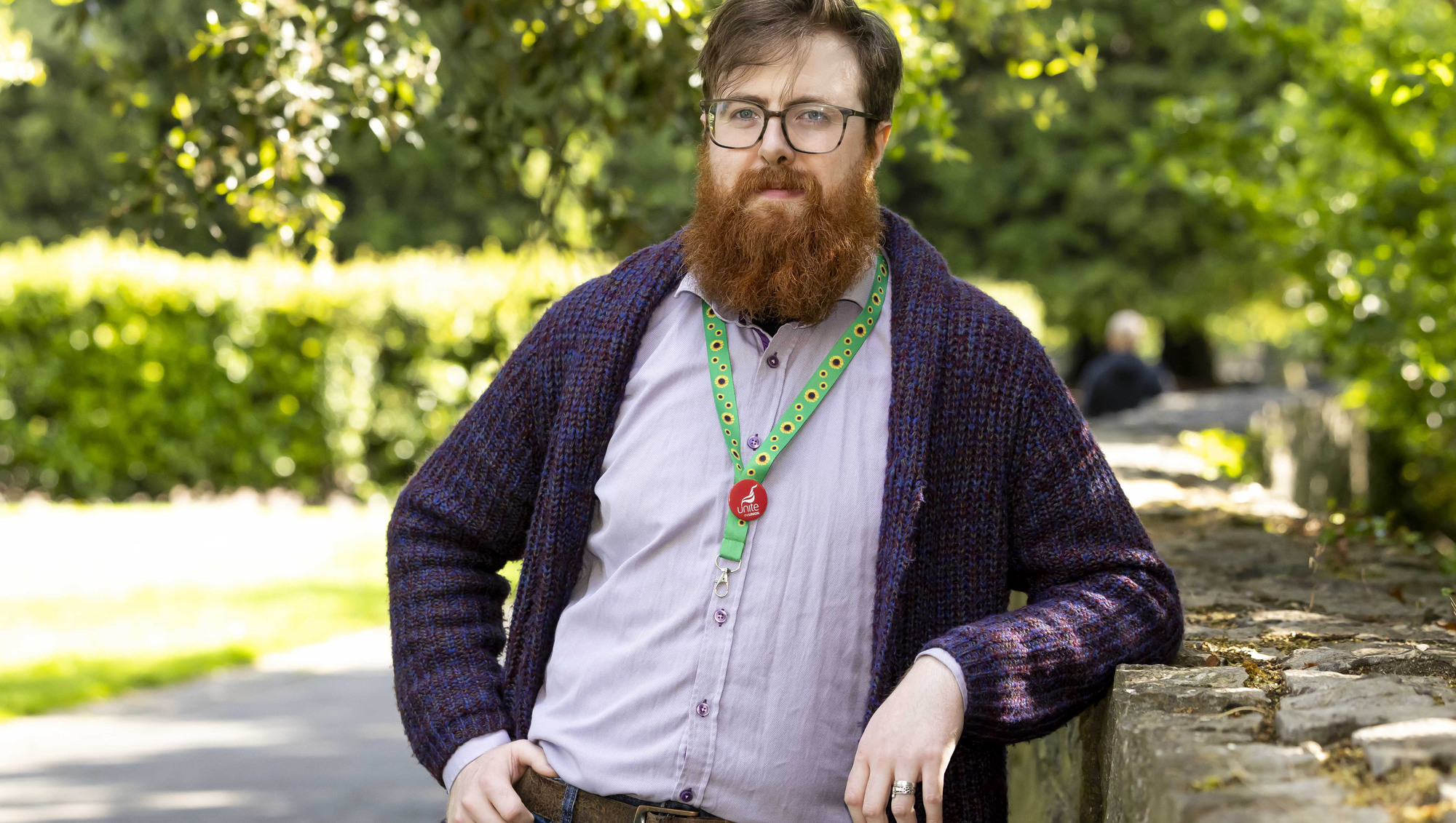
Dylan O'Riordan from Waterford who won a case against his former employer. Picture: Mary Browne
Dylan O’Riordan is understandably weary-eyed as he sits down to talk.
For the past two years, he’s been stuck in legal gridlock with Ireland’s largest cinema chain, Omniplex, over an ongoing discrimination case.
He’s now tying up the loose ends on a Labour Court ruling that requires the cinema giant to pay him compensation of €29,000.
Some have chalked his case down as a straight employee vs employer roster dispute.
Dylan insists it’s much bigger — and that his experiences are a case study of the uphill battles autistic workers face all across Ireland.
“I’m in a minority of a minority, a lot of disabled people don’t have the capacity to have these conversations and to go through these procedures,” says 30-year-old Dylan, reflecting on the past two years.
Dylan was diagnosed as autistic at the age of 18.
In March 2022, he began working with Omniplex in Waterford (trading as Omniplex Cork Ltd).
In his application, he had disclosed his autism but did not request any further accommodations.
Following a promotion to duty manager, he began to feel overburdened due to the variable nature of his shifts and requested a roster that would guarantee two consecutive days off.
His requests escalated through the channels, from WhatsApp messages to pull-a-side chats with his general manager, to boardroom meetings with human resources.
An occupational health report recommended a clear need for consistency and rest. Omniplex did not produce an amicable arrangement.
Dylan says his inability to recover from his working hours triggered a downward spiral.
At his ultimate nadir, he was experiencing autistic shutdown, self-harming, and suicidal ideation.
“I was going into shutdown,” he says.
“I was having meltdowns … I was screaming, I was
losing it.”
Following an extended period of sick leave, he resigned from the job in June 2024.
A month prior, he had begun to bring forward a self-represented case against Omniplex to the Workplace Relations Commission (WRC).
The adjudicator ultimately found that Omniplex had failed to provide reasonable accommodation to Mr O’Riordan. They were forced to pay €12,000.
The WRC highlighted the case as one of 50 that helped define the statutory body through its first 10 years of existence.
Then came the Labour Court appeal from Omniplex.
Dylan recalls the notice of appeal coming in on December 23, 2024, and how it felt like a punch to the gut.
“To see the notice that the appeal came in, it really ruined Christmas for me… and I love Christmas,” he chuckles.
He had been frequently posting about his travails in the WRC on his TikTok account, ‘@Batman_autism’, and was trying to raise awareness about disability resources in the workplace.
In a video to his followers, he confessed that the appeal was going to be energy-sapping.
The video was watched over 100,000 times, and one user sent it to their friend, a barrister.
A few days later, there was a message in Dylan’s inbox from Ellen Walsh — a barrister who works in the field of labour and employment law — advising him that the case was winnable.
Walsh eventually represented Dylan at the Labour Court.
Following another hearing and a largely similar case across the same trodden ground, Omniplex were ordered to pay twice the original sum of compensation in late May.
“It’s vindicating that I did go, ‘look, this isn’t right’, and ‘this shouldn’t be happening’, and I was able to stand up for myself at the WRC and the Labour Court,” Dylan says.
For all the elation after his result, he also feels a gnawing anxiety. He does not believe his experience at Omniplex was an isolated one.
“I don’t think [Omniplex] are in too unusual of a situation… I started talking about my story. I had dozens of people from all over the country, from all different industries — public, private, it didn’t matter.
“Very similar experiences, where they felt that they couldn’t get access to their company’s disability policies, if they actually had them.
“And when they’re in jobs, they may not want to disclose [their disability], and they may be masking, even through their probation period, just to make sure that they’re a little more secure before they start being honest.”
Those anecdotes are corroborated by the data.
Ireland’s national autism charity, AsIAm, estimates that 85% of autistic individuals are either unemployed or underemployed.
For those who do work, 48% of those it surveyed say they were not provided with additional accommodations for their disability.
Almost 70% do not believe employers are becoming more autism-friendly.
Dylan is keen to stress that there are available, if imperfect, supports.
The employers group Ibec and the Irish Congress of Trade Unions’ Reasonable Accommodation Passport is a confidential live document that clearly charts an agreed list of accommodations held by a worker with a disability.
He suggests accommodations — such as writing clear instructions, the use of noise-cancelling headphones, and making recordings available for people who have auditory processing issues — as easy additions to help make the workplace more autism-friendly.
But he’s also conscious of companies that wax lyrical on inclusion but skimp on hard concrete policy.
“I think that we can see a gap between policy and practice,” Dylan says.
“We can see a gap between intention and execution, and I think it is a matter of maybe ignorance.”
The ignorance of others has dogged him for a lot of his working life.
When O’Riordan, an otherwise warm, genial character, speaks about his meltdowns, the plunges of depression that left him in “some of the worst states of my adult life”, they stand in sharp contrast to one comment allegedly made by his former general manager.
He alleged on two occasions that his former general manager referred to his autism as “a superpower” as a means to stifle concerns about his working hours.
His former general manager denied making those comments.
“With platforms like TikTok and with the internet, there is an amazing benefit in people sharing their experiences and being able to see those experiences and feel less isolated,” he says.
“There is also then that conversation outside of the sphere: It can be very much seen as particular elements of it are the key focus, like the stimming, or having a special interest becoming the primary focus of what autism is.
“The ‘superpowers’ comment often comes from working with young children, where you’re trying to explain and you’re not trying to go too detailed about it.”
Dylan now works in a law firm, filing and organising paperwork, a space where he says his autism comes to the fore.
He’s continuing to keep his hands full.
A member of the Social Democrats, he helped pass a motion at the party’s annual convention in February, decrying the unnecessary barriers that autistic workers face while calling for statutory deadlines for employers in implementing reasonable accommodations for employees, a legal requirement under the Employment Equality Acts 1998-2015.
“I really don’t want this to be about me,” he says. “It’s a landmark case. I’ve been told it’s been cited in college essays… I know that solicitors have talked during podcasts, they’ve made blog posts.
“This is a very important case, and the main thing that I want to see from this and from having these conversations is that I don’t want this happening again to someone, because this nearly killed me on several occasions.”
CONNECT WITH US TODAY



Be the first to know the latest news and updates