If we can't regulate social media, can we regulate anything?
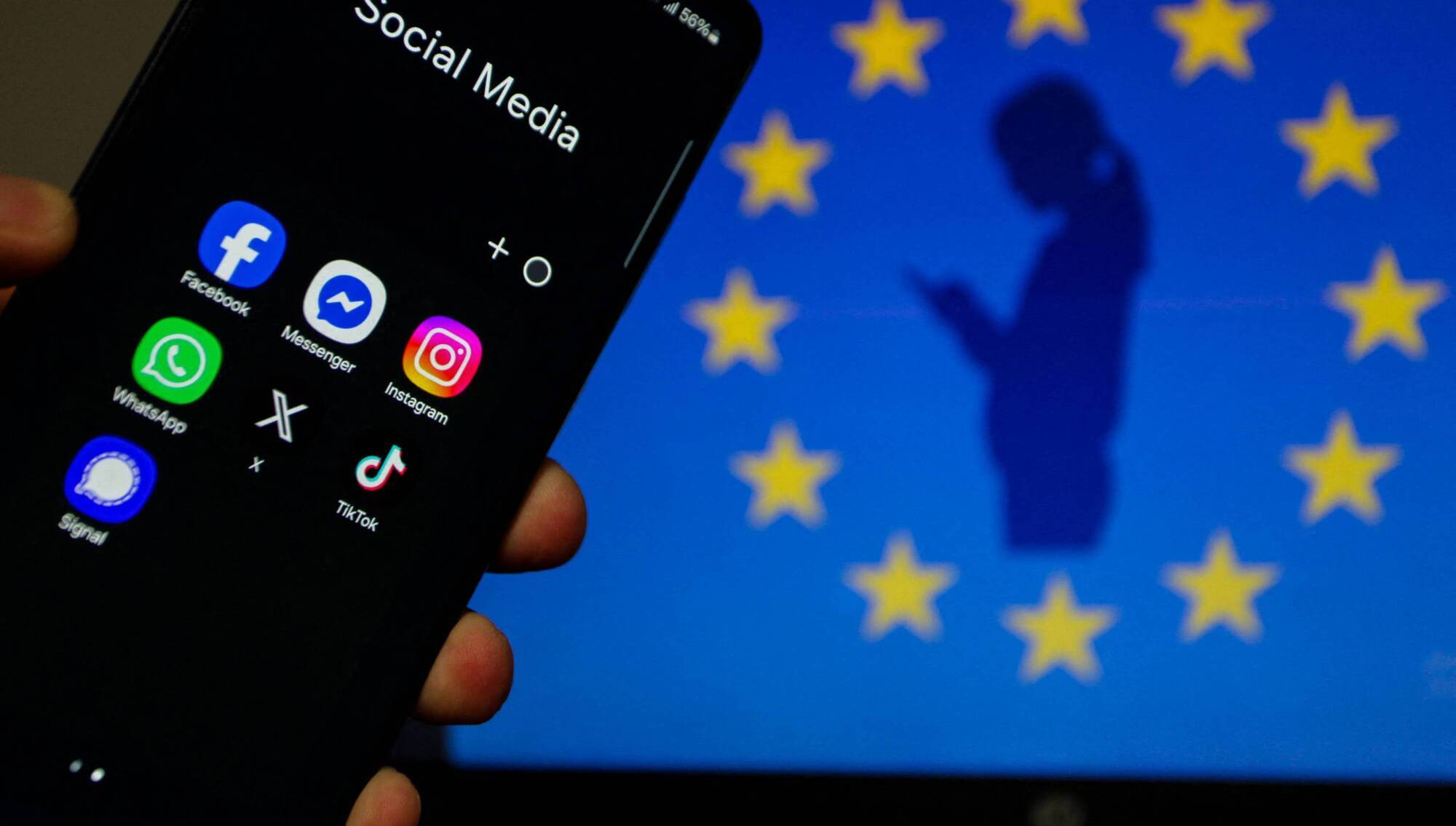
Tech companies represent a new kind of lobbying power. In the EU, their lobbying outspends the financial services and pharmaceutical industries combined. They have offices filled with former policymakers and fund think-tanks to produce supporting studies. It is paying off. Picture: Imen Ben Youssef / Hans Lucas / AFP via Getty Images
An algorithm is simply a set of instructions. Social media companies use algorithms to determine what people see. Initially, social media was populated with updates from accounts people had chosen to follow.
The platforms realised they could retain people for longer, and make more money, if they served up an endless scroll of attention-grabbing content. Recommendation algorithms drive that business strategy. They feed people content that provokes fear and outrage because that keeps them engaged.
It would be charitable to describe these as unintended consequences, but they are the foreseeable results of engineering decisions made to maximise profit. Leaked documents reveal companies knew the harm they were causing and neglected to act.
The case for regulation has never been clearer. Researchers and campaigners have been making it for years. Now, the courts and politicians are catching up. Last week, the EU Court of Justice found platforms are liable for content they actively curate. In May, the Oireachtas media committee published a report on online platforms with a recommendation to "turn off harmful recommender algorithms by default".
Even former taoiseach Leo Varadkar recently acknowledged regulating algorithms would have been a better way to reduce online harm than his government's failed hate speech legislation. The public also wants action. A 2024 survey found 82% of people across Ireland support turning off recommendation algorithms.
Read More
We have the evidence, the solution, public support, political consensus, and an EU court ruling that removed platform’s legal shield. In a functioning democracy, the next step would be obvious. Yet many of us are not expecting concrete action.
The problem is that we live in political systems captured by unprecedented corporate power. The multi-billionaires who run these corporations have no regard for democracy or ordinary people. As Pope Leo wrote recently, they are more powerful than many governments. How did we get here?
The deregulation project initiated by British prime minister Margaret Thatcher and US president Ronald Reagan in the 1980s pre-dates tech companies. Nevertheless, the tech giants owe much to an ideology that decried state intervention as "red tape" and "barriers to competitiveness".
We can also thank deregulation for the monopolistic dominance of five or six tech companies where there ought to be thriving competition.
Tech companies represent a new kind of lobbying power. In the EU, their lobbying outspends the financial services and pharmaceutical industries combined. They have offices filled with former policymakers and fund think-tanks to produce supporting studies. It is paying off. The European Commission is pursuing a deregulation agenda to boost competitiveness, even rolling back its own rules to protect the public from AI.
As the host of so many tech companies, Ireland has a special role. Our low-tax model and regulatory shyness have made us a comfortable home for corporations. But compliant politicians are not the whole picture.
Tech companies fund research institutes, think-tanks, and charities to promote subtle influence campaigns that redirect attention from their own culpability. The most insidious are educational materials for young people. Instead of designing safer systems, tech companies advocate a version of "digital literacy" that instructs teenagers and parents on "being responsible" online.
And the people telling them this are trusted adults who have themselves been fed materials by tech-funded bodies. If digital literacy materials don't explain what algorithms are or why a handful of companies control what you see, they are not educational. They are corporate propaganda.
Tech companies have been remarkably successful in convincing people it is somehow impossible to remove a design feature that did not exist 10 years ago. Listen to any public debate and you will hear someone say, with great certainty, that regulating algorithms is "not possible" or "not realistic".
Often, these are well-meaning people, but their narrow conception of what is possible serves the platforms.
Regulation protects us from industries that, left unchecked, prioritise profit over people. It has, until recently, given us safer cars, led-free toys, clean water, and properly tested medicines. If politicians feel powerless to regulate an obvious harm, we have major trouble in our democracies.
- Dr Eileen Culloty is an associate professor at the DCU School of Communications and FuJo Institute

CONNECT WITH US TODAY



Be the first to know the latest news and updates