AI backlash is growing — and tech execs know it
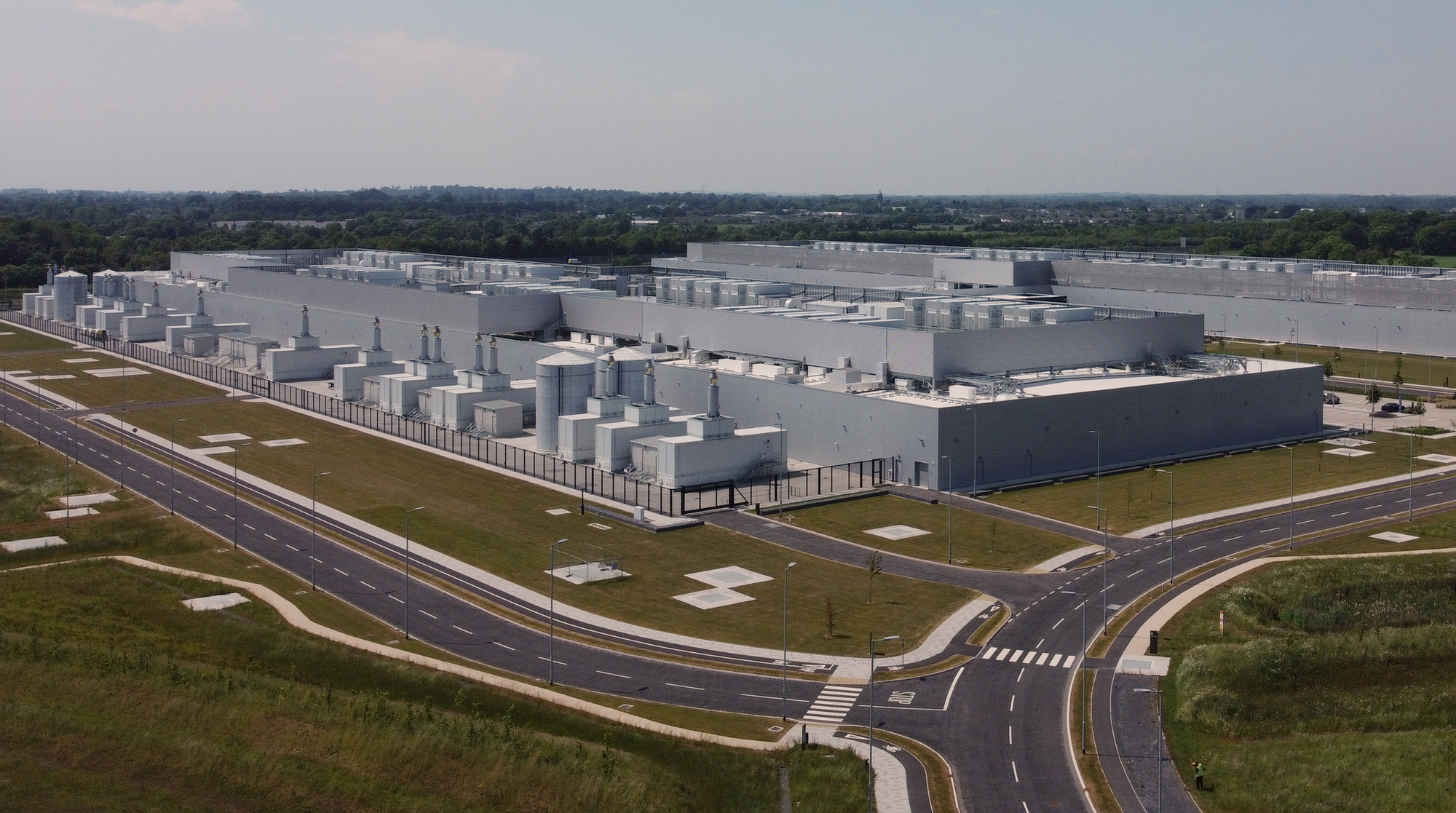
To tech executives, AI will solve everything — including the climate impacts of the industry’s own data centre expansion, which requires immense land, energy, and resources. Photo: Niall Carson/PA
AI backlash is growing. However, if you listen to state and industry boosters, you’d think the fate of the world rests on AI. To them, AI will solve everything — including the climate impacts of the industry’s own data centre expansion, which requires immense land, energy, and resources.
This techno-optimism feels like gaslighting. How can these resource-hungry technologies solve problems of their own making?
Read More
Beyond environmental impacts, AI data centres are inflating a financial bubble. Microsoft CEO Satya Nadella explained in Davos 2026 that the AI “boom” will bust without society-wide adoption. According to a recent article in , the major cloud providers are pumping $800bn into data centre infrastructure, driving them into major losses.
You can see why tech elites — and the states and geopolitical blocs that have bet their economies on this technology — are concerned. In this precarious economic scenario, what is driving political obsession with AI?
It helps to consider EU industrial geopolitics. The war in Ukraine and strained transatlantic relations have brought “EU strategic autonomy” in digital, energy, resource, industrial, and military sectors to the fore.
The “twin transition” industrial framework — digitalisation and decarbonisation — calls for reducing dependence on foreign energy sources and building domestic digital capacity.
These aims were accelerated by the infamous 2024 'Draghi Report,' written by former president of the European Central Bank and Italian prime minister Mario Draghi.
The report compelled EU policy to competitively secure the bloc’s position between a smouldering US-China trade war, earmarking direct support for AI infrastructure and adoption by European businesses and public bodies.
The alignment of economic competitiveness and geopolitical security has since superseded climate commitments.
Meaningful autonomy, however, is easier said than done, especially given the accelerated pace and concentrated ownership of AI technology.
The big three US hyperscale cloud providers (AWS, Google, and Microsoft) control 70% of the European infrastructure-as-a-service market — how companies (and states) outsource AI computing.
While organisations can reduce dependence on US software, the underlying “stack” — including data centres and chips — is overwhelmingly owned and controlled by US tech multinationals.
In this AI arms race, political scientists Henry Farrell and Abraham Newman argue that the US under Biden and Trump has weaponised interdependency.
In their analysis, win-win globalisation built on US infrastructure and friendly trade relations is over.
This arrangement was always underlaid by US military and economic power securing a supposedly free, fair world market and, more importantly, cheap resources and manufacturing from the global south for US firms and trade partners.
Under Trump, weaponised interdependency has gone into overdrive. US military actions, resource grabs, and tariffs victimise allies and adversaries alike — including Europe.
While major European powers have acted on this in recent attempts, for example, to move French government services away from US platforms, the reality is that even operating systems and cloud platforms are undergirded by the US stack.
Ireland is especially vulnerable. Our FDI-led economic model rests on facilitating big tech’s infrastructure, especially since the financial crisis, when the IDA got in on the ground-floor of the cloud boom.
This has caused an immense concentration of data centres, which use 22% of national electricity — making Ireland a world outlier.
FDI dependency constrains our climate and energy policy. Ireland’s grid, on average, relies on half fossil fuels, a proportion data centre expansion isn’t helping.
Earlier this year, the Government removed the de facto moratorium on Dublin grid connections, introducing policy suites to unlock data centre growth. Afterwards, Eirgrid admitted that it would be in a “challenging” position until at least 2028.
By then, data centres are projected to utilise nearly 30% of national electricity, and even more energy. The Private Wires Bill will enable data centres to source and even build their own off-grid electricity, especially fossil gas generation.
Along with policy interest in banned nuclear power, long-standing public energy legislation is being re-written by and for AI growth.
Most attempts to “solve” the data centre energy problem have furthered their integration into our energy system, towards privatisation and/or fossil fuel lock-in.
Meanwhile, as a recent Friends of the Earth report shows, household energy bills skyrocket largely due to data centre demand. We pay twice what these companies do for electricity.
Nonetheless, the St. Patrick’s Day trade mission to the US was laser-focused on energy and data centres. At the White House, Trump bullied the Taoiseach to buy US fossil gas.
Afterwards, Martin absconded to an AWS-hosted trade expo, where he reiterated the Government’s commitment to solving energy problems for data centres, to a room full of companies publicly moving away from climate action.
The twin transition promises a “win-win” of digitalisation/decarbonisation, whereby one supports the other. In Ireland, beholden to monopolistic tech companies, undergirded by hyperscale data centres, this has looked more like win-lose — not only from a climate standpoint, but in terms of public energy security and AI-related job losses.
Why are we still buying this? It’s not just lobbying, and it’s certainly not public enthusiasm for AI.
The answer is the economy — and specifically, State strategies to secure AI competitiveness in line with EU industrial ambitions while utilising the infrastructural “advantage” of US FDI and data centres.
Amidst “AI wars” between the US, China, and the EU, it becomes a geostrategic imperative for Ireland to maintain these economic arrangements. In this context, the viability of the Irish economy is inextricable from our geopolitical alignments.
Ireland’s FDI-led development model already means that public infrastructure is developed towards FDI needs.
Ireland’s history of postcolonial under-development and public policy designed for attracting FDI has made infrastructure anachronistic and imbalanced — high-tech energy systems for multinational data centres exist alongside a creaking electricity grid and stalled energy transition.
The Government’s blinkered enthusiasm for AI and its infrastructures can only be explained by the context of EU industrial strategy and our national history of US FDI lock-in — infrastructure and energy must be for economy and security, rather than for the people and collective flourishing.
The economic interests of AI companies become conflated with Ireland’s national interests.
Political economist Ilias Alami argues that geopolitical competition around AI encourages an “irrational use and allocation of resources” into monopolistic industries designed to cultivate and grow consumer demand.
State policies incentivise these industries despite climate crisis and geopolitical insecurity.
A more environmentally just and even rational industrial policy would privilege meaningful adaptation to climate change, supporting economic activities that directly benefit people in Ireland — not those that are designed to automate jobs, hoover up resources, keep us way too online, or commit genocide.
Lawmakers must reconsider the policy imperatives inserting these undemocratic and environmentally destructive technologies into our economies and public life.
The growing popular rejection of AI represents a struggle over the future of economic development in a rapidly warming and increasingly volatile world.
- Patrick Brodie is an assistant professor in the School of Information and Communication Studies at University College Dublin.

CLIMATE & SUSTAINABILITY HUB
CONNECT WITH US TODAY



Be the first to know the latest news and updates