Ruti Lachs: Cork has so many precious memories of a vanished Jewish community
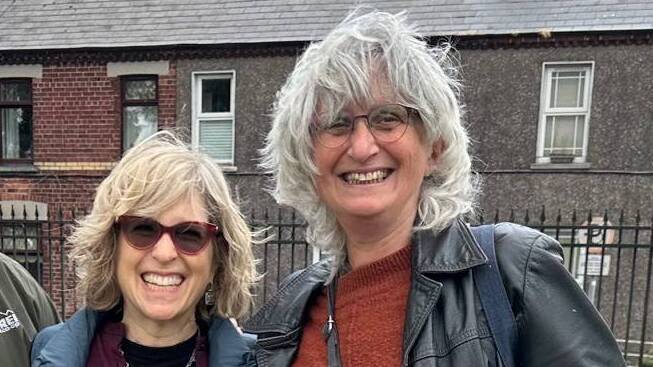
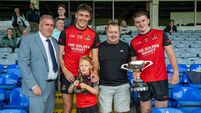
Ruti Lachs (right): 'I have written a book about historic Jewish culture and history in Cork, which will be published in Cork next year.'
Ten years ago, in February 2016, the synagogue in Cork closed its doors. Almost all of the Jewish children who had grown up in the city had left years before, to go to university or marry in other places with larger communities – Dublin, Manchester, Glasgow, London, America, Canada, or Israel.
Elderly parents followed their adult children, or passed away and were buried in the cemetery in Curraghkippane. And so, with only a few Jewish people left in the city, the synagogue closed.
But the memories remain. Since 2017, I have talked to about 50 children and grandchildren of the former Jewish residents of Cork, and they have told me their family stories, or passed on their ancestors’ memoirs. I have also interviewed a number of the non-Jewish neighbours, who fondly remember the community.
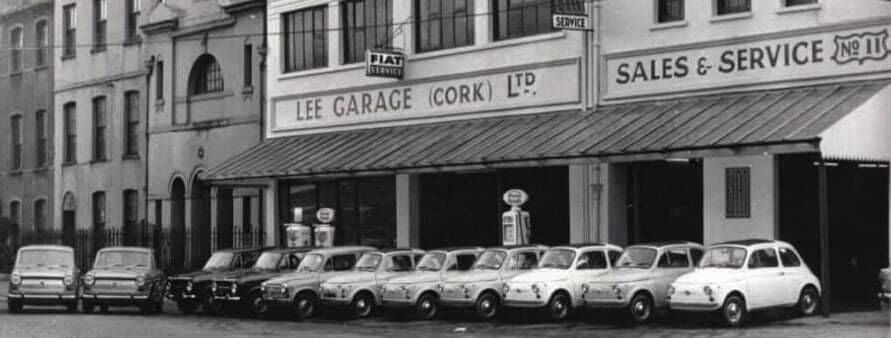
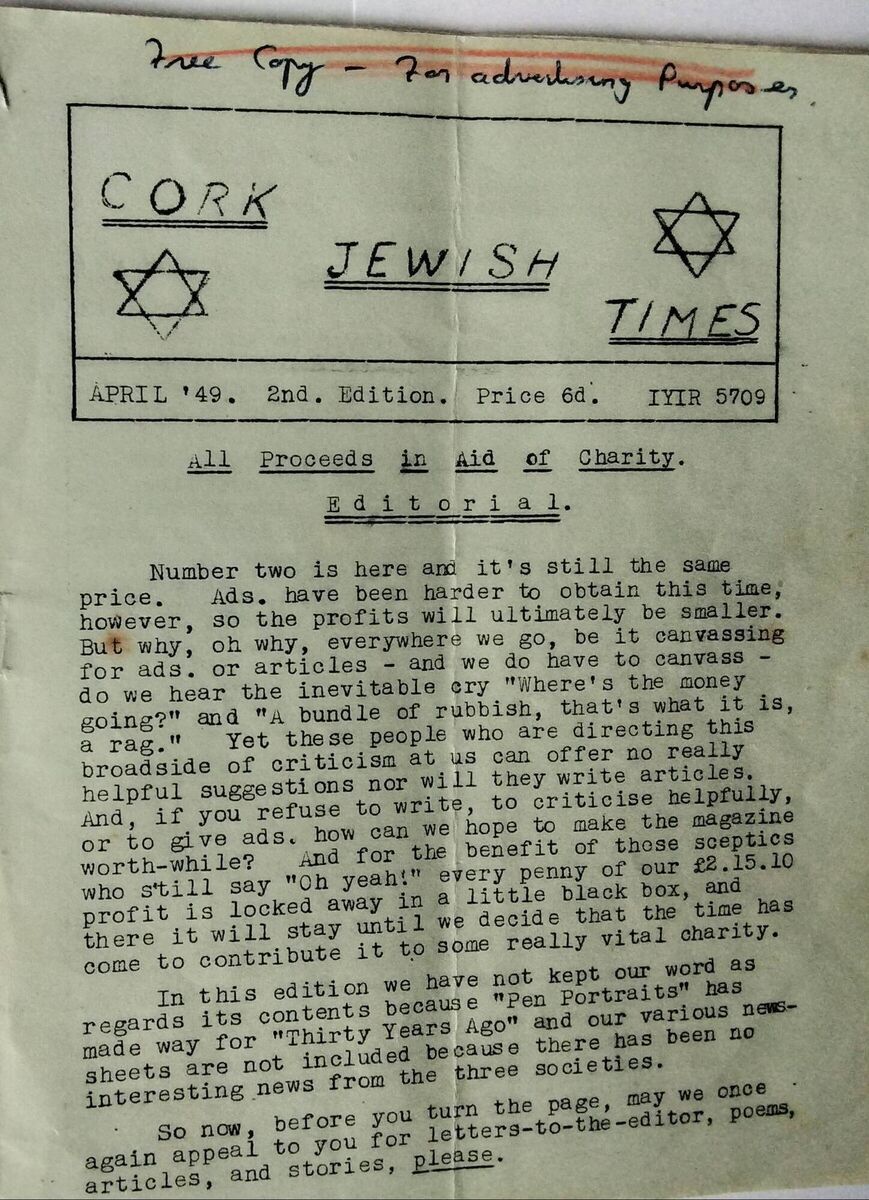
The synagogue was on South Terrace in Cork and the building is now a Seventh Day Adventist Church. Every Saturday people dress in their Sabbath best and head to prayers at their church where once the Jewish families prayed. Saturday is the Sabbath for both Seventh Day Adventists and Jews.
A number of my correspondents in the Cork Jewish Diaspora remember the annual fast day of Yom Kippur, when Jewish people spend most of the day in the synagogue. From the age of 12 (girls) or 13 (boys), no food is consumed from sunset on one day until dark the next day.
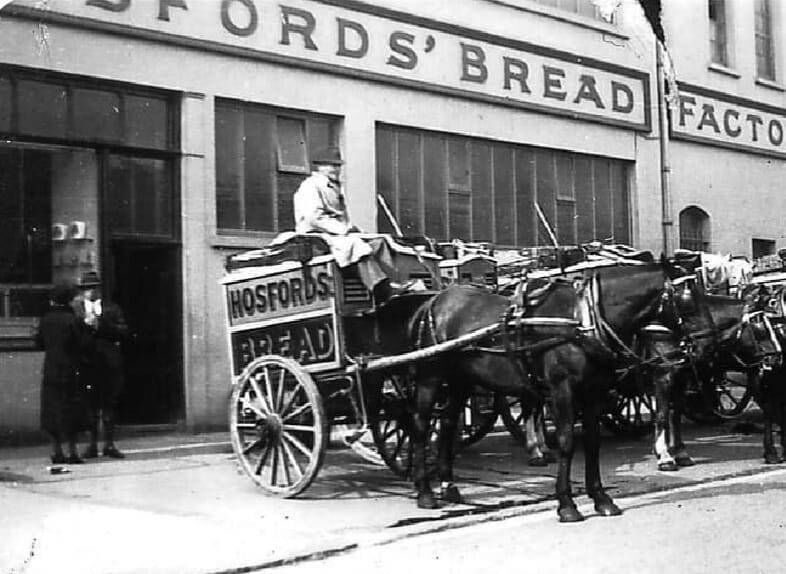
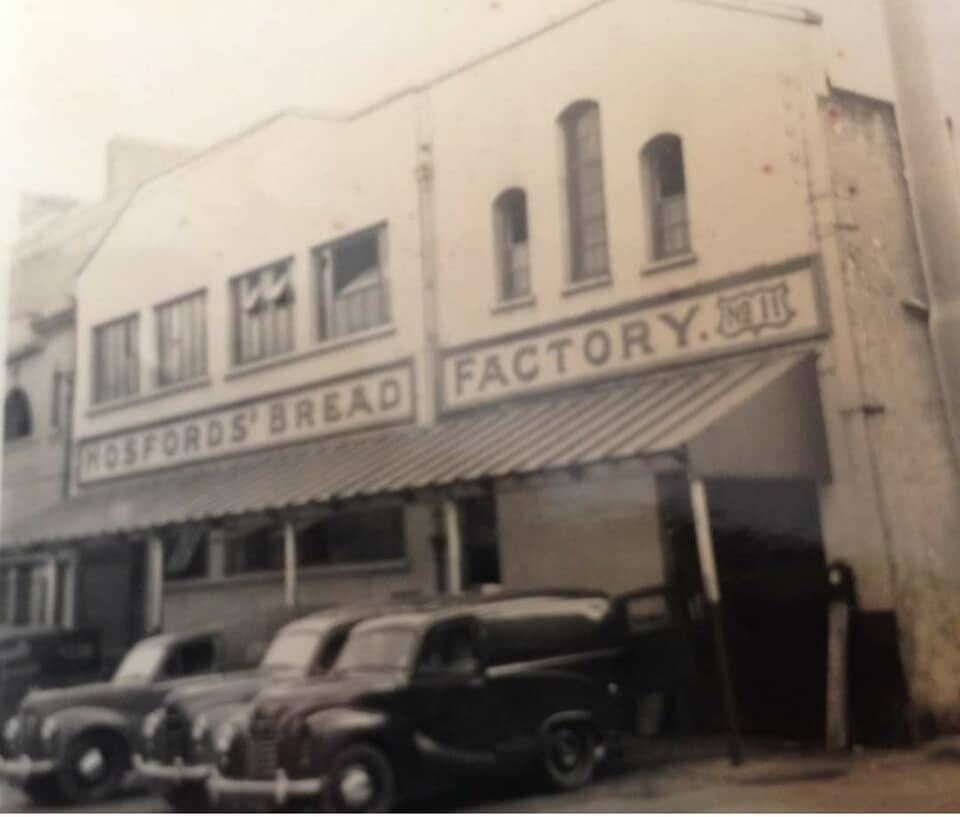
Twenty-five hours of fasting, and much of it spent in prayer. The garage that is next door to the former synagogue used to be Hosfords Bakery, and it was absolute torture for the fasting congregation to smell the fresh-baked bread scent wafting through the windows.
Another festival memory, and a happier one, is Simchat Torah, when as part of the prayer service, the tradition was to throw sweets to the children and they would all race to pick them up.
Parts of the Torah — the Five Books of Moses — are read every Shabbat (Sabbath) during prayers, but it’s a long story, and takes all year. This festival celebrates the end of the Torah reading, and starting it again.
The reading of the bible is a serious matter. But Blanche Wolman tells in her memoir of a time that her family were very upset with the heavy parchment scroll on which the Torah is written.
One Shabbat, when her father was lifting the Torah out of the ‘ark’ (the large press which houses the scrolls), the top of it hit the oil-filled lamp above, and some hot oil fell into Rev. Wolman’s eye. He didn’t drop the scroll, and luckily didn’t lose his sight, but it was a scary moment.
Jewish children may have been disappointed that they didn’t get to celebrate Christmas like their friends, but the festival of Chanukah more than makes up for it. Chanukah lasts for eight days, and falls during December at different times on different years, because the Jewish year is a lunar one.
David Elyan told me about one Christmas memory that did endure, when his uncle Ga Jackson, who owned Jay’s toy shop, borrowed a donkey and dressed up as Santa Claus, parading around the city streets, presumably to boost pre-Christmas sales, with local children following along, delightedly shouting “Have you seen Jaysus’ ass?”
Mary Coffey of Albert Road has a fond memory of the Jewish community. She was asked by a Jewish neighbour to bring a chicken to the Rabbi, for kosher slaughtering.
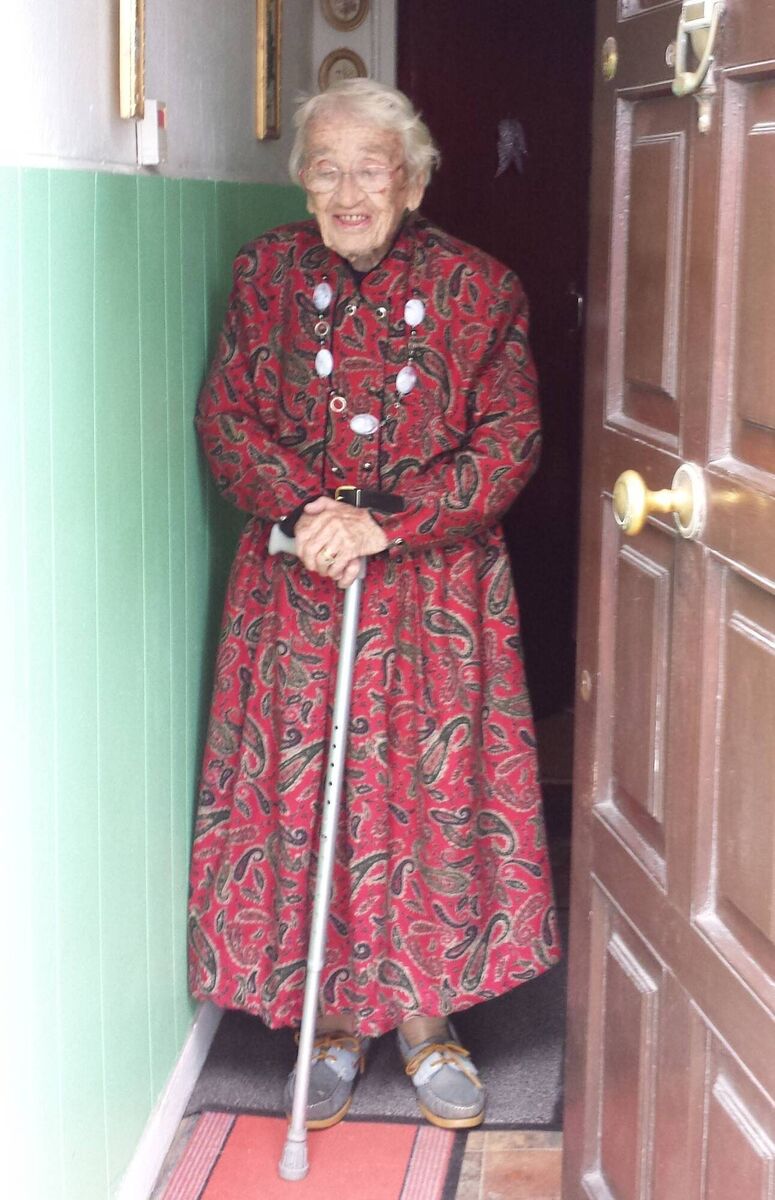
After she brought the chicken back, ready for its next role as the Shabbat meal, to Mrs Levin, she was rewarded with some matza, the unleavened cracker-like bread that is eaten on Passover. Mary remembers sharing the matza with the other children on the street.
Most of the Jewish children in Cork went to local national schools, and got on well with the other children, even though there were often only two or three Jewish children in any particular national school in the city.
Not all the relationships between Jewish children and their non-Jewish schoolmates were pleasant. Blanche remembers that when she was at school in Shandon, some children from another school used to tease the Jewish kids, putting their hand in their pocket and waving it, saying ‘Pig’s ear! Wor! Wor!’.
Marsha Coleman’s grandfather was J.T. Clein, a very active member of Cork’s Hebrew congregation, and a dentist with a surgery on MacCurtain Street. Marsha was born in the USA but spent a year of her childhood in Cork.
She remembers seeing , starring Alec Guinness, at the cinema there. Her grandfather was involved with liaisons between the Jewish and non-Jewish communities. A priest or nun would often visit her grandparents for tea and cake.
Blanche remembers that in her two-room school only one room had a fireplace. When she was cold, she would tell the teacher that she had a headache and would then be sent in to the other room, to sit by the fire. One day the teacher asked her where the headache was, and she said ‘In my foot’!
Hemmy Elyan, who lived in Monerea Terrace, told a story that one day on the way home from school, one of his pals found a little silver Italian coin and gave it to Hemmy. There was a shop down a laneway with a blacksmith next door where they used to stop and watch the horses and have a smoke.
The coin looked like a sixpence. Hemmy went in and asked for a packet of Players cigarettes. The shopkeeper, an older woman, took the coin and gave him the cigarettes. He shared them with the boys, about three cigarettes each.
The next day the shopkeeper arrived at school with the coin and told the vice principal, Mr Martin, that she had been tricked. The boys all had to stand in a line, like an identity parade, and the shopkeeper picked Hemmy out. He said he’d been given the coin by ‘a countryman’.
Hemmy was sent home, where he stole sixpence from his mother’s purse, and later gave it to the shopkeeper. After that, his teacher Mr Martin used to say "Well, Niyermeyer, did you meet any more ‘countrymen’?" But Mr Martin, who was very keen on music, had a soft spot for Hemmy, a musical child.
Hemmy’s Hebrew name was Nehemiah, but no-one could pronounce it. Mr Martin called him ‘Niyermeyer’. Hemmy was a cheeky kid, but also a charmer. Mr Martin said that you couldn’t be cross with ‘Niyermeyer’!
David Marcus has memories of the Passover, or Pesach, festival which he describes in his book .
He remembers a Mrs Silverstein, whose "small front room would become the community’s eight-day Passover commissariat from where she traded specially imported matzo, matzo meal, kosher chocolate, biscuits, wine and other annual exotica, and twice in the week my brothers and I would journey to our milkman’s farm on Cork’s rural edge" where the cow would be milked into specially koshered-for-Pesach cans they had brought with them.
A number of Cork people, including my first interviewee, Paddy Kelly, remember being asked to come in to the Jewish homes on Saturday mornings in the winter to light the fire.
As Jewish law forbids working on the Sabbath, including creating fire, the local children would happily go in to light the fire in the grate, sometimes when their Jewish neighbour had already gone out to morning prayers in the synagogue. Often, a gift of a coin or apple would have been left on the mantlepiece as a thank you.
My most recent interviewee, David Elyan, who was born in 1940, had some great stories about his childhood. But the funniest was about his uncle, the naughty Hemmy Elyan — the same one who paid for cigarettes with an Italian coin — who was known to steal the occasional orange or pickled cucumber from the local shop.
He was caught out one time when his mother, Sarah Elyan, went to the toilet in the outhouse, and was surprised by an orange falling on her head. Hemmy had been hiding the stolen oranges above the cistern.
David left Cork in the late 1950s at the age of 18, and that is the story of so many of the Jewish children. By the 1950s, there were very few staying and marrying in Cork, and so there were very few Jewish births.
This makes the childhood memories that have been shared with me so precious, and I feel honoured to have been permitted to tell these stories.
They are now stored in the Cork Jewish History Digital Archive in Cork Public Museum. I have written a book about historic Jewish culture and history in Cork, which will be published in Cork next year.
- Ruti Lachs is a musician, writer, educator, and performer.

CONNECT WITH US TODAY



Be the first to know the latest news and updates