Michael Moynihan: Why Cork's tiny statue of the mosquito that bit Oliver Cromwell could be a masterstroke
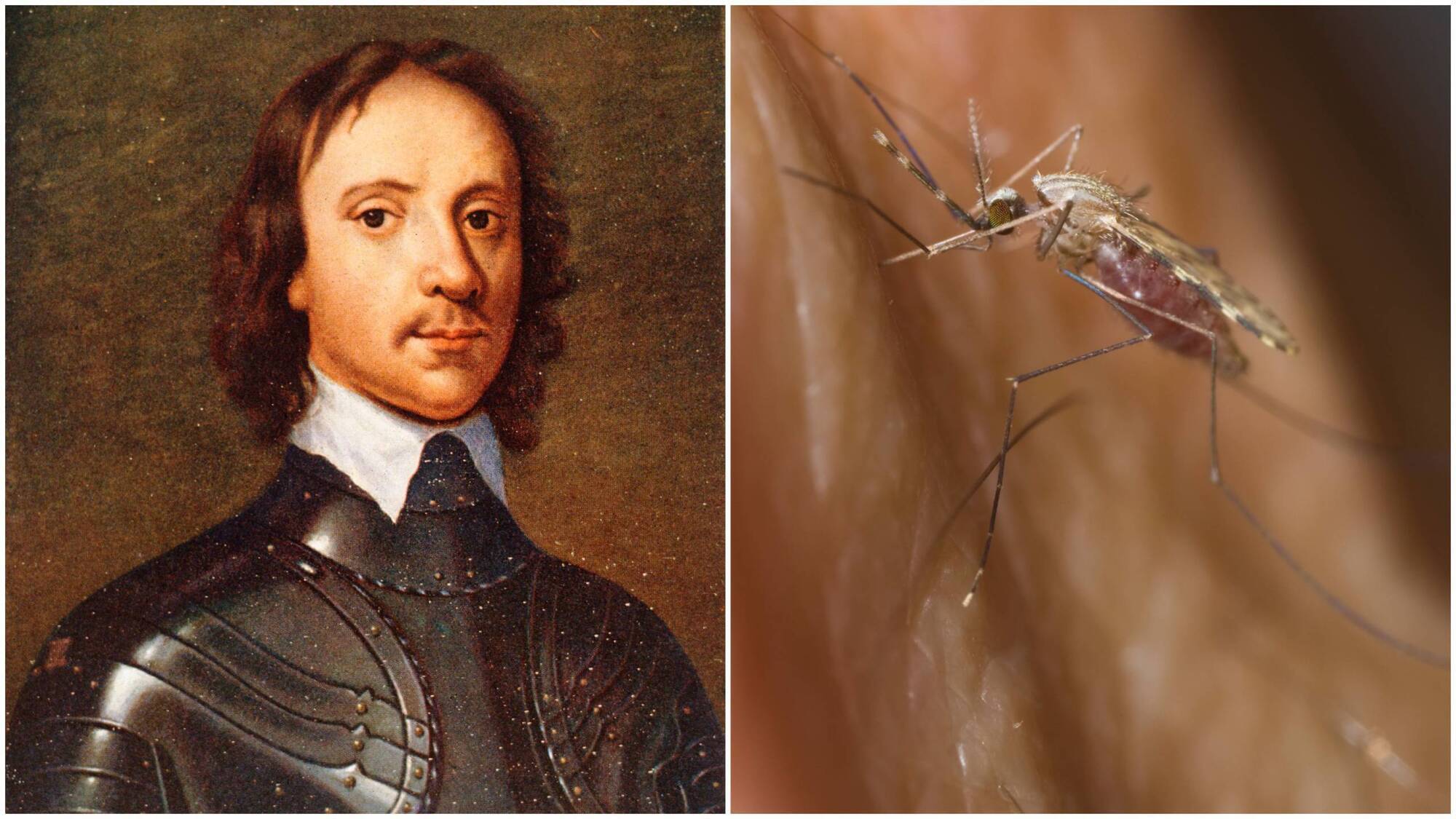
Cork City Council is set to consider a proposal for a tiny statue honouring a mosquito linked to Oliver Cromwell.
Attention! A statue is being proposed for Cork. Specifically, a statue to commemorate the mosquito that may have killed Oliver Cromwell by infecting him with malaria while he was here.
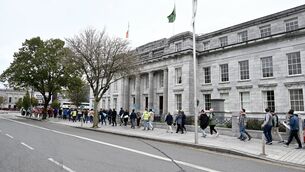
Yes, the ‘may’ in that sentence is working overtime, but this proposal is to be considered by Cork City Council, as reported here by Liz Dunphy last week: “It would be 'the world’s smallest public statue’," and could be erected on an empty plinth outside Cork City Hall, Green Party councillor Oliver Moran said.
“Mr Moran suggested erecting the statue as part of Cork City Council’s public art scheme. He has proposed that Cork City Council ‘erect a statue to the mosquito or midge that bit Oliver Cromwell during the siege of the city, later causing his death through ‘Cork fever’ (malaria), and that this statue shall be ‘the world’s smallest public statue’.”
Finally: an initiative the entire city can get behind.
I don’t want to get into any arguments with other municipalities about their statues and public art schemes, not all of which are — ah — to my taste. That’s neither here nor there because you’re talking about something subjective. Each to their own and all that.
But it’s still important not to fall into some of the traps we’ve seen elsewhere. And by elsewhere I mean parts of Ireland which are not Cork.
Read More
For instance, one of the most eye-catching works of public art in Ireland is the Spire, the massive metal spike in the middle of O’Connell St in Dublin.
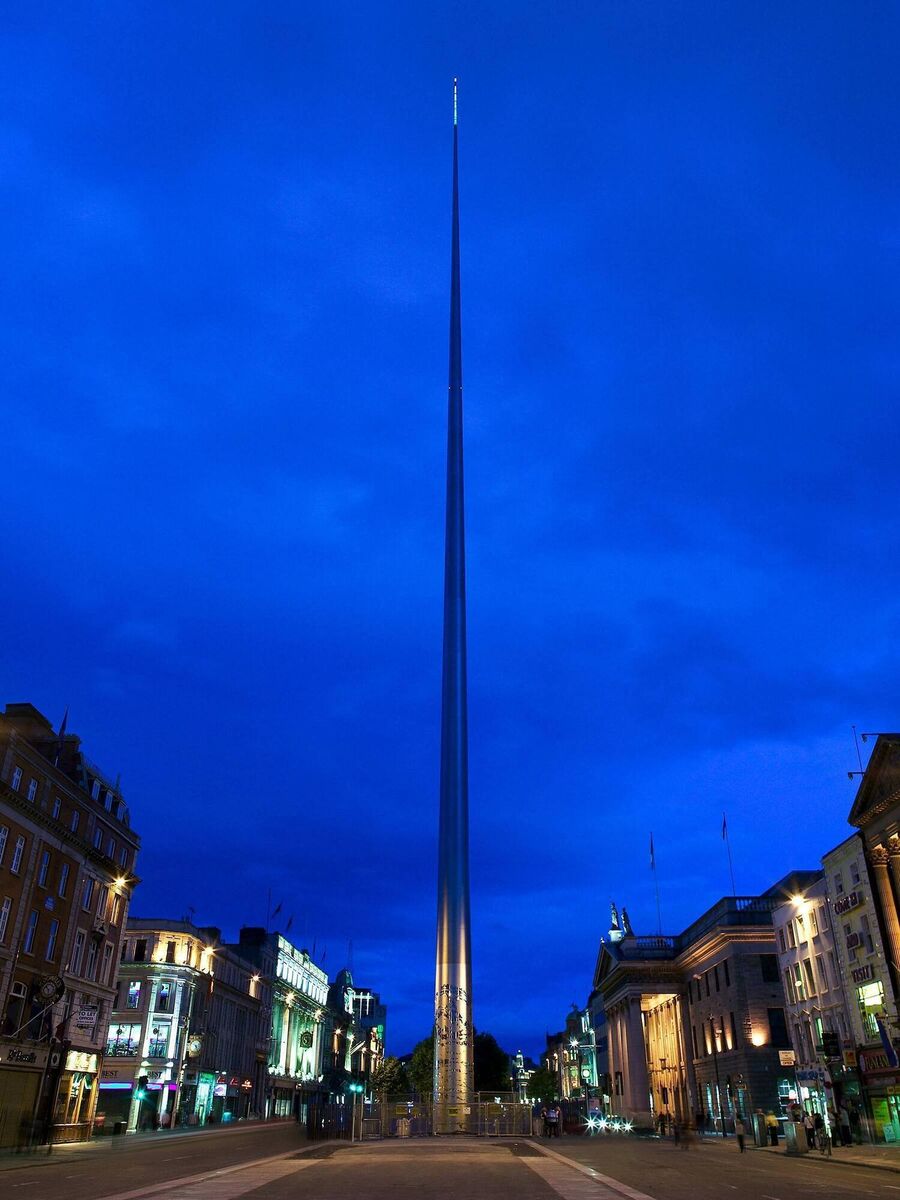
As with many such works, this divided opinion when it was first unveiled but is now an accepted part of the capital’s non-traditional streetscape. You meet people there before matches to give them tickets, they give out because you have paper ones rather than the transferable phone ones, you say if that’s your attitude I’ll just sell these over at the Piper’s. Anyway, what we might want to avoid with our mosquito statue is the kind of buyer’s regret Dublin experienced when it came to cleaning its public art.
Last year Dublin City Council sought tenders to maintain the Spire over the next five years. The contract for the upkeep of the 120-metre structure — cleaning, general upkeep, and alarm and monitoring systems — was €500,000 for that period.
Possibility of this happening in Cork: zero. The mosquito statue will not be 120 metres tall.
Of course, before the Spire was dreamed of there was another large monument on O’Connell St in Dublin: Nelson’s Pillar.
That was blown up by dissident members of the IRA in 1966, presumably on the grounds that they weren’t happy with a British naval hero looking down on the capital.
Possibility of this happening in Cork: less than zero on political grounds. The mosquito bumped off Oliver Cromwell, after all.
Then there was the Millennium Clock.
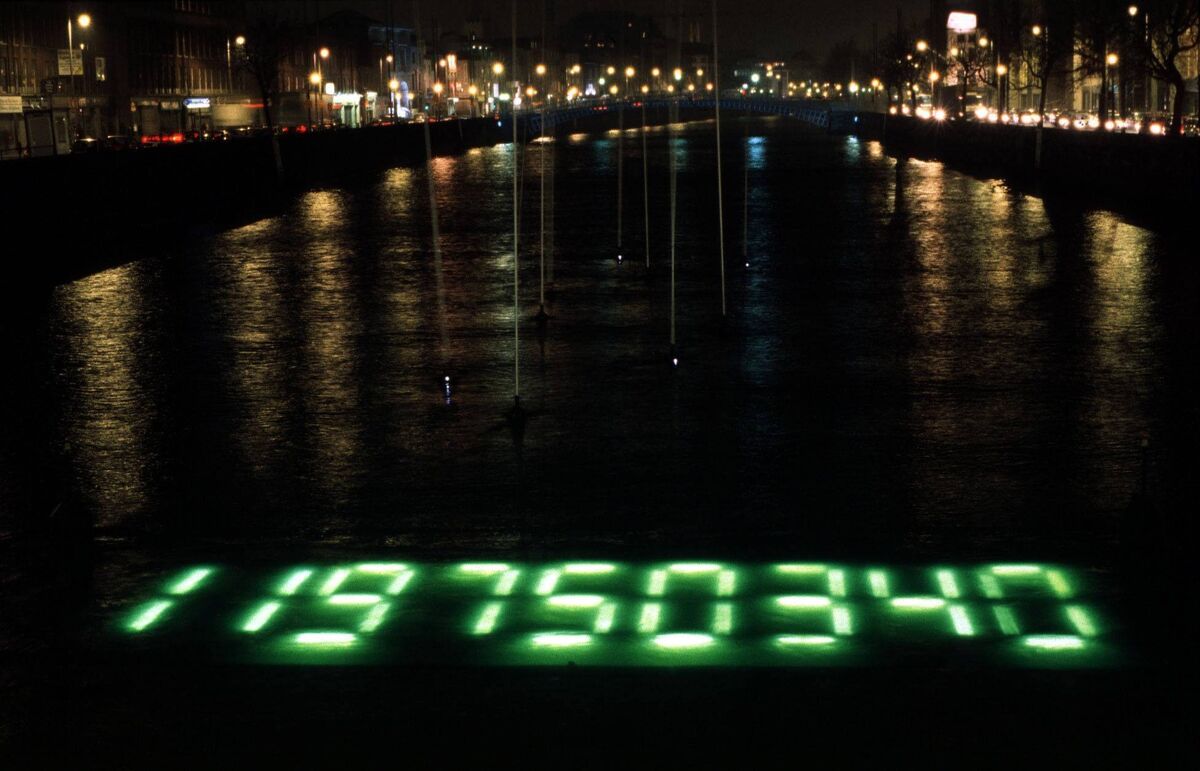
For the benefit of younger readers, this was a great wheeze wherein a digital clock, put in the river Liffey near O’Connell Bridge during March 1996, was to count down to the millennium.
Unfortunately it was beset on all sides almost immediately. There were technical challenges with the countdown display, it got covered with mud and algae, and there were issues with river users navigating past it. It was gone from the river before 1997 dawned.
Possibility of this happening in Cork: zero. Mosquitos are not clocks.
(Could we get a couple of examples from somewhere that’s not within fifty yards of O’Connell St? — ed)
One of the traditional problems with public art is public unhappiness, usually expressed in terms of dissatisfaction with the work’s accuracy.
Case in point: the statue of Sonia O’Sullivan in her native Cobh was the subject of some criticism because it wasn’t quite a dead ringer for her.
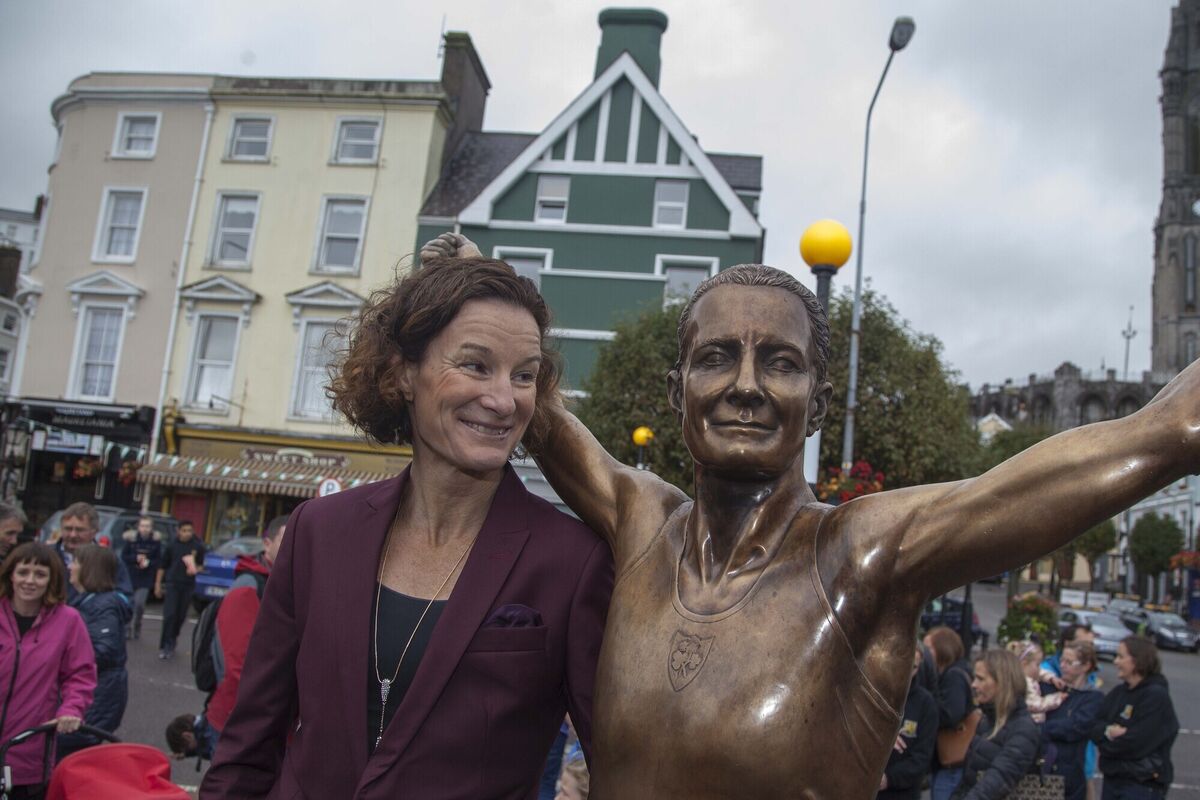
She had a common-sense response: “You’re not supposed to look at it too closely. It’s a piece of art, you have to stand back and get a good look at it and then you can see what it is supposed to be, the significance and symbolism of it.
“It’s not supposed to be an exact replica of me. I think it’s a kind of image of me and an artwork of me, so it’s a reflection of a happy memory of me that people like to recall.”
Probably something people should remember when criticising public art in general.
Possibility of this happening in Cork: zero. Who’s going to say ‘that’s not a bit like a mosquito?’
Up in Clare there was a different kind of objection to a work of art proposed for the town of Ennistymon five years ago.
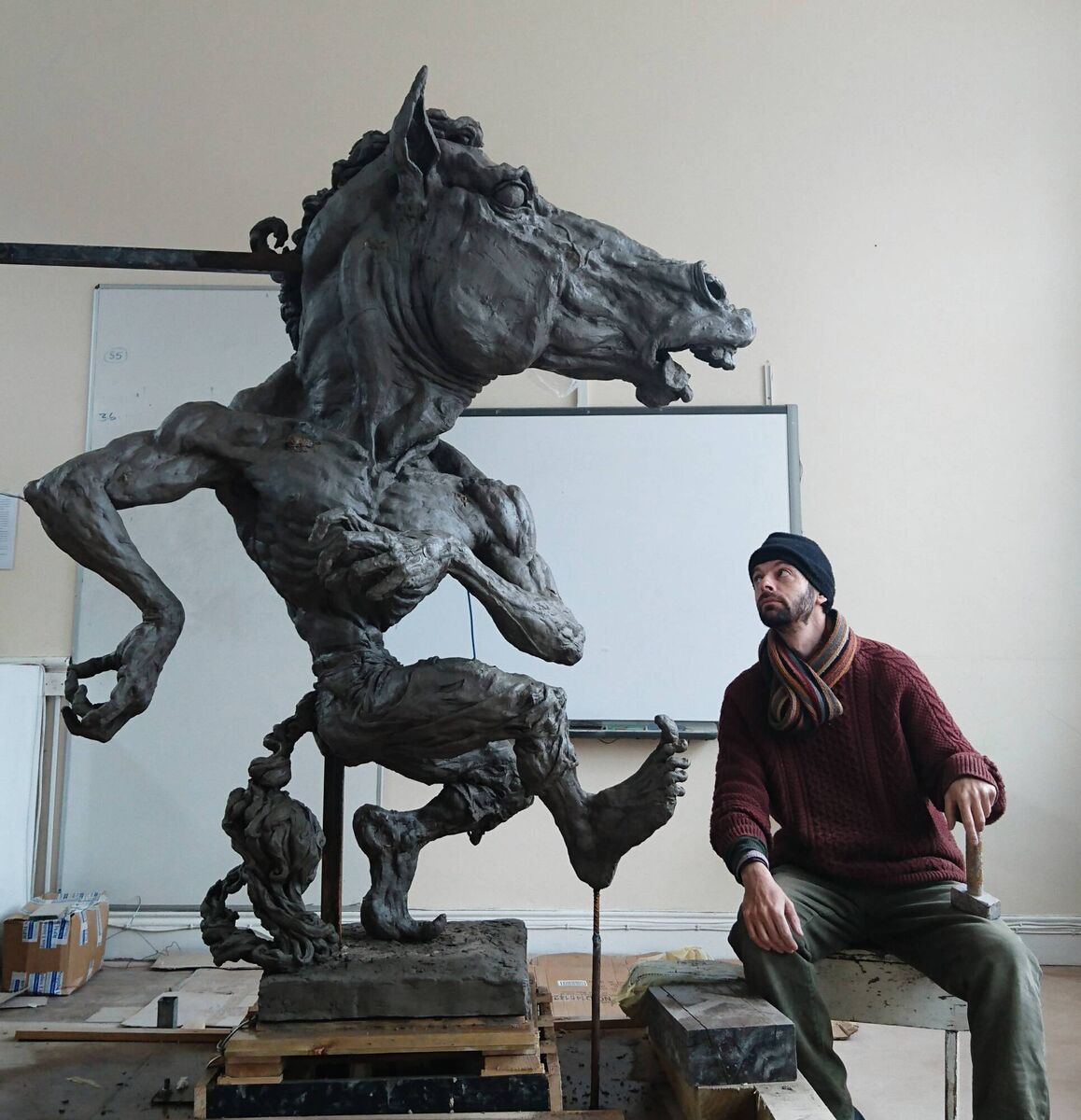
Clare County Council commissioned sculptor Aidan Harte to come up with a statue associated with that town’s horse fair, and Harte duly came up with the Púca, a two-metre bronze sculpture of a man with a horse's head.
However, local parish priest Fr Willie Cummins denounced the statue from the altar at Mass, describing it as “sinister", and Clare County Council put the plan on hold. In 2022 the statue was moved to another spot altogether in Clare — Poll a Phúca, near the Michael Cusack centre at Carron in the Burren.
Readers who visited Dublin in recent decades may recall the Anna Livia statue designed by Eamonn O’Doherty to commemorate Dublin’s Millennium in 1988.
Named after a character from James Joyce’s masterpiece , the piece was meant to personify the river Liffey, but controversy reared its ugly head before the piece even appeared on the street. One politician famously said it would look like “the tomb of the unknown gurrier”, and when the hefty piece of art was actually installed
in its original granite surrounds, it was repeatedly vandalised and strewn with rubbish until it was removed in 2001.
After a decade in storage it was installed at the Croppies’ Acre in the city.
Possibility of happening in Cork: letting a large structure rot in storage? Has happened before here, so can’t be ruled out.
One thing all of those Dublin works of art have in common, of course, is the attachment of a nickname as soon as they were unveiled. Once the ribbon was snipped or the canvas dropped the hilarious unofficial christening took place. The Spire: the stiletto in the ghetto. Anna Livia: the floozie in the jacuzzi. The Millennium Clock: the chime in the slime.
(To clarify, these are all examples of Dublin wit. The reason I have not put the words Dublin wit in quotation marks is because there are not enough quotation marks in the world to do justice to my opinion of D. W.) Possibility of this happening in Cork: zero. You are talking about a city full of public art, but where people refer to The Statue without having to name it, after all.
And a city where zany nicknames are about as welcome as, well, a mosquito bite.
CONNECT WITH US TODAY



Be the first to know the latest news and updates