Ireland is a rich country with poor infrastructure due to delays, disputes, and overruns
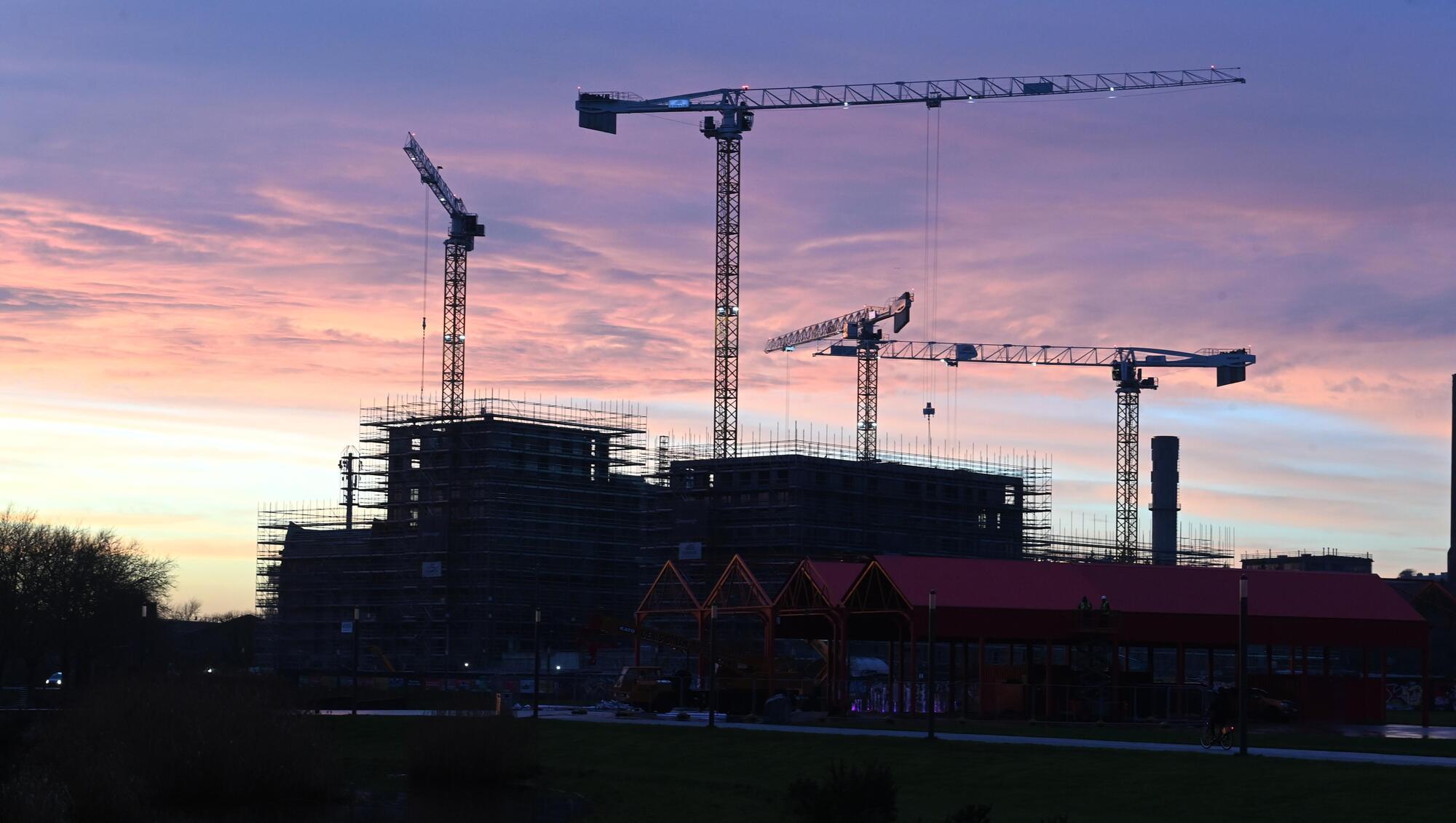
The recent Accelerating Infrastructure Report is a positive step in the right direction. The report outlines significant actions required to streamline the State’s processes, moving strategically important projects to the top of the queue among the myriad clearance processes. File picture: Larry Cummins
The last few weeks have seen the likes of Sinead O’Sullivan and David McWilliams asking why Ireland faces housing and infrastructure gaps despite being a rich country. The answer lies within the morass of regulatory and bureaucratic systems that have calcified within the State’s delivery system for infrastructure since the mid-2000s. So much of the Government’s investment in infrastructure leeches away in delays, disputes, and overruns.
Ireland is embarking on a transformational investment programme, with over €275bn committed up to 2030. This means a whopping annual investment of €15.8bn in 2025 needing to increase to €28bn by 2028. The Government will have to spend €105m on capital infrastructure each working day for the next ten years to meet this target.
Consulting engineers fight through the undergrowth of overlapping bureaucratic, legislative, and regulatory systems every day to design the Government’s infrastructure. Our experience indicates that the gap between the promise and delivery will be huge. A substantial proportion of the billions announced will not trickle down from the Government press release, into our drawings and onto the ground in the next decade.
Getting more bang for our buck is now an urgent political imperative. The recent fuel protest feels like a strong articulation by population groups that feel ‘left behind.’ It is an echo of the sentiment behind Brexit and other political upheavals we have seen across the globe.
One of the levers the Government can pull to negate this is to deliver more homes, schools, hospitals, and water infrastructure, connecting communities across Ireland.
The recent Accelerating Infrastructure Report is a positive step in the right direction. The report outlines significant actions required to streamline the State’s processes, moving strategically important projects to the top of the queue among the myriad clearance processes.
However, deeper, even cultural, changes are required, particularly in how public sector clients engage design professionals over the coming year.
First, engineering expertise must be embedded earlier in decision-making. Too often, engineers are engaged after key choices have been made. That is too late. Early technical input improves feasibility, reduces redesign, and avoids delays.
Second, the planning system must become more predictable and time bound. Clear statutory timelines, reduced duplication in environmental assessments, and better-resourced consenting bodies would significantly shorten delivery cycles - without weakening scrutiny.
Third, procurement must shift from lowest cost to long-term value. Quality-based selection, outcome-focused contracts, and earlier contractor involvement can improve buildability and reduce lifecycle cost.
Risk allocation also needs urgent reform. Today, disproportionate risk is often transferred to those least able to manage it. This drives defensive pricing, limits competition, and suppresses innovation.
Moving toward fairer, balanced risk sharing, supported by proportionate liability, would create a more sustainable delivery model. Firms would be accountable for their own work, not exposed to unlimited liability for others. That is standard in many comparable jurisdictions. Ireland is an outlier. This would also reduce legal costs eroding the value of the State’s investment by encouraging more collaboration rather than risk avoidance behaviours.
Project pipelines must be clearer and more consistent. The stop-start nature of delivery undermines investment in skills and capacity. A transparent, long-term pipeline allows industry to plan, invest and scale, particularly in times of global volatility such as today.
Ireland must address the talent challenge. Ireland is not producing enough engineers to meet demand. This is a national constraint. We need to expand education pathways, attract international talent, and make engineering a more visible and valued career. Most importantly, we must show that there is enough quality work in the infrastructure pipeline to provide lucrative, rewarding, and prestigious careers over the coming decades.
Finally, collaboration between industry sectors, government, agencies, and communities need to engage earlier and more constructively. In countries experienced in delivering infrastructure at scale, such as Spain and Australia, political sponsorship of projects is strong and extends much deeper than the initial big figure announcement to the ribbon cutting photo opportunity. This political support is buttressed by extensive community engagement, rather than a legalistic system that incentivise objections and delays.
Consulting engineers are trusted advisers who provide intellectual services to clients, but they are too often treated simply as service providers. Investment in the design phase yields the greatest return in terms of project life-cycle costs and can also reduce problems and disputes downstream.
As the global expert, Bent Flyvberg states in his seminal work, , projects do not go wrong, they start wrong. If we invest more in the design phase, we can think through the problems that cause delays when it comes to construction.
If Ireland is serious about closing the gap between ambition and reality, then delivery must become the priority. That means reforming the systems that enable infrastructure and placing delivery expertise at the centre of decision-making.
- Shane Dempsey is director general at the Association of Consulting Engineers of Ireland.

CONNECT WITH US TODAY



Be the first to know the latest news and updates