No diagnosis needed for children’s supports at an early age
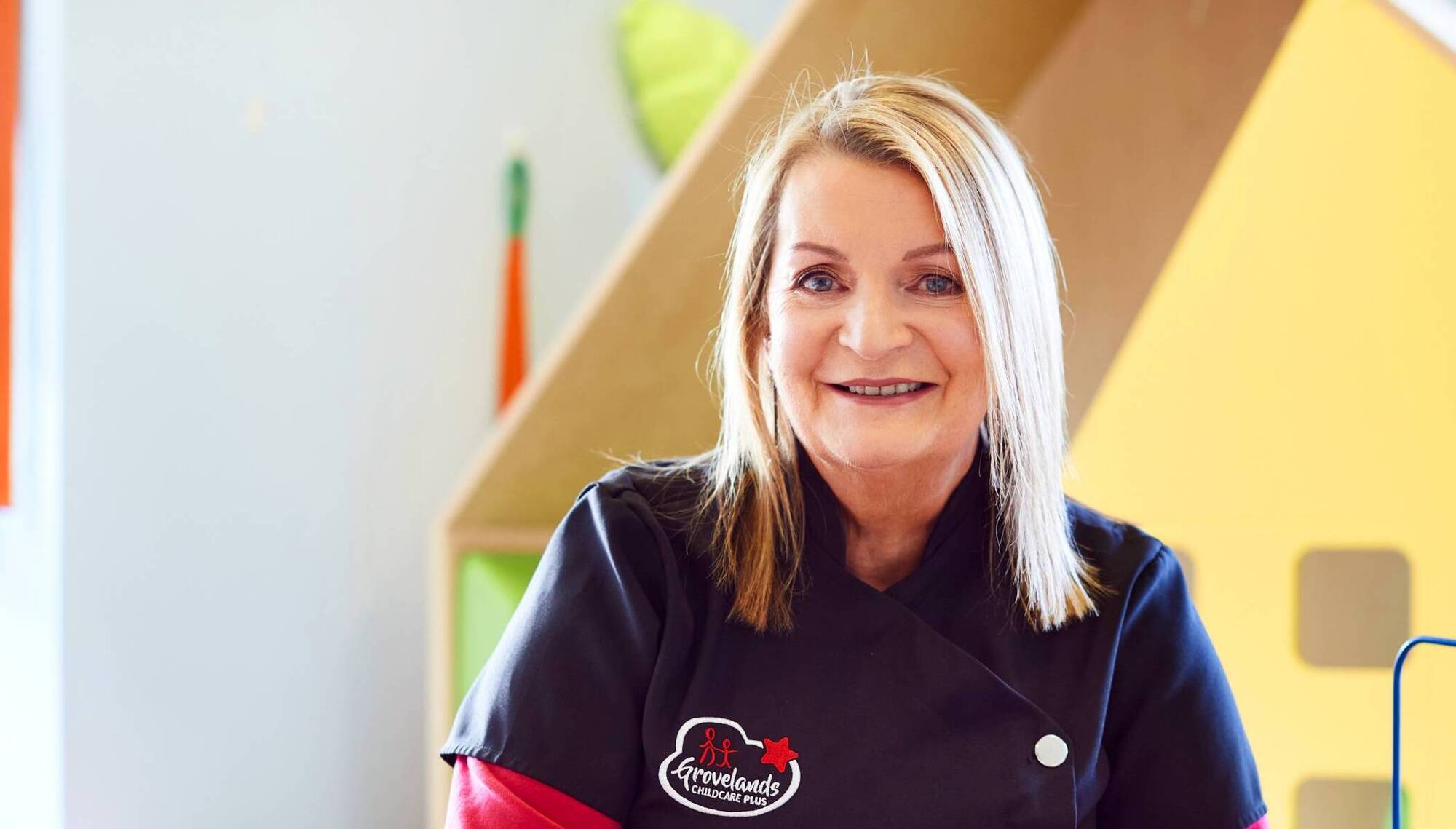
Chair of Seas Suas and managing director of Grovelands Childcare, Regina Bushell, has spent decades of her life working with children during key stages of their early development.
Early years educators can often be the first to broach the delicate subject of potential developmental delays with parents.
They tend to meet children for the first time as they welcome them to pre-school, usually just before they turn three.
Sometimes they are the first to share concerns about a child with parents, even before doctors, public health nurses, or other professionals trained in providing diagnoses.
They can even sometimes be the first to identify potential concerns within days of a child’s enrolment, even despite that child having undergone multiple health reviews, according to Regina Bushell, managing director of Grovelands Childcare.
Read More
“I suppose people are only seeing a snapshot of a child sometimes,” she explained.
“When you are in with us, you are seeing more of the child. Sometimes parents have no idea. They might be first-time parents, they mightn’t have picked up that there’s a developmental problem.
“Then we have to start on this road with them for the future wellbeing and development of their child.”
Part of this includes the process of applying for additional support for their child through the Access and Inclusion Model (AIM).
Run by the Department of Children, AIM covers both universal and more targeted supports available to pre-school children through the Early Childhood Care and Education (ECCE) scheme.
The programme is intended to help early learning and care providers be fully inclusive by allowing every child to “meaningfully participate” in pre-school.
A key aspect of AIM means no diagnosis is required for supports, which are delivered across seven levels, depending on a child’s individual needs.
Accessing these supports means preschools are often the first places where the subject of disability is raised.
“We have to sit down with parents and encourage them to sign those documents so that we can get the supports their children need,” Ms Bushell said.
She has spent decades of her life working with children during key stages of their early development, opening her first playgroup 50 years ago in her own home.
An Athlone native, and president of the town’s Chamber of Commerce, she has grown her business through the years, picking up recognition for raising standards in early learning.
Grovelands Childcare operates six centres across the Midlands, providing care to 700 pre-school children daily, and working with more than 1,000 parents.
Ms Bushell is also chair of Seas Suas, a representative group for independent childcare providers.
National delays with accessing services, therapies, and diagnoses in the Irish health care system are well flagged.
At the same time, early intervention is well recognised as leading to the best outcomes for children.
But, there is a growing concern amongst childcare providers about a widening gap in provision for children with the most complex needs.
Like many aspects of the State, responsibility for different areas of early education and care falls between different Government departments.
The “quality of learning” under the ECCE scheme is inspected by the Department of Education, while ‘Early Years’, including pre-school, school-age and childminding services, are inspected by Tusla.
Meanwhile, due to an absence of timely screening and intervention, childcare providers are managing increasingly complex needs, Ms Bushell said.
At the same time, there is no clear pathway or alternative State provision available for childcare providers to refer parents to when they can’t meet their child’s needs.
Most children thrive and have amazing outcomes from the interactions they received in their preschool. “But then there are those small few children who fall through the cracks.”
The reality on the ground is that, despite doing everything possible, there are situations where an early learning and childcare setting simply cannot meet a child’s needs safely within a group environment, Ms Bushell said.
Often, providers will look at reducing their staff ratios, adapting their environments as best they can, and will work with all supports available to them.
“We have a protocol that we go through. We get the supports in, we do everything that we need to have done,” she said. “It still may not end up being what the child needs.
“At that point, under our duty of care to the child, to other children, and to our staff, we may have to make the very difficult decision to cease a placement.
“We are seeing this more frequently at the same time as early intervention classes in some mainstream primary schools are being reduced or reclassified.
“If they leave our service, those parents and that child are in total limbo with no supports.”
Early intervention classes operate under the remit of the Department of Education, the vast majority specially for autistic children.
These classes are for children between the ages of three and five, too young to start school, but who need one-to-one support.
They are intended to provide early support to children before they start school, aiding their transition to junior infants.
The majority are attached to mainstream schools, and staffed by one class teacher and two special needs assistants (SNAs) to six pupils.
Children do not have the same legal right to a place in an early intervention class as they do to be enroled in school.
In recent years, many early intervention classes have been ‘redesignated’ as primary school autism classes, sparking concern that these settings are being quietly phased out.
While the number of autism primary school classes has essentially doubled since 2020, from 1,319 to 2,629 in 2025 to meet the need for school places, the number of new early intervention classes opened in that same timeframe has barely kept pace with the repurposing of others.
These classes are redesignated when a “notable need arises” in an area, and the students in a class age out of pre-school, according to the National Council for Special Education (NCSE).
“Parents and schools are often anxious to ensure that a group of six children in a early intervention class can continue to attend the same school and have the class redesignated as an autism special class,” a spokesperson for the Department of Education said.
There has also been a significant increase in resources and supports provided to children with additional needs accessing the AIM programme over recent years, the spokesperson added.
This is true; The AIM budget for 2026 is €84.04mn, an increase of 50% since 2024, and supporting 9,000 children this year.
However, there are still key differences between the level of support available to a child through AIM and through an early intervention class.
The AIM programme does not operate an SNA model. Instead, additional funding is provided to pre-schools where a child requires extra assistance, and the model is designed for shared support in most cases.
“One-to-one is not provided under AIM,” Ms Bushell said.
Another key difference is the environment. Think of a preschool: Its loud, its bright, its busy, and staff must balance the various needs of multiple toddlers safely, while also following policies and procedures.
“Our environments are built for groups of children,” Ms Bushell said. “Some children need a very quiet environment. It just does not suit them.
“They need quietness, they need one-to-one and they need people who are highly skilled to advise on what that child needs.
“The majority of facilities around the country would not have specific sensory rooms.
“If you have a child, who has very complex autism, it also takes a lot of expertise and experience to support that child,” Ms Bushell said.
Preschools will make every effort to integrate every child but the environment might still be a “stressor”.
“Even with reduced numbers, it’s too much. Sometimes a child cannot handle any more than a half an hour, or an hour a day in that type of environment.
“There are times obviously when a child is happy and content, we do facilitate that where we can but we can’t always.”
“We do everything possible to support inclusion, and that looks at reducing the ratios and adapting the environments, and working with AIM, and working with Better Start and the therapists,” Ms Bushell said.
“At the end of all that, if a child is still there and we’re not meeting that child’s needs, we know that they need that early intervention, and that they need it very early in order to make a difference in their lives,” she said.
“If they don’t get that support early on, they may not thrive in the way that they could. You hear parents say it all the time, when they get the right support, it makes such a huge difference to them.”
The Department of Children declined to say if it collates the number of placements ceased by providers in cases where they cannot meet a child’s needs.
“Where parents experience difficulties in accessing a mainstream setting that meet their child’s needs, they are encouraged to engage with the City and County Childcare Committees who may be able to assist in finding an alternative placement.
“Where providers experience difficulties in meeting a child’s needs, they are encouraged to access expert early years educational advice and support from the Early Years Specialists at Better Start.”
There is also specialist preschool provision and supports through the Department of Education and through HSE funding, she added.
Ms Bushell said childcare providers often tell parents to “get on to their county’s childcare committee, we tell them to get on to their local TDs”.
“If you have a child with that level of need, you’re probably a stressed parent anyhow. Then you have to go through the whole dilemma of ‘where do I turn to next?’.
“There’s nowhere we can actually send those parents. That’s the heartbreak of it, where do we tell them to go in the middle of it all?”
- Jess Casey is Education Correspondent with the
CONNECT WITH US TODAY



Be the first to know the latest news and updates