Politics has tossed friendship out of the window — as Keir Starmer is realising

British prime minister Keir Starmer. There is no leader in waiting obviously superior to Starmer, certainly not his former health secretary, Wes Streeting.
The Tories took years of Westminster turmoil to reach their Liz Truss moment. It has taken Labour only two. Britain has a weakened prime minister, a fatally divided government and a shambolic House of Commons. No one beyond Keir Starmer’s looming rivals can seriously believe the cure lies in his immediate toppling.
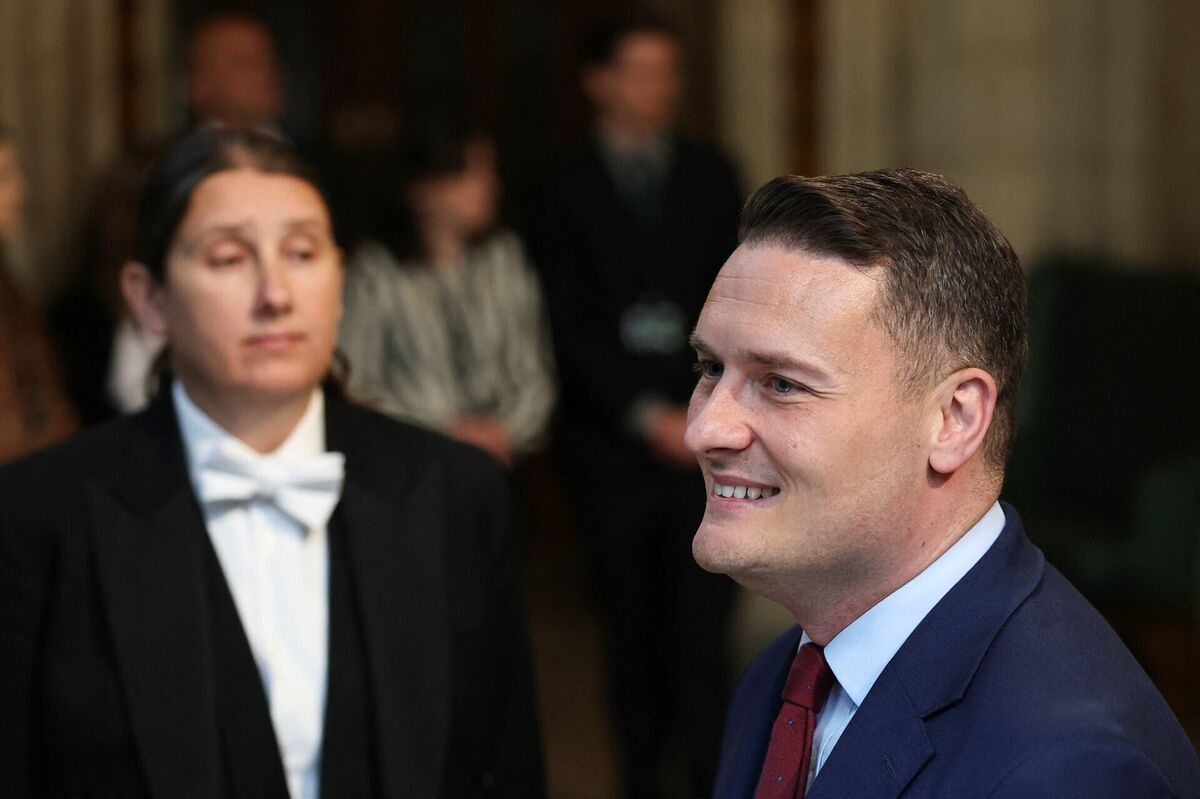
There is no leader in waiting obviously superior to Starmer, certainly not his former health secretary, Wes Streeting.
Out of naked ambition, he has ditched a critical job in an extraordinary display of cabinet nastiness. As the chancellor, Rachel Reeves, suggests, the effect of a leadership change on the economy could be severe.
Yet Westminster’s corridors are bubbling and seething, close to explosion. Something is very wrong with British politics.
Starmer is a victim of democratic circumstance. He has been faced with adverse opinion polls and a recent round of “midterm” local elections in England. These elections, which are nothing to do with Westminster, always tend to go against the party in power — if seldom so dramatically. The election results in Scotland and Wales were devastating, however.
Labour is also suffering from a Europe-wide collapse in conventional party loyalties. There were earlier signs of this. In the 2024 election, Labour’s popular vote under Starmer was actually lower than that under his predecessor as leader, Jeremy Corbyn, in 2019. As it was, that victory offered Starmer a golden opportunity to refashion Labour as a new political force.
The opportunity was in the form of two challenges left him by the outgoing Tories. One was to tailor British economic growth to the looming digital revolution, the other to radically reform an increasingly dysfunctional welfare state.
He and Reeves have struggled to put the public finances on an even keel. Where they made bad decisions — notably on taxation — it was as much to do with pressure from their MPs.
Among Labour leaders, Starmer was always a stolid backwoodsman rather than a rhetorician in the Harold Wilson or Tony Blair mould. He has lacked talent in his Downing Street back office and Labour’s backbenches have denied him the range of ability that has steered his party through hard times in the past. There are no Denis Healeys, Roy Jenkinses, Robin Cooks, Jack Straws or even Tony Benns waiting in the wings. That Starmer last week had to turn for help to the former leader Gordon Brown is a measure of his desperation.
To his credit, Starmer has performed well abroad. He has steered the country through a frantic period in transatlantic and European relations. He has kept Britain out of Donald Trump’s madcap Iranian war.
For so many of his colleagues to undermine him so devastatingly just now seems the act of enemies, not critics. It is the act of ambitious individual MPs spotting a chance for self-advancement, egged on by a hysterical parliamentary media that treat the political scene as having little to do with governing the country, only with supplying a 24/7 gossip column. Such columns crave only corpses and divorces.
In his celebrated analysis of British politics, the French scholar Alexis de Tocqueville said that it can only be understood as like a club. This concept was updated by the historian Peter Hennessy who held that parliament works through the cohesion of “good chaps”, men and women agreeing on how to behave towards each other and in person. They do not need rules, only the social customs and practices of the club room.
This club has clearly begun to dissolve. Even un-clubbable Tories such as Edward Heath and Margaret Thatcher could rely on a social as well as political coherence of colleagues — meeting, dining, weekending together. Successful parties were led by people who were genuinely friends. The same was true of Labour’s Hampstead and Islington “sets” that featured in its previous administrations. This cohesion undoubtedly weakened under Theresa May, but it collapsed completely with Boris Johnson’s butchery of his former colleagues. Friendships did not characterise the Truss or Rishi Sunak cabinets.
This loyalty enabled a government to push through possibly unpopular election mandates, to see unpopular polls as a time to stick together, not break apart.
Every decision did not have to be a battle – as Starmer’s appear to have been. But then in former times MPs spent half their day at Westminster chatting in the bar and awaiting late-night votes. That is less so today and many MPs remark on how much casual friendship has gone as a result.
No one could possibly argue that the national interest has benefited from this week’s self-serving antics by Streeting, Angela Rayner and Andy Burnham. They cannot now pretend that a new Labour government will be a cohesive team of like-minded colleagues. The reality is that Britain is best led by friends not enemies. Today the friends are not much in evidence.
- Simon Jenkins is a Guardian columnist
CONNECT WITH US TODAY



Be the first to know the latest news and updates