Rob O'Sullivan: My partner and I are worth more to our town than short-term tourists
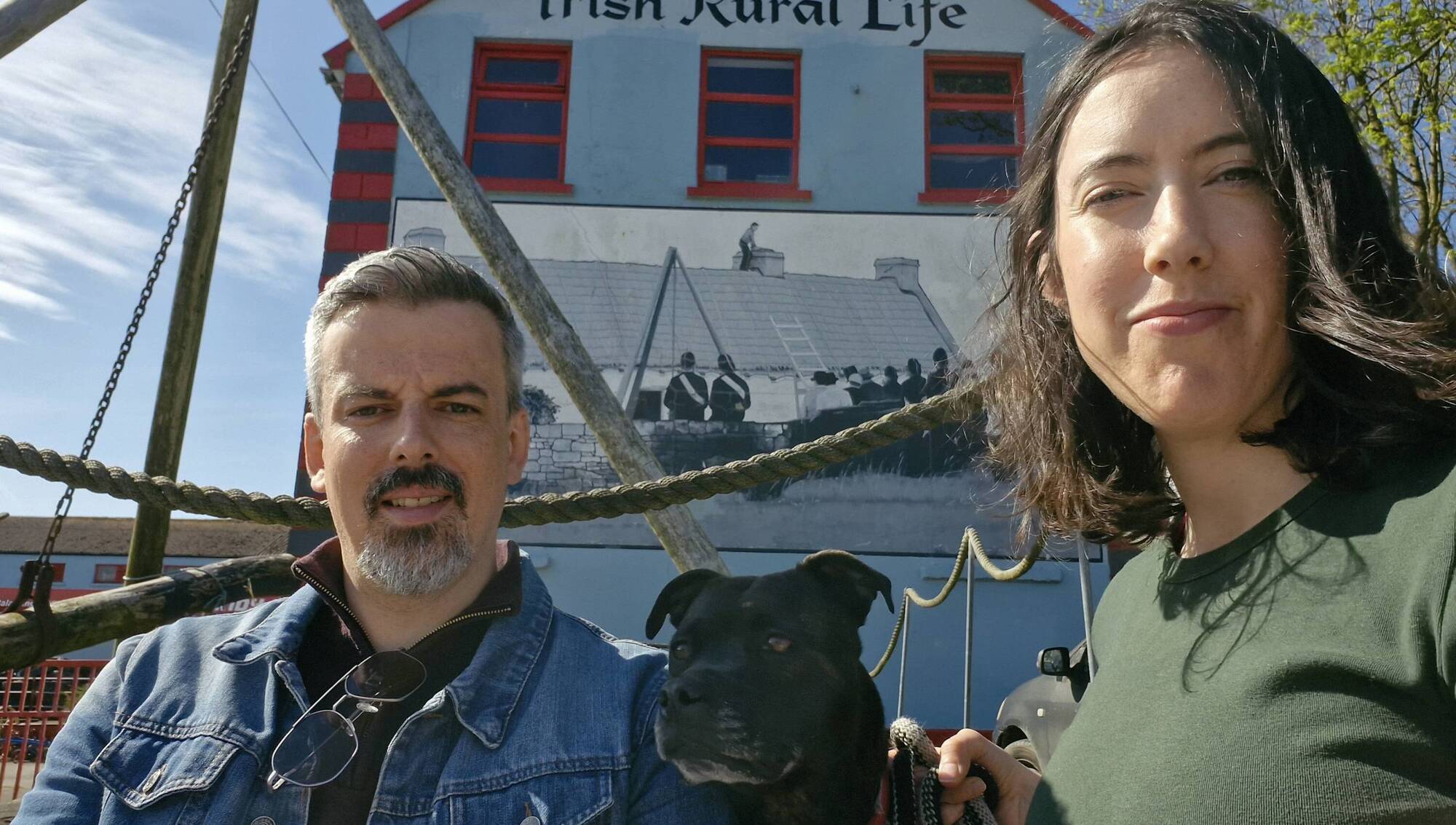
I went to the Museum of Irish Rural Life, right here in my new home of Kilrush to find out about short-term lets in our countryside. File picture: Dan MacCarthy
We’ve heard many claims recently of attacks on rural Ireland. Most we’ve heard before. Most pertaining to a handful of industries. Most from a minority made wealthy by those industries.
But one recent accusation was new to me — the idea that regulating short-term lets is an attack on rural Ireland. I must confess, I had no idea these properties were such an important part of my culchie heritage. I felt compelled to address this oversight, and what better place to do so than the Museum of Irish Rural Life, right here in my new home of Kilrush, Co Clare.
Read More
The museum was not what I expected. I had anticipated a monument to Irish agricultural life; a carefully curated collection of tools, machinery, and farmhouse paraphernalia. All those things were certainly present, but there was also much more.
The first thing that struck me were the vignettes of a rural life that I barely remember from my early childhood but had disappeared before my teens. The same tea tins my grandmother used. The same tools my grandfather stored in the derelict piggery. The same woodworm-eaten desk I sat in when I started school.
But there were surprises too. The tools of dead or declining industries that I didn’t know existed. An oar from a Lusitania lifeboat that had washed ashore locally. Paintings and photos from the West Clare Railway and the stories of the immense wealth it brought to the area. It was captivating. The museum is as eclectic and whimsical as the land that bore it.
I could have perused for hours but I was on a mission. Though I searched high and low, there was one thing I could not find — an exhibition on short-term lets. What I did find was an imposing battering ram. The same kind used by the local landowners to evict tenants and ensure they couldn’t return by destroying the external walls.
One such scene is painted on the gable wall of the museum. It seems rural Ireland does indeed have a rich tradition of evicting local people for financial gain. We’ve just traded the battering ram for the lock box on the wall.
If I exhibit naked hostility towards short-term lets, it is only because they are the most proximate manifestation of the housing crisis for me and my partner Katie. The home we were evicted from in Cork is now an AirBnB charging nearly €10,000 per month.

We struggled to find a new home in a county where short-term lets outnumber long-term rentals 28:1. Now that we’re hoping to return home, short-term lets have gutted the market and rendered many properties unmortgagable through unpermitted modifications to accommodate the industry.
We’re told that our misfortune is a regrettable, but necessary, trade-off to protect the rural tourism economy. I question how far that economy extends beyond the property owner. Where will the tourist spend their money if our businesses are closing in the absence of locals supporting them year round?
Here in Kilrush three restaurants have closed since my arrival, the aqua park has closed down, and the Shannon Dolphin Centre’s website specifically cites the lack of staff accommodation as the reason for their closure.
I’m not bemoaning those who host guests in a spare bedroom, or who offer their whole home for a few weeks while they’re on holiday. I’m not mad at those accommodation providers who welcome regulations that protect our tourism industry by ensuring we maintain the highest standards. For all my vitriol, I recognise that short-term lets have a role to play in that industry.
What I am angry about is the delay and dilution of regulations that could bring 12,000 homes back into full-time use (Fáilte Ireland’s estimates — not mine). I’m angry because I know that each one of these homes is worth more to us with locals living in them.
My partner and I, for instance, are not without economic value to the community. We pay tens of thousands in rental income to a local landlord. We regularly eat in the award-winning local establishments like Beag and Oileán, who serve amazing local produce like the vegetables grown by Eamonn at Seven Acres Farm.
We buy our fish every week from Gerry at the farmer’s market. I buy my fishing tackle from O’Sullivan’s, my gardening materials from Gleeson’s, and my dog’s food from the same vet that serves the local farmers. We also spend so much in the local Super Valu it prompts warnings from our banking app.
When friends come to stay we all spend far too much in the local pubs, and the following morning we enthusiastically support the local deli and pharmacy. But we bring so much more to our new home than our economic value.
We’re also the newest members of the local ciorcal comhrá. We’re volunteers in the community garden. We’re bringing young people into pubs in West Clare to play board games on their quiet nights. We’re two lapsed musicians who have encouraged another lapsed musician to dig his fiddle out of storage so we can play in the local pub (We start next week. Pray for us).
Katie supported a local mental health charity with free yoga lessons, and I’ve given free science workshops to local schools.
I don’t say any of this out of a sense of self-congratulation. Our efforts pale in comparison to those of the wider community, and would not succeed without them. I could not have offered the science workshops without the support of local librarians like Frances.
We couldn’t establish the board game club without supportive publicans like Carmel. I couldn’t become a chess coach to local children without the head coach Oliver asking for my help. My point is that the people make rural Ireland what it is.
They are the threads from which the tapestry of rural Ireland is woven. Every emptied home in our communities represents a missing thread in that fabric. Each absence making the tapestry less beautiful, less resilient, and more likely to fray.
Of course, rural Ireland’s problems run deeper than one unregulated industry. Rural Ireland is under attack, and has been for a long time. These attacks come in the form of service cuts, underinvestment, and grossly imbalanced regional development.
For rural Ireland to have a future we must protect, and invest in, the people that call it home. In the absence of communities living, working, and evolving within it, rural Ireland does not exist. It is a community in built infrastructure only; a tourist attraction showcasing hollowed-out dioramas of how we used to live.
A museum of Irish rural life.