Paul Hosford: Petitions committee a good place to see what's on Irish people's minds
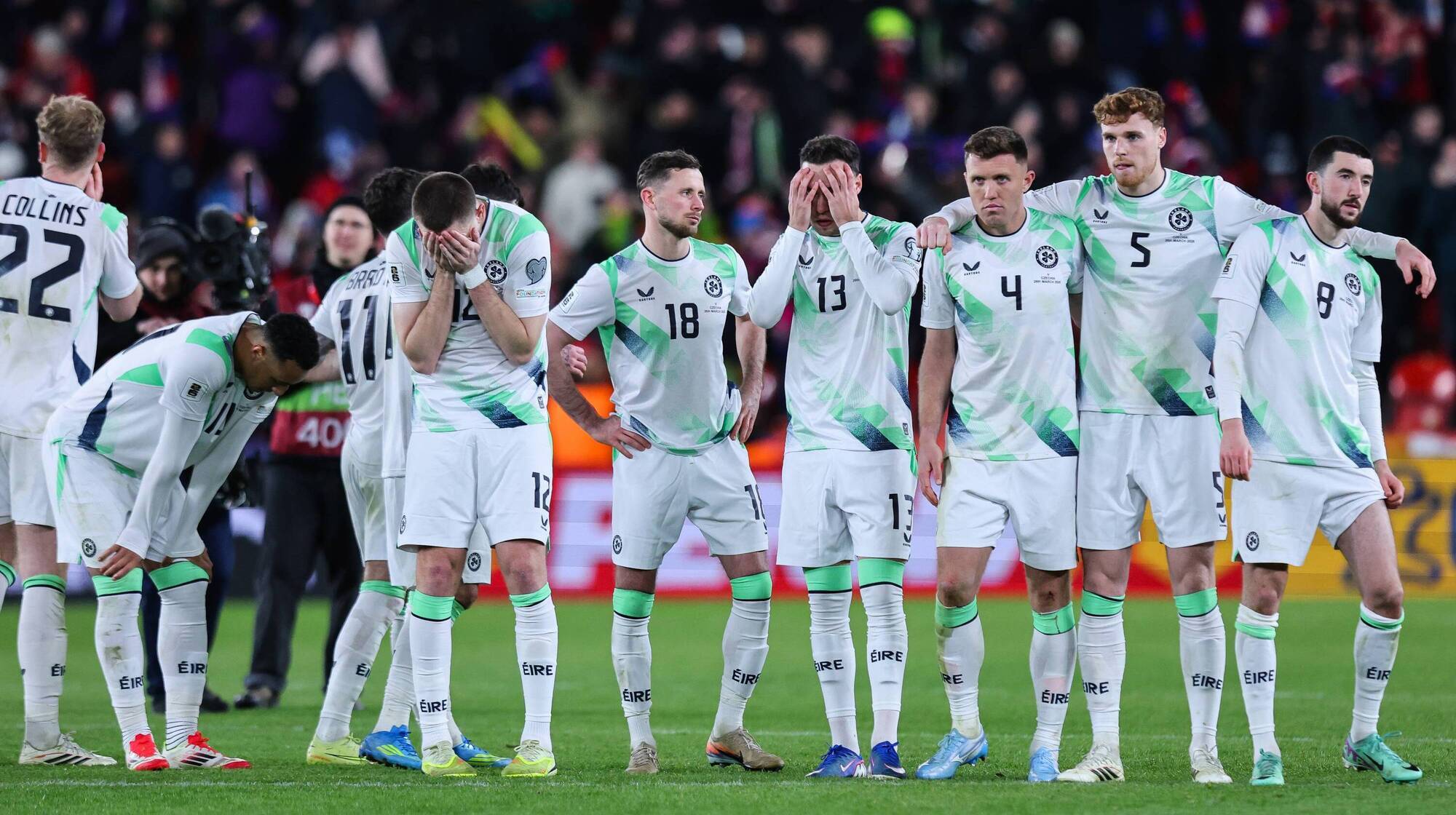
The petitions system has largely been a mixed bag and recently included one calling for March 27, when Ireland met Czechia in a hugely anticipated, but ill-fated World Cup qualifying play-off, to be declared a bank holiday. Photo: INPHO
Back in 2012, amid a fervour of political reform talk, renewed civic involvement, and a new energy (to borrow a phrase) in Irish political life, a move was made.
The then-named Joint Committee on Public Service and Petitions promised to allow the public to "set the agenda" of the political system by allowing members of the public to submit petitions, which would be considered by the committee.
The petitions system allows any individual to fill in a form on the Oireachtas website and submit it to the committee for consideration, which can be done if petitions concern matters of general public interest and the petitioners show that they have already taken steps to resolve the issue.
If a petition is in order, the committee may then ask petitioners to speak to them or seek evidence from relevant organisations and government departments and even invite ministers to answer questions about the matter.
Any member of the public can submit a petition on a matter of general public interest or concern. Just one signature is required, and there is no limit to the number of people who can support a petition.
As an idea, the notion is admirable and was lauded at the time by Fine Gael TD and subsequent minister Charlie Flanagan, who said it would allow for "direct democracy". It has since seen petitions on everything from state exams, visa rules, tree heights, and who to put on one euro coins.
It has largely been a mixed bag between issues that have been hugely important to the national conversation and those that matter largely only to the person who is vexed enough to ask the Oireachtas to intervene.
On Tuesday, the committee met for a short meeting to consider petitions entitled:
- Equal Parenting Time/Shared Parenting to Become the Default in Irish Family Law;
- Declare One-Off National Holidays for World Cup Qualification Play-offs;
- Irish Airspace Safety Concerns;
- Reform Visa Rules for Parents of Irish Citizens;
- Ban Student and Teacher Use of AI and AI Chatbots in Educational Environments;
- Only allow cars with more than one occupant on the N11 during rush hour;
- Regularisation of Asylum Seekers Who Have Worked and Paid Taxes for Three Years or More.
If you are unfamiliar with the process at the committee — and I will assume you are — the role of the members in these situations is to rule on the admissibility of the petition itself and next steps.
In all but one case on Tuesday, it was agreed to obtain the relevant department's response to the petitioner, and to check whether there was a subsequent response.
The lone exception was a petition calling for March 27, when Ireland met Czechia in a hugely anticipated but ill-fated World Cup qualifying play-off to be declared a bank holiday. Submitted in January, the petition said "moments like this bring people together in a way nothing else can".
The petition added: "Furthermore, if Ireland wins the semi-final, I urge the Government to declare March 31 and April 1 as once-off holidays as well. These additional days would allow the nation to come together for the Play-off Final and, hopefully, celebrate a historic sporting moment that could inspire generations."
So, just three days off for the football. No arguments here.
In response, the Department of Enterprise said that introducing an additional public holiday "has implications of a broad nature in terms of costs, productivity and its effect on competitiveness".
"There are no specific proposals in the Programme for Government to legislate for the introduction of a new public holiday," it added.
The petition was, unfortunately, considered out of date, given that the game ended in penalty shoot-out heartbreak nearly two months ago.
But one pressing issue, the only one which saw an input from the members, was a petition to close the N11 dual carriageway to single-occupant cars, a move the secretary general of the Department of Transport called "radical" in his response to the committee.
He adds that it would "create a risk that road users who have no feasible alternative to travelling alone in their private car would be restricted from access to employment, healthcare or educational opportunities".
While it would be easy to dismiss the petitions because the ones that gain attention are going to focus on quirky things, the truth is that, as far as an insight into the issues which are important to Irish people, the petitions committee is not a bad place to start.
- Paul Hosford is deputy political editor for the
CONNECT WITH US TODAY



Be the first to know the latest news and updates