Harassment by online influencers requires legal change
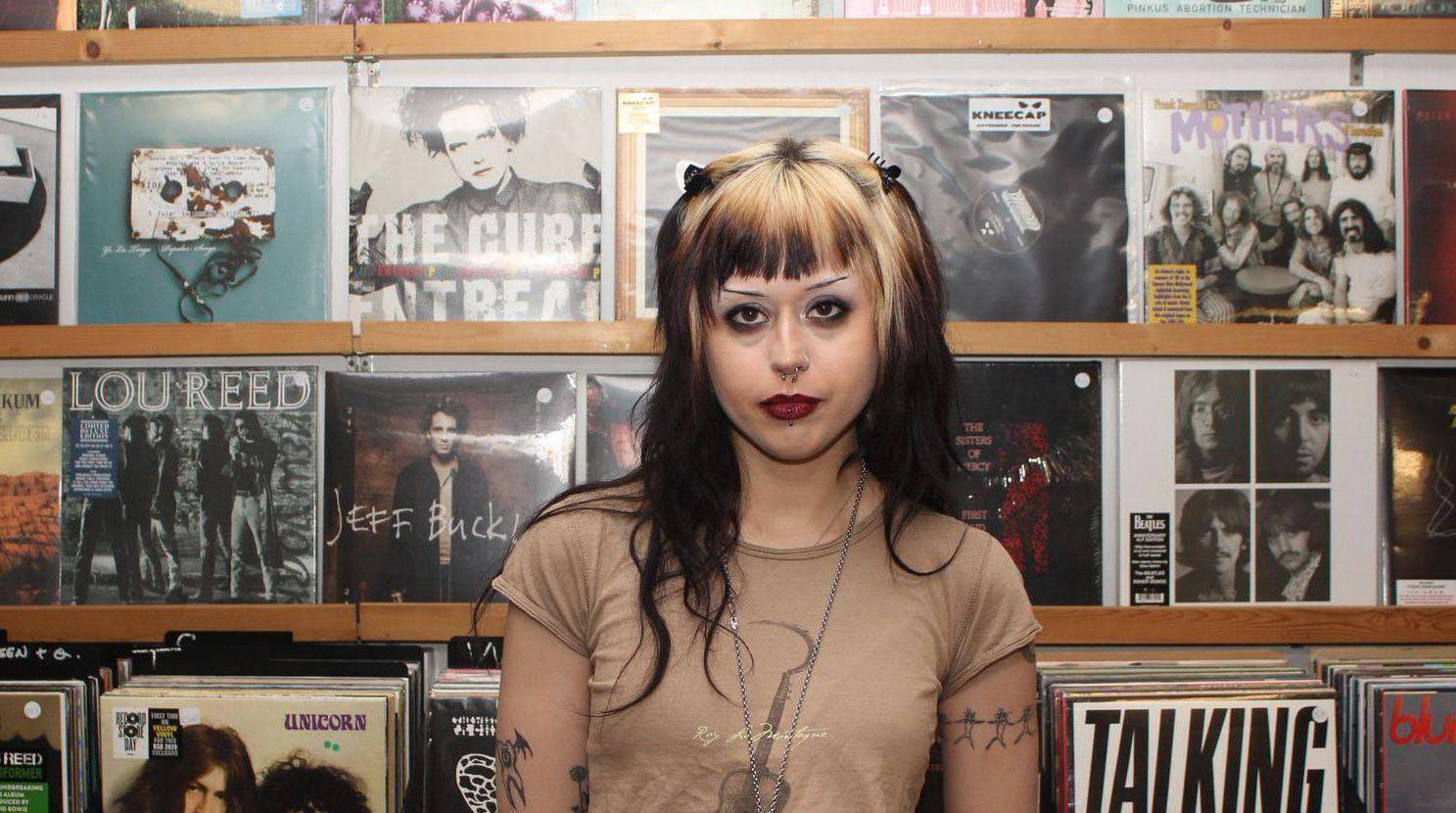
Willow Esteve was filmed at her workplace, where the influencer attempted to make her accept a soiled banknote.
Last month, a young woman in Cork City was placed into an ambulance while a stranger recorded her without consent.
The stranger was Vladyslav Morhulets, who films what he calls ‘point-of-view pranks’ using Meta’s Ray-Ban camera glasses, and who at last count claimed an audience of more than a million followers on TikTok.
Imagine how the woman must have felt upon finding that her medical emergency had been recorded, edited, posted and monetised across Morhulets’ social media accounts.
Following complaints, TikTok eventually removed the footage, citing its rules on adult sexual abuse and on harassing, degrading or bullying behaviour, whereas Meta, the company that produces both the glasses and owns Instagram, declined to act.
More recently, a retail worker named Willow Esteve went public about being filmed by Morhulet at her workplace, where he attempted to make her accept a soiled banknote. And just last week, a similar incident was recorded at Gino's Gelato in the city.
Public forums, such as Reddit’s r/Cork, are awash with reports of similar incidents. One poster claims that he and his same-sex partner were harassed in Bishop Lucey Park — at the time, they feared they were being targeted as a gay couple.
Another post describes how two female workers, one of them a survivor of sexual assault, were repeatedly approached at the door by two men feigning a need for service and edging into the premises until one of the workers, by then genuinely frightened, screamed at them to leave and threw a kitchen utensil. They realised only afterwards that they had been filmed.
The Reddit threads have identified Morhulet, and an accomplice named ‘Max’, as the offenders.
The modus operandi of such “influencers” is simple: find a stranger, stage a humiliation, covertly record the reaction, edit to fit the punchline, and serve it to a vacuous audience numbering in the millions.
What is most revealing in all of this is that the Morhulets of this world are capable of amassing such large followings, that so many people have decided that the public degrading of a stranger constitutes entertainment.
That audience is complicit in this behaviour, with each view and share functioning as active participation in an attention economy whose basic unit is the involuntary exposure of others. A culture organised on such terms cannot sustain any meaningful idea of a social contract.
Meta’s defence rests on a small LED embedded in the frame of these glasses, designed to illuminate during recording.
The Data Protection Commission has already noted the absence of any field testing demonstrating that this indicator performs any meaningful regulatory function, and Esteve’s account of being filmed without ever seeing it suggests the answer in practice.
The light can be obscured and it can almost certainly be removed, and even if it worked exactly as described, the scenario Meta asks us to accept, in which pedestrians on St Patrick’s Street scan one another’s eyewear for a flicker of light, is implausible.
Ireland, and the European Union more broadly, should treat consumer wearable cameras as surveillance devices and regulate their use accordingly.
Design standards are one element of this, and device indicators should be tamper-resistant, visible at conversational distance, and possibly even paired with an audible signal.
But the law should also make clear that the covert recording and publication of identifiable individuals, absent a demonstrable public-interest justification, constitutes a prima facie breach of data protection and privacy rights, giving rise to civil liability and, in aggravated cases involving harassment or exploitation, criminal sanction.
Recording in circumstances where a person cannot reasonably refuse, such as medical emergencies, should be prohibited outright, with platforms placed under enforceable takedown obligations that need to be rapidly actioned.
Faith in platform self-governance is misplaced because their incentives are not aligned with the protection of the people whose lives become content.
Companies like Meta and TikTok are structured around engagement and scale, and their moderation systems are reactive, inconsistent, and often contingent on public pressure rather than principle.
We now have years of evidence that social media platforms are quite happy to shirk responsibility for the routine exposure of unwilling participants as long as that exposure continues to generate traffic and revenue.
The result is a system in which harm is treated as a tolerable by-product of profit, and in which the burden of response falls on individuals, not on the companies that enable the conduct.
But meaningful change does not always have to wait on national or EU intervention. Regulators have consistently shown an inability to keep pace with technology, but older institutions, such as universities — of which Cork is fortunate enough to have two — can look to fill that void.
In cases where a student deliberately humiliates another person, expulsion from their programme would send a clear signal that such conduct is incompatible with membership of a respected public institution.
A student whose content has been removed from social media platforms for violations involving harassment and sexual exploitation, has surely reached the threshold for the most serious disciplinary sanctions available.
Universities carry a responsibility to ensure that those they educate emerge as citizens capable of acting with basic regard for others, and those that cannot inculcate basic norms of consent and responsibility have failed in a core public duty.
The conferral of a degree is a public act, and all third-level institutions should consider what it signifies when extended in such cases.
The technology will continue to advance, and the next generation of recording wearables will be harder to detect than those currently misused on the streets of Cork.
The regulatory choices made in Ireland and Europe in the coming months and years will determine whether a person walking through Irish cities can still expect to remain a private citizen and not worry about being degraded for someone else’s gain.
That is not a question that can be left to the discretion of private platforms or the judgement of those who profit from such material — it is a question for our policymakers and public institutions, and ultimately for the kind of public life we are prepared to accept.
- James O'Sullivan is a lecturer at University College Cork and a writer. See jamesosullivan.org for more of his work.
CONNECT WITH US TODAY



Be the first to know the latest news and updates