100 years of Fianna Fáil: Party must move from analysis to action to survive another century
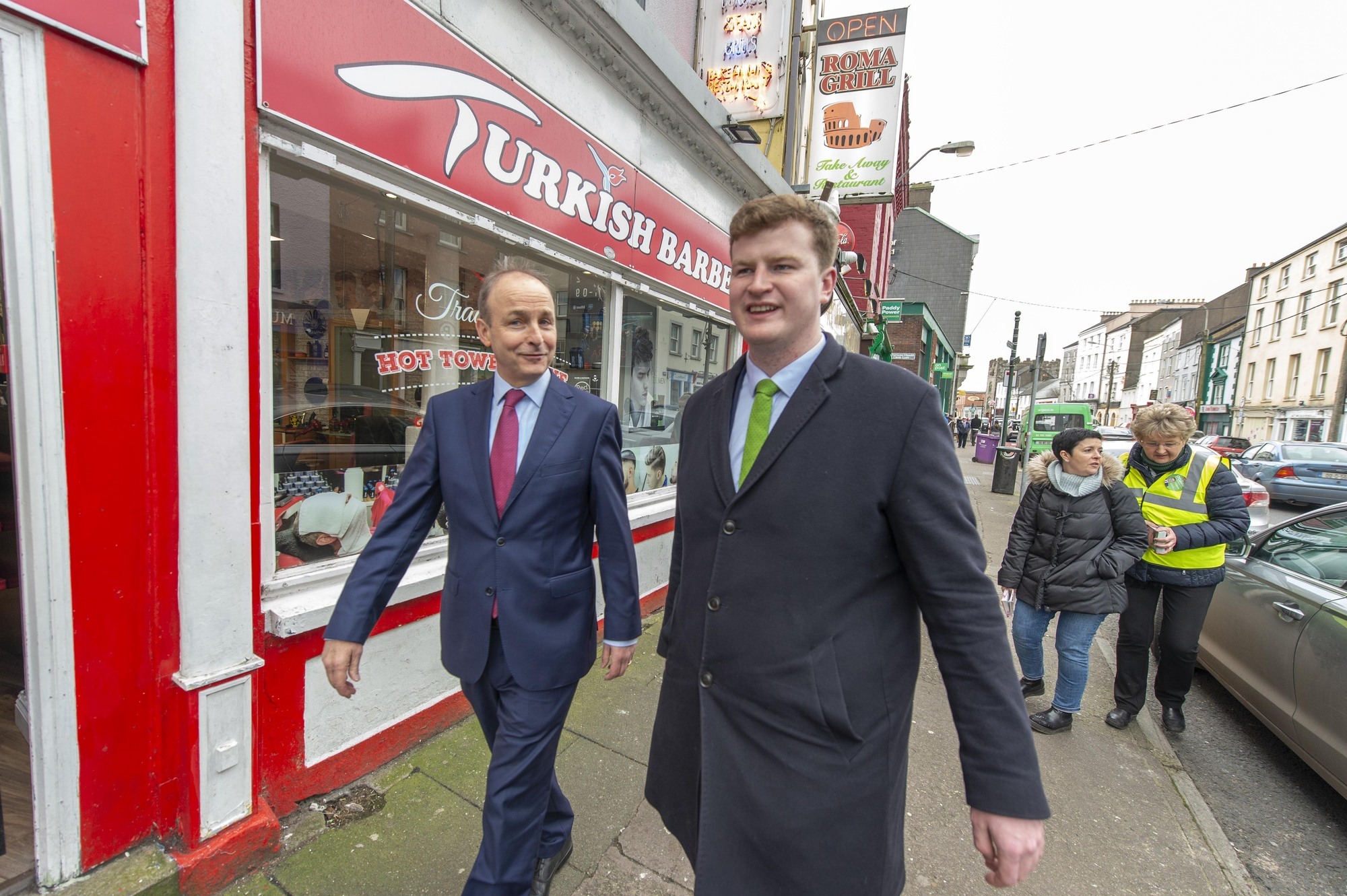
Fianna Fáil leader Micheál Martin canvassing with local candidate James O’Connor in Youghal, Cork East. File picture: Michael Mac Sweeney/Provision
The February 2020 general election was not a pleasant or ideal time to enter Dáil Éireann as the world quickly turned upside down during the onset of the covid-19 pandemic.
Within a few months, the Dáil had relocated to the soulless glass barrel that is the Convention Centre — a venue supposedly more appropriate for political discourse by social distancing in comparison to the squeezed corridors of Leinster House.
It now feels like an age has passed since the country came to a grinding halt for the pandemic. The nightmares of Nphet briefings and cocooning are a distant memory.
Read More
The State collectively responded to this crisis with a rare whole-of-government approach. In the actions taken, perfection was not the enemy of the good, and society responded to this call to collective action, trusting that it was the correct course.
This was not done out of choice, but by nffecessity and duty.
The Government did not get everything correct, and very difficult decisions had to be taken in a manner that was abnormal to the usual process-driven institutions of the civil service.
While for the majority of our society, the pandemic will be remembered as a period of darkness that many would prefer to forget, on the other hand, it offered an insight into how quickly the State can move when it is required.
This approach needs to be considered in how we do our business in response to current challenges. This is true of the systems of Government, but also for Fianna Fáil as it marks 100 years since the foundation of the party by Éamon de Valera.
Our political future can be found in our past. We have been a party that has been entrusted by the people to lead governments for over 60 years, delivering many fundamental outcomes that have shaped modern Ireland.
Key moments include joining the European Union, then the EEC, free second-level education, the Good Friday Agreement, and the transformation of an agrarian economy into the global leader of small nations in FDI.
With the clear exception of economic mismanagement leading to the 2008 to 2012 financial crisis, it could be argued that Fianna Fáil gets the bigger picture.
In order to remain a political powerhouse for the next century, we must become rapidly responsive to the needs of a country with an expanding population and an economy bursting at the seams under capacity constraints, delivering for our citizens.
This is what frustrates me with the current Government. It is no secret in the halls of Leinster House — and to our distinguished friends in the media — that, on occasion, I have locked horns with the leadership of my party, coming into conflict on matters both national and local.
However, I do believe firmly in the capacity of Fianna Fáil to be a force for good.
Less than five years ago, we moved at a record pace to protect and preserve Irish society and the economy from an unprecedented global crisis in the pandemic. It gave the powers that be a pathway to tackle head-on the creakingly slow delivery of critical infrastructure, and a planning system that has been choked by legal and regulatory hurdles.
In times of crisis, there is often opportunity, in particular to learn. There was a time, in the era of Seán Lemass, when politics in Ireland was defined not just by ambition, but by capacity and clarity of vision.
Big decisions were taken because the State and the political system had the ability to understand problems, to act decisively, and to bring the public with them.
That sense of urgency has, in many ways, been replaced by caution and a preference not to disrupt what appears, on the surface, to be working from those within the system.
As we reflect on 100 years as a party, I want Fianna Fáil to return to its roots as a political movement that aspires to tackle challenges head-on and in a coherent and collective manner.
In simple terms, to get the job done and to restore the social dividend of a thriving economy for ordinary people.
If we are serious and sincere about the future of Fianna Fáil, and about the successful future of Ireland, then we must move from analysis to action, and ensure that we are not just describing the need for change but delivering it.
- James O'Connor is a Fianna Fáil TD for Cork East
The founder of Fianna Fáil, Éamon de Valera is a central figure in Irish history and its politics, from the 1916 Rising all the way through and beyond the foundation of the State.
He led the party from its founding in 1926 until 1959, overseeing the Irish Free State’s evolution to the Republic of Ireland.
de Valera oversaw Ireland’s response to the Second World War, where the State took up a position as a neutral nation, owing to the return of the so-called treaty ports from Britain.
While he served as Taoiseach for over 20 years, he eventually relinquished power and was elected as President of Ireland — the first and only person to hold both roles.
While de Valera’s legacy is tied up with the image of ‘Old Ireland’, Seán Lemass is much more attached to the Ireland of today. He took up the leadership of Fianna Fáil in 1959, but was a key operator for years who had convinced de Valera to found the party.
Lemass moved Ireland away from previous protectionist strategies and sought to bring in foreign companies, while also pressing for the State to join the European Economic Community as soon as possible.
Change, however, did not just come at an economic level, with some major social changes come in during Lemass’s tenure, including the announcement by Donogh O’Malley that all second-level education would be made free.
The first Taoiseach from Cork, and the only to have won five All-Ireland hurling medals, Lynch took up the Fianna Fáil leadership in 1966.
His time as Fianna Fáil leader was dominated by the emergence of the Troubles in the North and later the arms crisis.
The Battle of the Bogside led to a national address on RTÉ, where he criticised the UK Government and insisted a UN peacekeeping force be brought in to calm the situation.
But key to Lynch’s time as Taoiseach was Ireland’s eventual joining of the EEC in 1973 and the further opening up of the country to free trade.
While he had been removed from Lynch’s first Cabinet over the arms trial, Charles Haughey eventually returned from the political wilderness and narrowly beat George Colley to the Fianna Fáil leadership.
He served as Taoiseach on three separate occasions, with an array of scandals attaching to his premiership, including the GUBU affair, after murderer Malcolm MacArthur was discovered in the apartment of Attorney General Patrick Connolly, and phone tapping controversies.
He was engaged in the peace process, however, beginning secret talks with Gerry Adams of Sinn Féin, while also establishing the IFSC and redeveloping Temple Bar in Dublin city.
Coming into the leadership, Reynolds continued with the peace process, with the Downing Street Declaration and an IRA ceasefire being two key wins.
One of the key points in his tenure came on his first day as Taoiseach, when the Government confronted the X Case. This saw a 14-year-old girl, named as X, prevented from getting an abortion after Attorney General Harry Whelehan sought an injunction.
His time as Fianna Fáil leader was brief, however, with Labour leaving the coalition to instead form the Rainbow Coalition alongside Fine Gael and Democratic Left.
Ireland’s second-longest serving Taoiseach, Bertie Ahern’s time as Fianna Fáil leader saw the country enter into major economic growth to be transformed from a relatively poor state to one of the richest in Europe.
Rapid spending increases and massive budgets were the norm, but the Celtic Tiger was not going to last forever.
He also oversaw the signing of the Good Friday Agreement.
But there is another half to Ahern, with controversy over his finances dominating his final years as Taoiseach.
Brian Cowen came into the Fianna Fáil leadership as the country’s downturn began to bite.
The 2008 financial crisis saw the Government clamp down on spending, while also opting to guarantee and later bail out Irish banks.
His leadership never recovered after an interview on Morning Ireland, with Simon Coveney accusing him of sounding drunk or hungover.
The crisis eventually led to an EU and IMF bailout of the State, while Cowen departed the stage after a botched reshuffle.
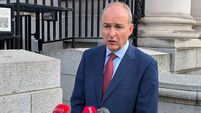
The current leader of Fianna Fáil, Micheál Martin took over the reigns at the party’s lowest ebb, with the 2011 election seeing it eviscerated following the handling of the crash.
But more than 15 years on, Martin has returned his party to Government on two consecutive occasions, with his time as Taoiseach dominated by world events.
From covid-19, the war in Ukraine, a rapid period of inflation and subsequent cost-of-living crisis, Martin faces further pressure as a war in Iran puts his Government in much more unstable ground.

- Compiled by Tadgh McNally

CONNECT WITH US TODAY



Be the first to know the latest news and updates