Colin Sheridan: How American TV and film subtly shapes how we view the world
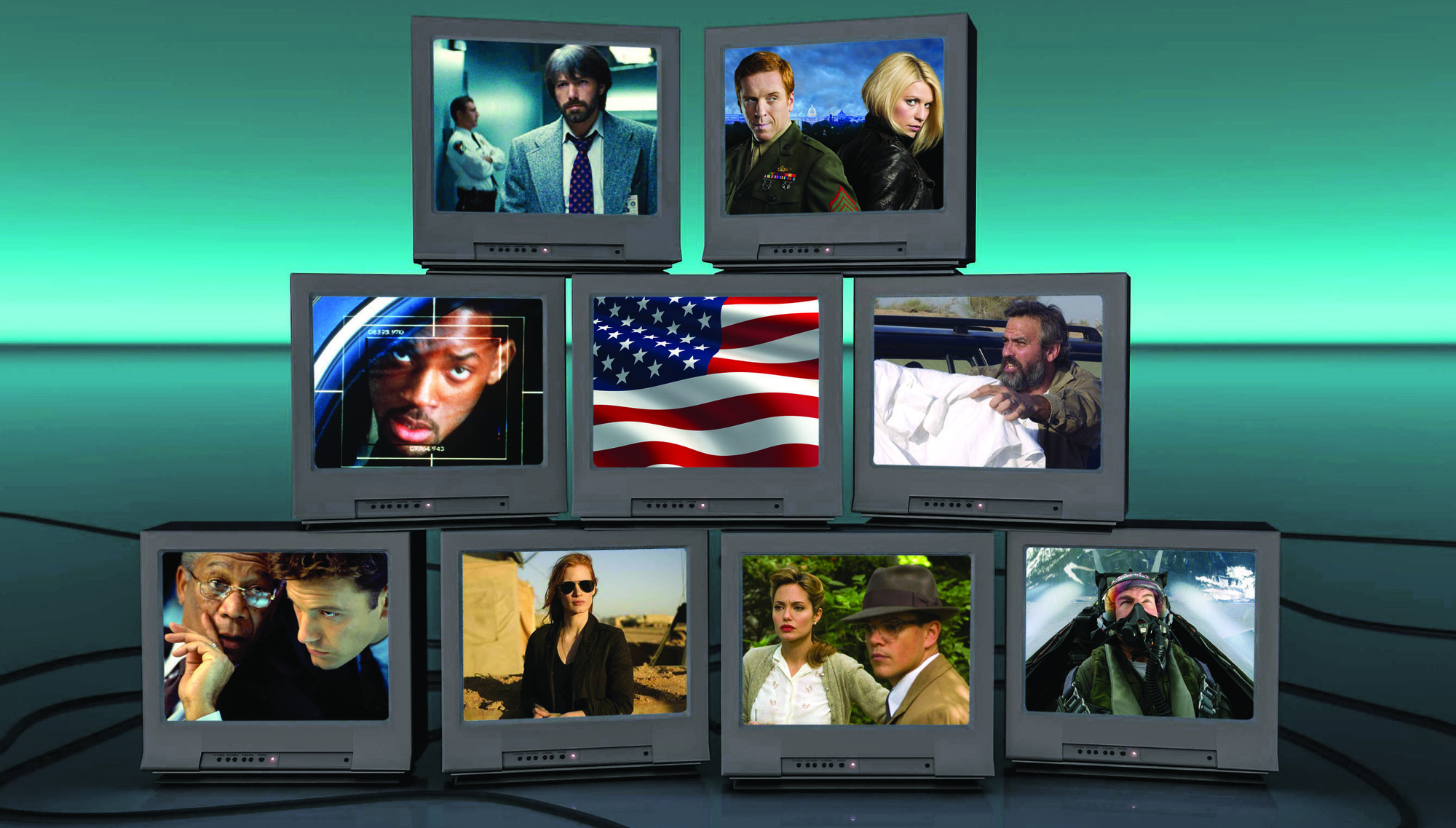
Declassified documents and first-hand accounts have shown the CIA has maintained a quiet, but consistent, presence in the entertainment industry, offering script advice, logistical support, and access in exchange for influence over how stories are told.
In 2015, the producers of the acclaimed US espionage television show brought a group of Arab graffiti artists onto a Syrian refugee camp set to add visual authenticity. The artists seemingly obliged. Across the camp’s walls, they sprayed Arabic phrases that went unquestioned by the production team.
Only after the episode aired did Arabic-speaking viewers point out the subversion: Among the slogans was a blunt message: ‘Al-watan unsuri’, or ‘Homeland is racist.’ It was a small act of rebellion, buried in plain sight, that exposed a larger truth about a show that had built its reputation on geopolitical realism, while quietly trafficking in caricature.
In another storyline, transported viewers to Beirut’s Hamra district; or, rather, to its imagined counterpart. Hamra is one of the most vibrant and cosmopolitan quarters of the Middle East; a dense patchwork of universities, theatres, bookshops, bars, mosques, churches, and galleries.
Yet on screen it became something else entirely: A grimy, volatile enclave teeming with menace, scored by ominous, distorted calls to prayer and populated by shadowy figures suggestive of Islamist extremism.
The orientalism was obvious to anyone who had travelled east of the Danube.
Perhaps the biggest insult was that the scenes weren’t even filmed in Lebanon, but in Haifa, Israel, replete with Hebrew signage and Israeli number plates, details that slipped in to the final cut. At the height of its cultural influence, offered millions of viewers not a window in to Beirut, but a carefully constructed distortion.
For decades, agencies such as the CIA have recognised the power of art, literature, music, and cinema as instruments of influence. The goal has rarely been crude propaganda. Instead, it has been something subtler: Shaping the contours of perception, nudging audiences toward particular understandings of what is ‘American’ and what is not.
The collaboration between Hollywood and US intelligence is neither speculative nor new. Declassified documents and first-hand accounts have shown the CIA has maintained a quiet, but consistent, presence in the entertainment industry, offering script advice, logistical support, and access in exchange for influence over how stories are told.
Films that touch on intelligence work, foreign policy, or geopolitical adversaries are especially likely to receive this attention. The result is not always overt messaging, but a steady framing of the world: American institutions are flawed, but fundamentally righteous, and their opponents are darker, more sinister.
Consider the portrayal of Iran in popular cinema. Ben Affleck’s , which dramatises the 1979 hostage crisis, was widely praised and commercially successful, but also criticised for reducing a complex historical moment to a binary moral tale.
When audiences encounter Iran primarily through this lens, the distinction between storytelling and state narrative begins to blur.
This dynamic is not confined to film. During the Cold War, the CIA’s engagement with culture extended to literature and music in ways that are only now fully understood.
The Congress for Cultural Freedom, a covertly funded organisation, supported literary magazines, exhibitions, and intellectual conferences across Europe and beyond.
Its aim was to promote a vision of artistic freedom that contrasted sharply with Soviet censorship, but it also worked to marginalise voices deemed too sympathetic to leftist or anti-American perspectives.
Even the Iowa Writers’ Workshop — one of the most prestigious literary programmes in the world — has been linked to this broader cultural strategy, illustrating how deeply embedded these efforts could become.
Music, too, played its part. The so-called Jazz Ambassadors programme sent American musicians, such as Louis Armstrong and Duke Ellington, on international tours sponsored by the State Department.
Jazz, with its improvisational spirit and roots in African-American experience, was presented as a symbol of American freedom and creativity. Yet these tours often took place against the backdrop of domestic racial injustice, a contradiction not lost on the musicians themselves.
While audiences abroad were encouraged to see the US as a bastion of artistic liberty, the reality at home was far more complicated.
A television series like does not need to explicitly declare Lebanon dangerous or Iran hostile. It only needs to depict them that way, and consistently enough, for the impression to settle. Over time, these impressions can shape public opinion in ways that are both profound and difficult to trace.
This is not to suggest every writer, director, or artist involved in these projects is consciously participating in a state agenda. The relationship is often more diffuse. Cultural producers operate within systems of funding, access, and expectation that subtly guide their choices. When co-operation with government agencies offers practical benefits — access to locations, equipment, or expertise — it can also come with implicit constraints.
Certain narratives become easier to tell than others.
illustrates how this can unfold in contemporary media. The show’s creators consulted with intelligence officials, and its depiction of CIA operations often carries an air of insider authenticity.
Yet this same authenticity does not extend to its portrayal of the Middle East. Instead, it falls back on a familiar set of tropes: Instability, extremism, and danger. The result is a world in which American actions, however controversial, appear as necessary responses to an inherently threatening environment.
What makes this particularly potent is the reach of modern media. At its peak, was one of the most-watched and most-discussed series in the world. Its images and narratives circulated far beyond the US, influencing how global audiences perceived places they might never visit.
In this sense, the show functioned as a form of soft power: Not through explicit messaging, but through the cumulative effect of its storytelling.
The graffiti artists who smuggled their critique in to the make-believe refugee camp understood this dynamic. Their intervention was small, almost invisible, but it spoke to a larger resistance against being misrepresented.
It was a reminder that the subjects of these narratives are not passive; they can push back, even if only in fleeting moments.
As audiences, we are often encouraged to consume culture as entertainment, to suspend disbelief, and immerse ourselves in the story.
But when those stories intersect closely with real-world politics, a more critical engagement is required.
The intertwining of American cultural production and state interests is unlikely to disappear. If anything, it may become more sophisticated as media landscapes — and political interference — evolve.
What remains essential is an awareness of how narratives are constructed, and whose interests they serve.
The distorted streets of ’s Beirut are not just a production oversight; they are part of a broader pattern in which culture becomes a battleground for competing visions of the world.
And, sometimes, if you look closely enough, the truth is still there: Spray-painted on a wall, waiting to be read.
We just need the language to understand it.
CONNECT WITH US TODAY



Be the first to know the latest news and updates