The Russian shadow fleet: Inside the ships that blur commerce and strategy
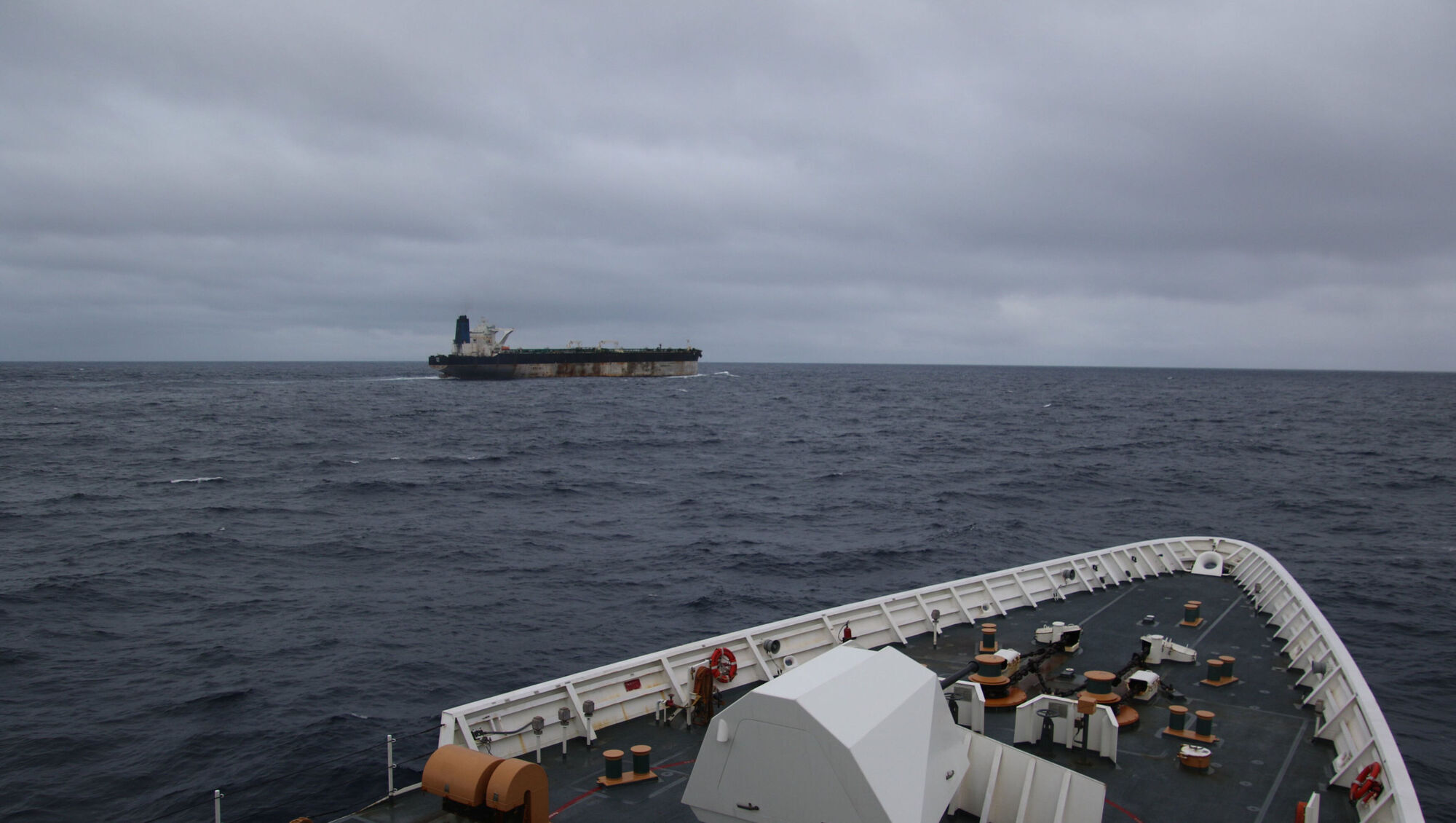
For Europe and for Ireland, the challenge lies not only in enforcing sanctions or preventing environmental accidents. It lies in understanding how these fleets operate, how they intersect with state policy, and what they may signal about the evolving character of maritime competition. File picture: PA
Picture a rusty, uninsured oil tanker slipping past European ports and adjacent waters, its crew underpaid, overworked, and sometimes not receiving wages. You’d worry — and rightly so. Now imagine hundreds of such vessels operating worldwide, flying foreign flags, evading registration, and moving sanctioned oil across global waters.
This is the Russian shadow fleet: ships that are technically not Russian, but which can be rapidly returned to the Russian register if needed, giving Moscow extraordinary flexibility to integrate them into its national maritime strategy.
These vessels are not just commercial anomalies. Analysts suggest many fit into Russia’s broader maritime doctrine: a dual-use concept in which civilian ships can be mobilised to support state objectives in times of crisis.
In practice, this means merchant vessels — crewed by civilian mariners — can be co-opted for military or state-directed activity, blurring the line between commerce and national security. Some ships have also been linked to small “supernumerary” teams onboard with ties to private military contractors or Russian state security services, highlighting the fleet’s potential role in strategic operations beyond oil transport.
One high-profile example is the detention of the tanker Boracay by French authorities, where two Russian nationals reportedly linked to the Moran Security Group — a private maritime security company with ties to Russian military, intelligence networks, and historical connections to the Wagner ecosystem—were found aboard.
Such cases illustrate how private contractors may operate aboard shadow fleet vessels, performing functions that extend beyond conventional ship protection.
For Ireland, whose ports and energy imports rely heavily on international shipping, these developments are far from abstract. Understanding how such vessels operate — and how they might be mobilised under Russian doctrine — is increasingly important for assessing risk, enforcing sanctions, and safeguarding European waters.
Estimates suggest the shadow fleet now numbers between 600 and 1,400 vessels, according to maritime tracking and sanctions-monitoring organisations. Many are older tankers purchased through opaque ownership networks since Western sanctions tightened on Russian energy exports.
They often operate with minimal insurance, complex corporate structures, and frequent changes of flag, making oversight difficult. The fleet also plays a critical economic role, sustaining oil exports despite sanctions and allowing Russia to maintain energy revenues essential for state finances and the war economy.
The vessels are rarely formally Russian. Instead, they operate under “flags of convenience”, registered in jurisdictions with limited enforcement capacity. Ownership is often layered through shell companies across multiple countries.
Yet this ambiguity can work in Moscow’s favour. Ships can change names, ownership structures, and national flags with surprising speed, allowing them to evade sanctions enforcement or, when politically useful, re-enter or enter the Russian shipping register.
This flexibility also reflects themes found in Russia’s 2022 Maritime Doctrine, a strategic document approved by presidential decree that outlines Moscow’s approach to maritime power.
The doctrine does not focus solely on naval forces. Instead, it describes a broader maritime system encompassing naval assets, merchant shipping, research vessels, ports, and maritime infrastructure. In effect, it recognises that civilian maritime capabilities can serve national objectives in times of crisis.
Historically, this approach is not unusual. During the Soviet era, parts of the merchant fleet were designed with mobilisation in mind, capable of transporting military cargo or supporting naval logistics during conflict.
Today, the lines are less explicit, but the principle remains. Civilian vessels and crews can form a strategic reserve of maritime capacity, particularly for logistics, transport, or auxiliary roles.
That context makes recent reporting about shadow fleet crews particularly noteworthy. An investigation by the Organized Crime and Corruption Reporting Project found some tankers regularly sail with one or two additional Russian personnel listed on crew manifests as “supernumeraries”.
These individuals are not part of the standard operating crew. In several cases, their backgrounds were linked to Russian security organisations, airborne units, or the Wagner private military network. Analysts suggest such personnel may allow Russia to maintain oversight of vessel operations or conduct secondary intelligence activities.
European intelligence officials quoted in reporting by AP News and CNN have suggested such individuals may act as informal “vessel protection teams” or liaisons with Russian authorities. Their presence does not necessarily imply covert operations, but it raises questions about why commercial tankers carrying largely foreign crews would include small numbers of security-linked personnel onboard.
In at least one reported case, two Russian nationals boarded a tanker departing the Baltic port of Primorsk shortly before sailing, listed only as technicians, while the rest of the crew came from other countries. The scale is small — often only one or two individuals — but it highlights how these vessels could quietly move personnel between ports.
Shadow fleet vessels may also serve intelligence functions. The Russia-linked tanker Eagle S was seized by Finnish authorities following damage to the Estlink-2 undersea power cable. Reporting from Lloyd’s List indicated the vessel carried specialised transmitting and receiving equipment capable of recording radio frequencies from Nato naval ships and aircraft, effectively acting as a signals-collection platform. The equipment was reportedly installed on the bridge, or “monkey island”, with data later transferred to Russia for analysis.
Cases such as Eagle S underline that some merchant vessels combine commercial shipping with intelligence collection or monitoring of maritime infrastructure, part of what analysts describe as broader hybrid maritime operations in the Baltic region. Ships can quietly gather operational intelligence, test enforcement thresholds, or perform other strategic functions—all while carrying legitimate cargo.
Sanctions enforcement has also exposed the legal complexity surrounding shadow fleet ships. In January this year, the tanker Bella 1, later renamed Marinera, was seized by United States forces following a weeks-long pursuit across the Atlantic.
The vessel had initially sailed under a Guyanese flag before reportedly re-registering in Russia during the chase. US authorities argued the registration was invalid and treated the tanker as a stateless vessel, allowing it to be boarded under international maritime law.
The operation, conducted by a US Coast Guard boarding team supported by US special operations forces and surveillance aircraft, illustrates how complicated maritime enforcement can become once vessels begin shifting flags and identities.
More recently, Sweden has also conducted inspections of suspected shadow fleet vessels in the Baltic Sea as European authorities attempt to tighten enforcement.
The legal authority to board vessels on the high seas often depends on the consent of the flag state. Without it, enforcement becomes difficult. The EU’s Operation IRINI, which monitors the UN arms embargo on Libya, has repeatedly faced similar challenges.
In several cases, Turkey — whose flag some ships were flying — refused permission for EU naval forces to conduct inspections, highlighting the diplomatic sensitivities that can surround maritime enforcement.
Russia has also used strategic signalling to complicate such efforts. Moscow has warned attempts to interdict vessels carrying its oil could lead to naval escorts being deployed to protect shipping.
At the same time, Russian naval vessels have periodically operated alongside commercial shipping in contested waters, particularly in parts of the Mediterranean and Black Sea region. Whether intended as protection or simply as a demonstration of presence, such actions underline the blurred boundary between commercial and state maritime activity.
For Europe, the shadow fleet presents a mixture of environmental, legal, and security concerns. Poorly maintained tankers carrying large volumes of crude oil represent obvious ecological risks if accidents occur near busy shipping lanes or sensitive coastlines. But the challenge is not limited to environmental regulation or sanctions enforcement.
Maritime security planners increasingly view these vessels through the lens of “grey-zone” activity — operations that fall somewhere between civilian commerce and state strategy. Ships capable of quietly moving small numbers of personnel, gathering intelligence on maritime infrastructure, or simply testing Western enforcement thresholds can become useful tools of influence.
While the shadow fleet’s primary purpose is sanctions evasion, the presence of poorly regulated vessels operating in nearby sea lanes adds another layer of complexity to maritime monitoring.
Irish authorities have made significant efforts to improve maritime domain awareness in recent years. Yet the practical realities remain challenging. The Irish naval service, like many European navies, faces capacity constraints. Personnel shortages and retention difficulties have affected the number of vessels available for deployment, while aviation support — particularly maritime helicopter capability — remains limited for sustained operations.
This matters because monitoring irregular shipping activity is resource-intensive. Boarding operations, surveillance flights, and maritime patrols all require specialised crews and equipment. Even identifying suspicious patterns among hundreds of vessels moving through busy sea lanes can stretch available resources.
None of this means every shadow fleet tanker passing near European waters is engaged in something more sinister than sanctions evasion. But the phenomenon highlights how modern maritime power increasingly operates in the grey space between commerce, law, and strategy.
The Russian shadow fleet may have emerged primarily as a response to economic sanctions. Yet its structure — loosely regulated vessels, complex ownership networks, and occasionally unusual crew compositions — also reflects a broader strategic mindset in which civilian maritime assets can be woven into national objectives when required.
For Europe and for Ireland, the challenge lies not only in enforcing sanctions or preventing environmental accidents. It lies in understanding how these fleets operate, how they intersect with state policy, and what they may signal about the evolving character of maritime competition in the 21st century.
CONNECT WITH US TODAY



Be the first to know the latest news and updates